Hello, friends. I hope you’re holding up in the great screwworm resurgence. If you’re from Texas or New Mexico, I want you to know that there are a hell of a lot of people thinking of you right now. You’re not alone, and some day, I swear, we’re going to get past the point where transport outcomes are the default.
I owe you all a conclusion to the series I started more than a month ago around the 1916 booklet written by orinthologist Edward Howe Forbush. The booklet is titled ““The Domestic Cat: Bird Killer, Mouser and Destroyer of Wildlife” and you can check it out in it’s entirety here. You can also find part 1, part 2, and part 3 of the blog at the respective links included here.
To briefly sum up where we’re at; Forbush is an ornithologist and the founder of the Massachusetts Audubon Society. This booklet is released by the Massachusetts state department of agriculture as recommendation to the public on the control of cats. So far, Forbush has outlined the history of cats, defined cats as vicious and bloodthirsty killers, and covered a survey conducted by the society proving out the way that cats damage bird populations. Now, we move to the point of the booklet; his recommendations for control.
I’m going to publish the whole legislation and licensing section, because it’s not that long, and it’s also very leading and worth the read.
Again, like with dogs, we see that origins of cat licensing had nothing to do with proving vaccination status, as we use them today. What we see here, and remember, this is a document put out by a governmental agency, is a recommendation for cat ordinances and licensing almost exclusively for the protection of bird populations. While the booklet does make a brief nod to cats as disease vectors, as we have previously discussed…it’s a nod. A barely there, likely included because he was asked to, mention. Forbush’s goal is to protect birds. The short of the recommendation is to license owned cats, and destroy strays. My favorite sentence in the whole mix was this one, which made me, quite literally, laugh out loud. “Enforcement of the law would gradually eliminate the wandering and stray cats, leaving only the stay-at-homes.” Someone please tell the unowned cats there is a law. They seem to have missed the memo.


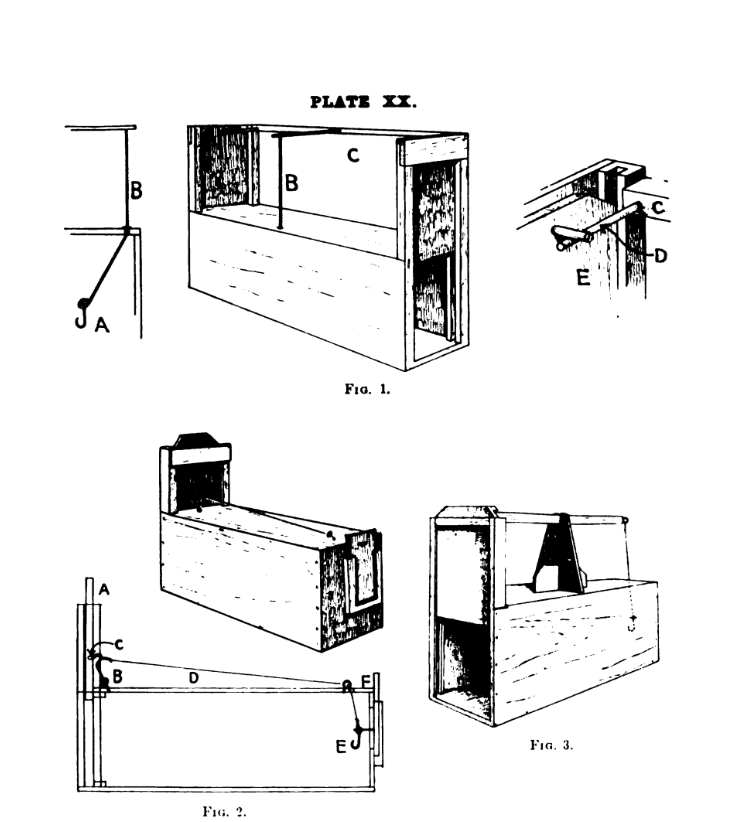
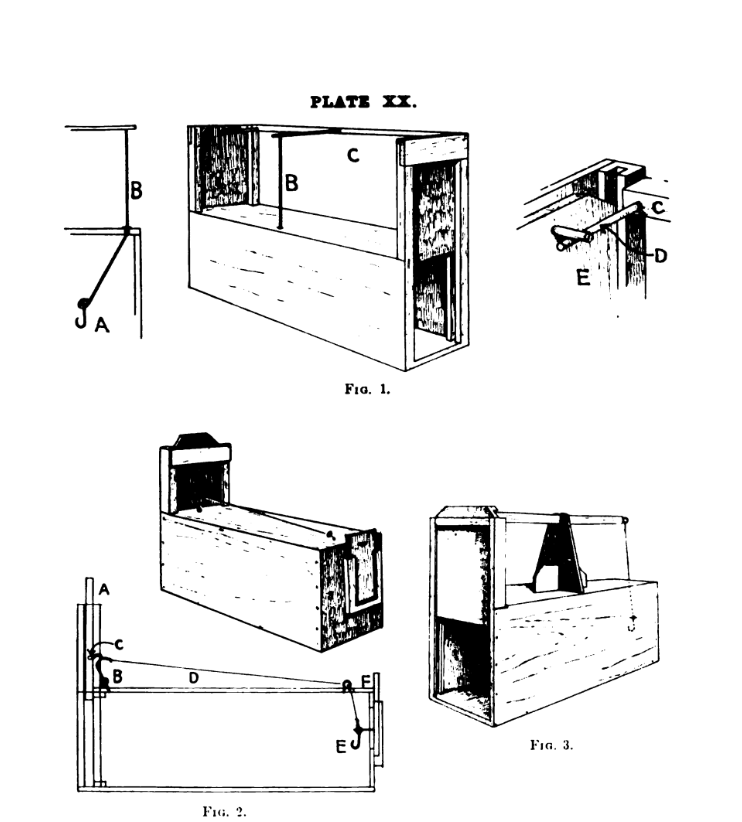
And from here, the booklet moves on to recommendations for killing the unowned cats. I’ll publish a few of the pages with illustrations. There’s not much for me to say about these pages. They speak for themselves and basically are just ways to kill cats. The trap is definitely a nod to our later humane traps, so that is interesting. Of note that the box is invented by someone affiliated with the Animal Rescue League of Boston, who also invented the automatic electric cage.



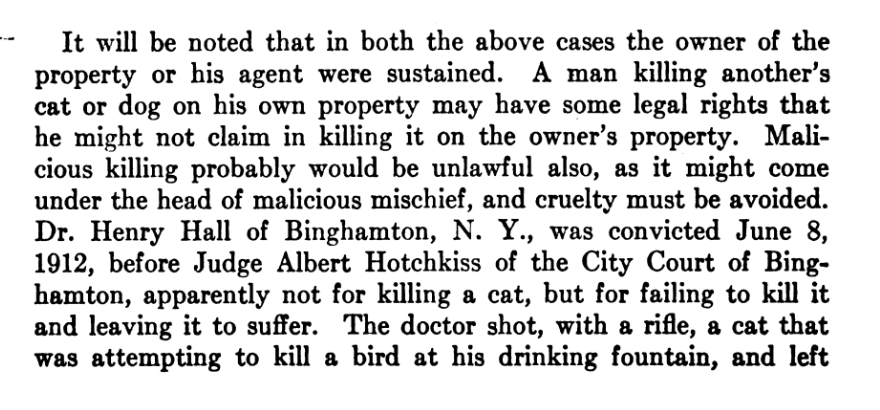
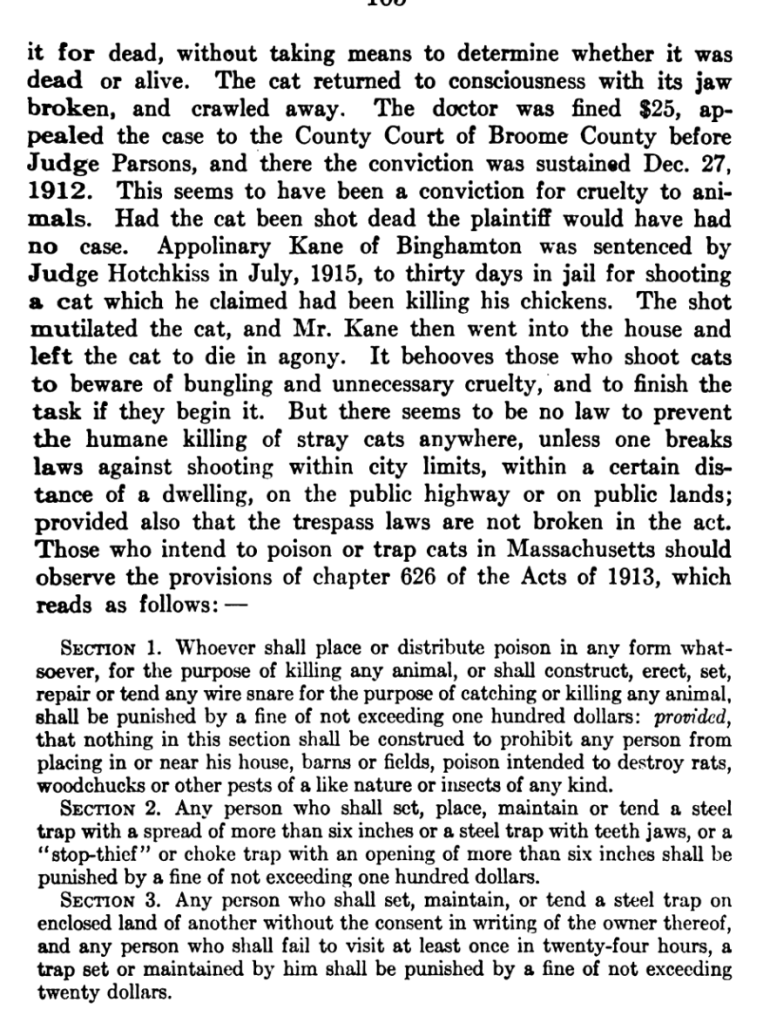
The next section discusses the rights of cats in various european countries as they stand in 1916, while lamenting the lack of clarity for American laws. The lack of clarity stems from the debate of whether or not the cat is wild or domesticated, and some case examples are given as well as the laws governing cats, whether they be domestic or wild, in Massachusetts.


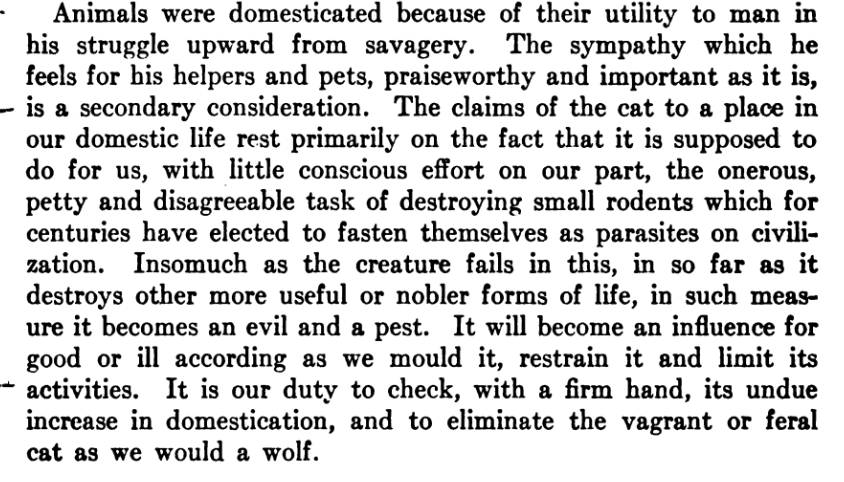
The final section of the booklet recaps the various sections, but i’d like to pull out this particular last paragraph for you. It is everything that’s wrong with humans, as far as I’m concerned. And it’s everything that’s still wrong with animal welfare today. We’re here with animals. They’re not here for us.
And with that, friends, I’ll leave you until next time.
-Audrey