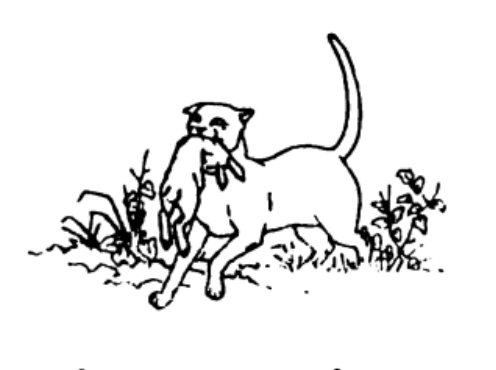
Trigger warning: pictures of dead birds.
Good morning, friends. This week, I’m eager to dive back into the 1916 booklet “The Domestic Cat: Bird Killer, Mouser and Destroyer of Wildlife” written in 1916 by Edward Howe Forbush and published by the Massachusetts Department of Agriculture. Last week, we looked at the book’s excellent description of the history of cats and how animal services agencies were working to “humanely” destroy them. This week, let’s dive into the meat of the booklet: Cats impacting wildlife.
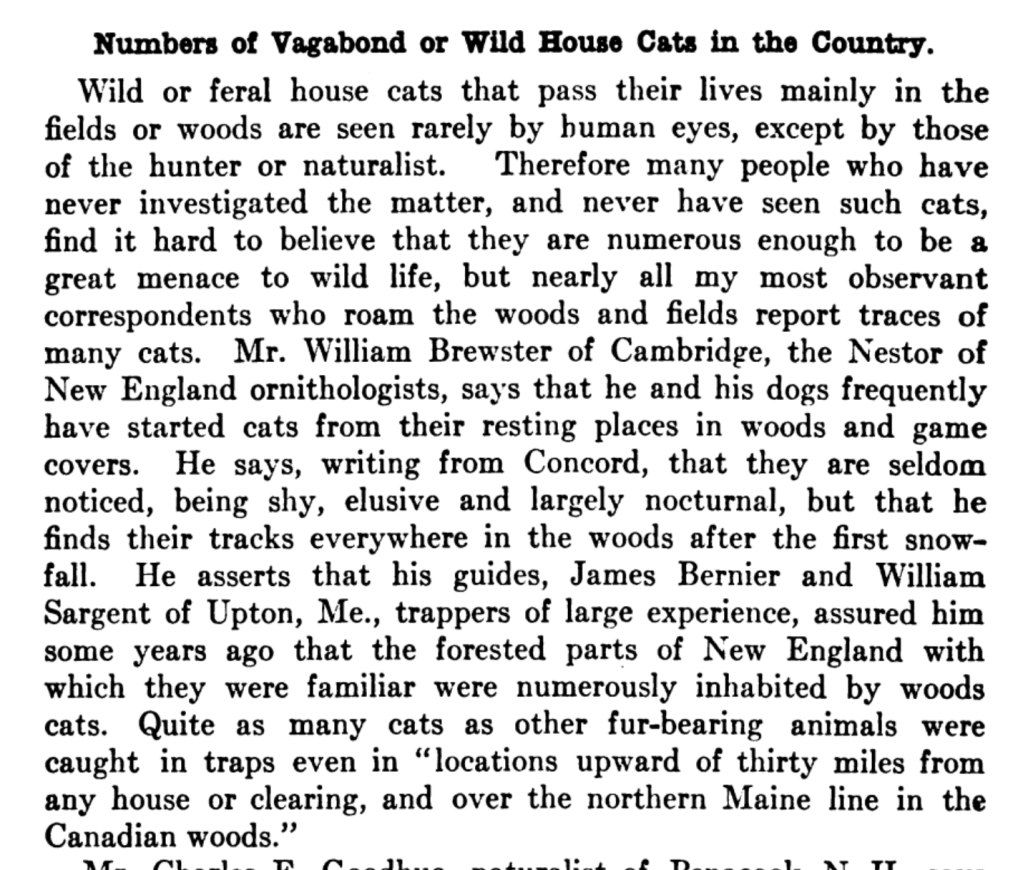
In the next section of the book, our author goes to great lengths to explain that there are massive, unknown numbers of “wild and vagabond” cats lurking in the most unlikely of environments. From the deep woods of Maine to the wilds of Central Park, great care is taken to explain not only that cats are prolific even in uninhabited areas, but also that they are increasing unchecked and should be shot.
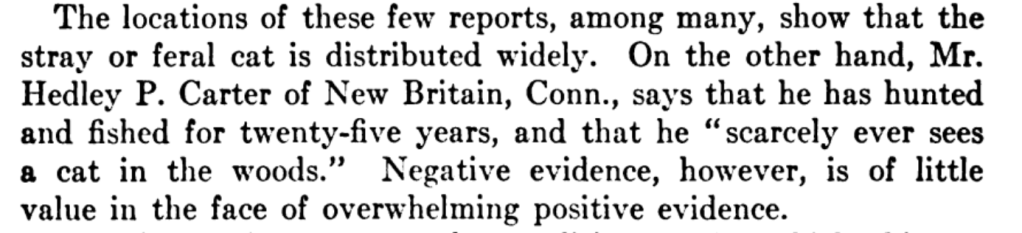
Following this, many first hand accounts of cats lurking on private land follow:
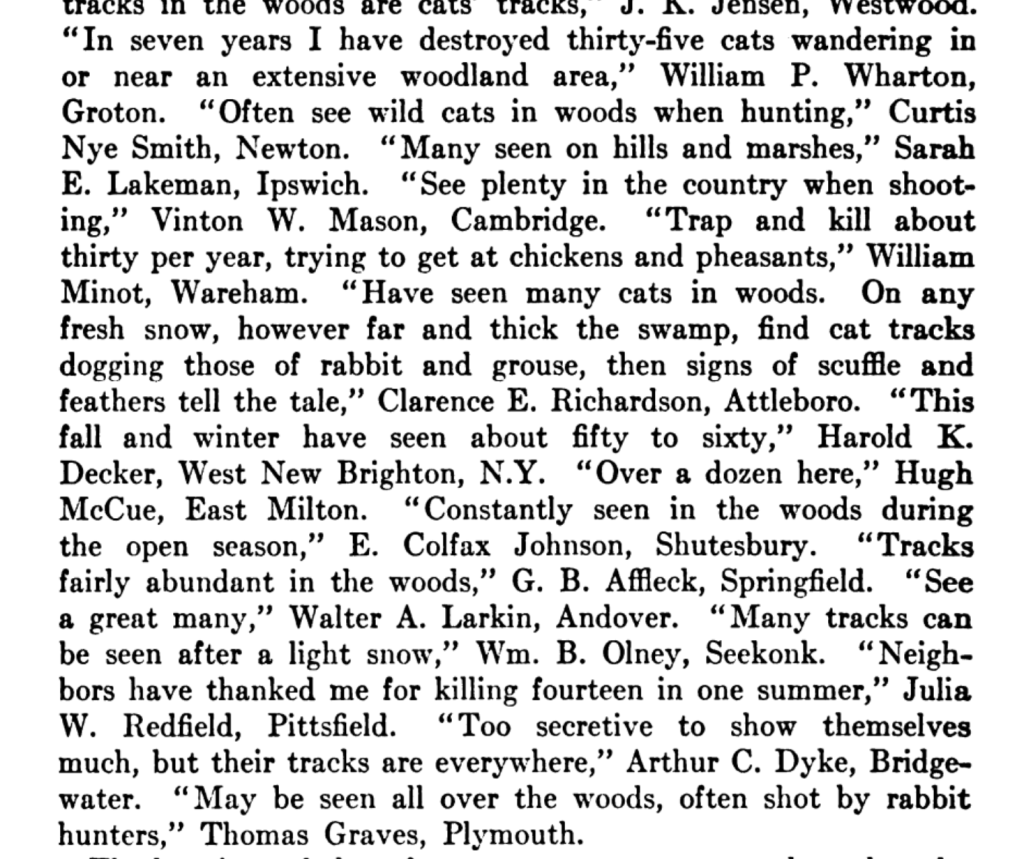
This guy, though, is apparently a liar. (I found this so funny.)
Next, the diet of the cat.
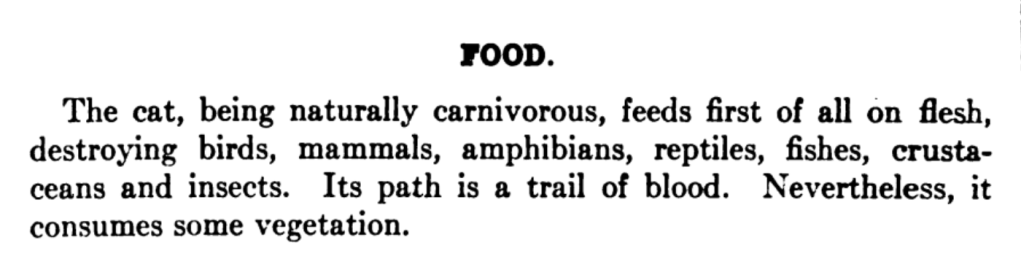
After an odd description of how the cat also eats vegetables and is particularly fond of asparagus, our author continues to portray cats as vicious killers of, well…everything. There can be no underestimating, in his mind, the joy that our friend the cat takes in murder. Much like weasels. And humans.
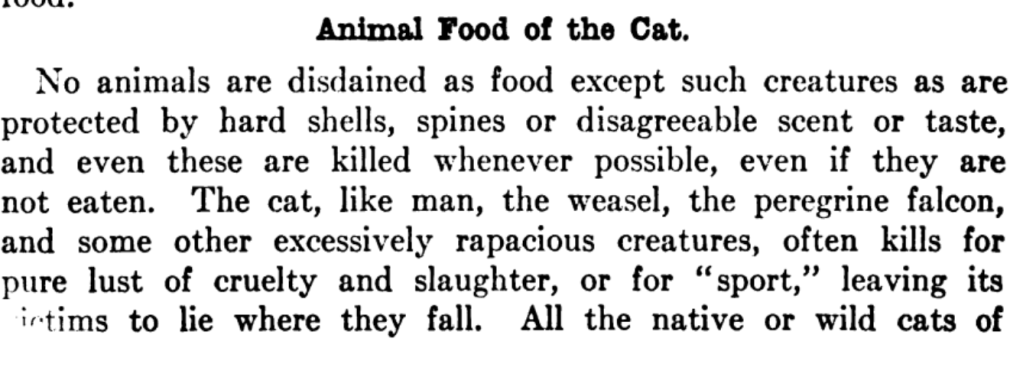
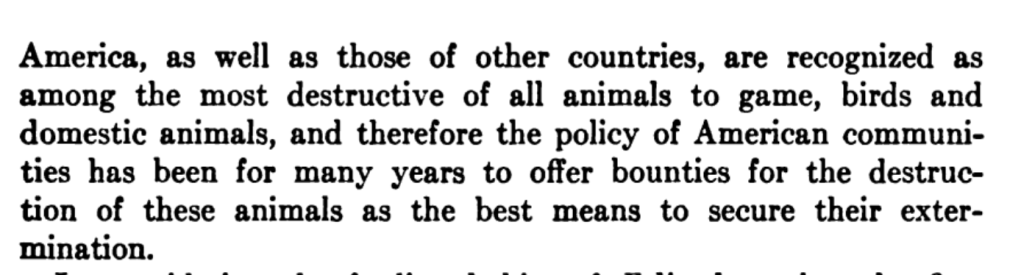
It’s here that we begin to enter the real purpose of the work; cats and the destruction of birds.

Our author first assures us that cats have been killing birds (and other things) since “ancient times,” describing in detail Egyptian pictorials that portray various cats in various states of killing things. Moving on to modern times, the author assures us that cats still kill things now. Stating that some cat owners deny that their pet cats kill any birds at all or “only one or two a year” our author finds it necessary to “Give voluminous evidence of the bird killing propensities of the animal.”
And such voluminous evidence does indeed follow in the form of this tale:
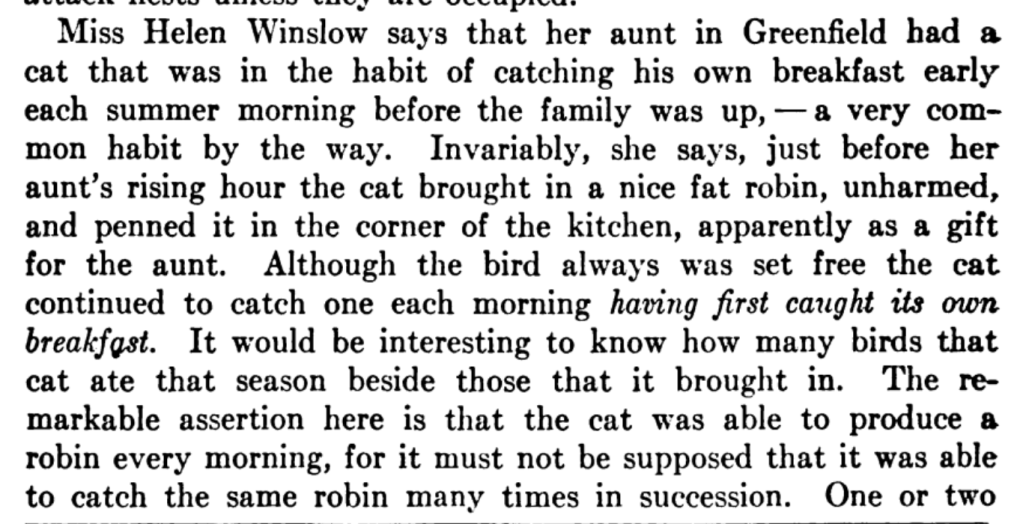
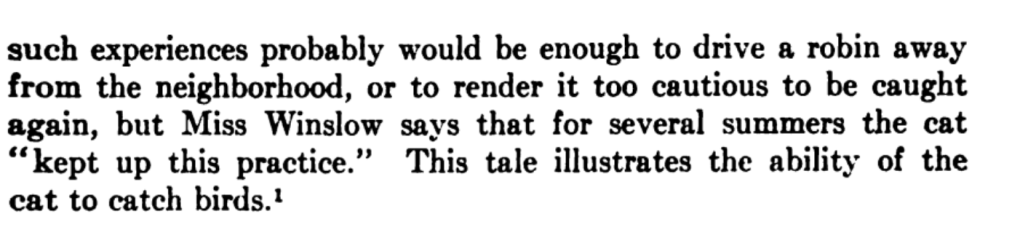
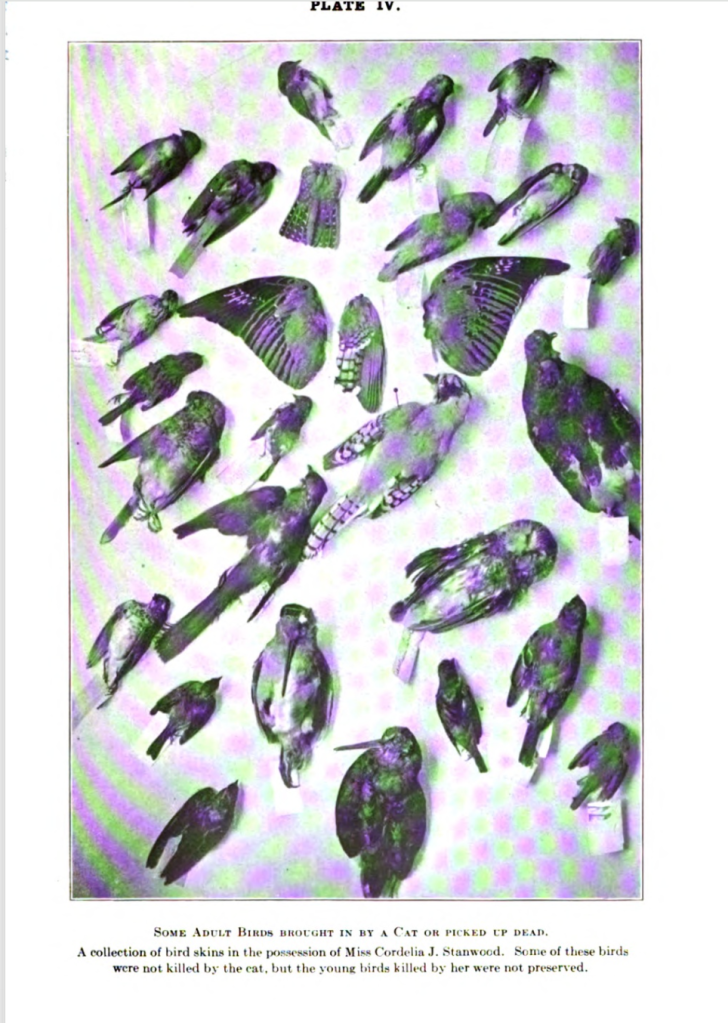
More stories follow, including a cat that once killed three sparrows, a cat that killed some partridges, a cat that killed three birds a day, and someone with seven birds who had to put netting around her trees. There’s mention that sometimes, birds are simply wounded by cats, and then later die. This section is rounded out by this photo of dead birds killed by cats.
The author moves from woodland birds to game birds to small animals, and frankly, it’s not worth unpacking. Just know that for about two dozen pages, we see story after story of cats killing birds, squirrels, mice and other critters as the author establishes his view that cats are murderous. What he fails to accomplish, though, is any real and credible data that the population of these animals is being impacted. It’s simply tales, photos and tables of individual reports of deceased animals, coupled with descriptions of cats as bloodthirsty beings who will murder any small critter they should come upon.
What strikes me about this booklet is the fact that it’s literally published by the government. And while it’s obviously well written, it’s not all that well researched. If the author’s intention is to show that cats are somehow harmful to the ecosystem, he’s failing drastically, achieving only in illustrating what i’m sure most people likely already knew in 1916; there is a circle of life, and cats participate in it. He fails to capture any true and measurable harm, making this primarily an opinion piece packaged as science.
Next week, we’ll take one more pass and finish our examination of this booklet with a detailed look at the recommended management of cats (which in the view of the author, is complete extermination.) There’s also a section on my favorite topic, rabies, which you know I’m super excited to unpack.
And with that, friends enjoy your weekend. Try not to get killed by any housecats.
-Audrey


One response to “The Domestic Cat: Bird Killer, Mouser and Destroyer of Wildlife, Part two”
[…] of Wildlife” and you can check it out in it’s entirety here. You can also find part 1, part 2, and part 3 of the blog at the respective links included […]
LikeLike