
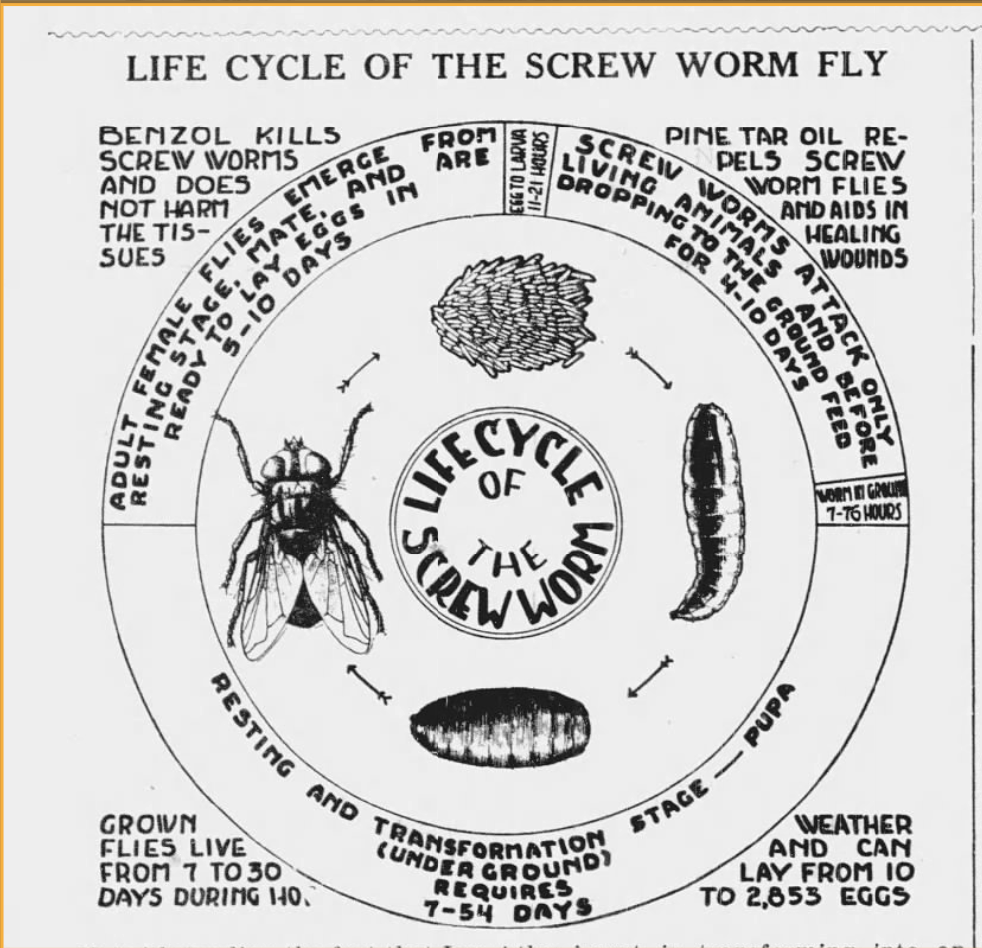
Hey team. You’ve likely seen that we have a new nemesis. The new world screw worm (or screwworm, or screw-worm), aka the Cochliomyia hominivorax, has recently made it’s debut in Texas and New Mexico. The TLDR on this creepy crawly is that essentially, it’s a fly that lays a maggot that infects and consumes living tissue, causing devastating injuries. Primarily screwworm is a livestock issue but since it can infect any warm blooded animal, including you and me, we need to be alert and aware. Right now, the primary impact to animal services is two-fold. Many states are creating restrictions or outright banning the importation of animals from any state that’s infected. That’s going to be devastating for Texas, where about 25% of live outcomes (give or take) are transfer outcomes.
There’s plenty of solid, current information to help you and your shelter combat the threat of screw worm, so I’d suggest you look to the nationals for the latest and greatest in control and prevention.
For this space, I asked the obvious question. Has this happened before? The short answer is yes.
Screw worms, in some species or another, were first documented in 1825 when US calvary horses were affected. The parasite itself was first scientifically recorded in 1858 when a French entomologist named Charles Coquerel identified adult flies reared from a human infestation and gave the species the name hominivorax, meaning “man-eater.” Gross.
From there, there are many, many documented infestations across the United States; In fact, screwworm was so common as to be used as an insult. There are a ton of examples of someone referring to someone else as a screwworm even before I could find articles or documents about actual issues from it. Let’s bring this back. Now’s the time.
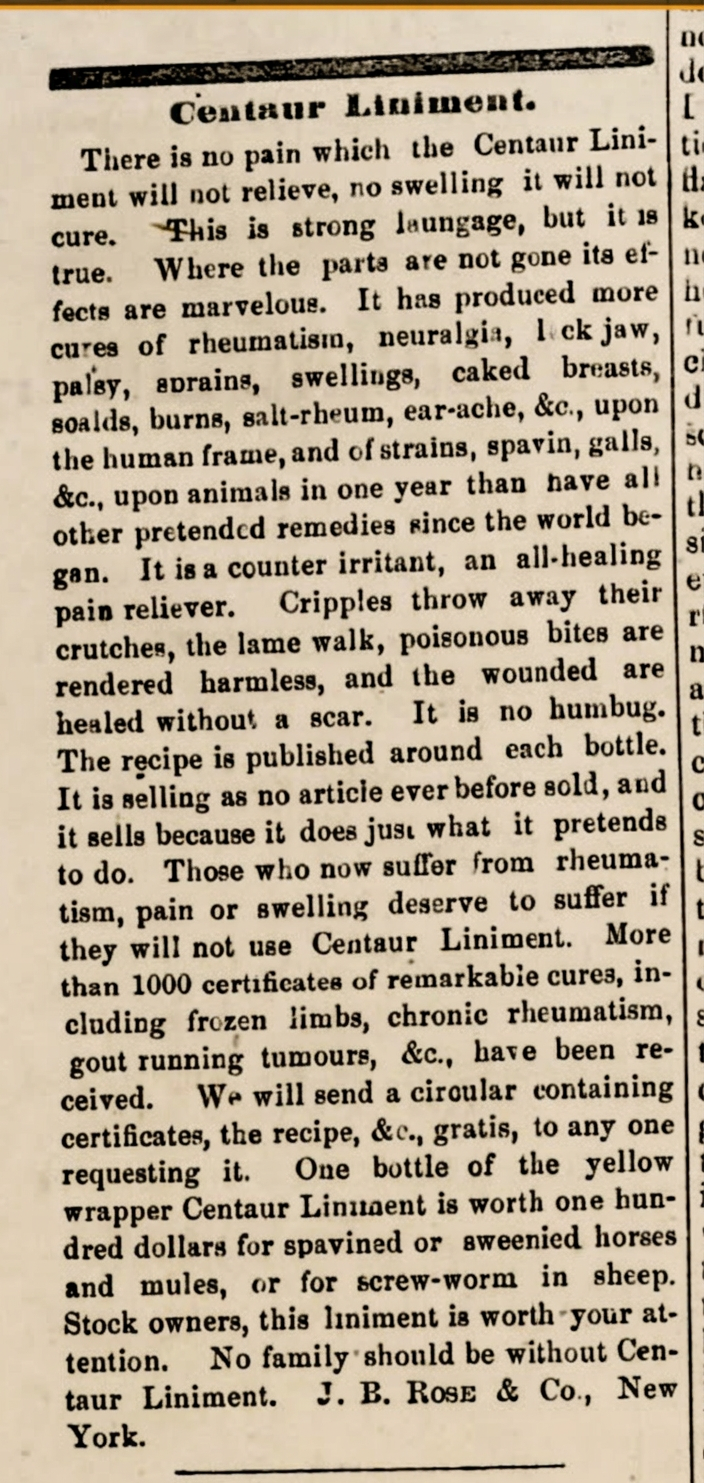
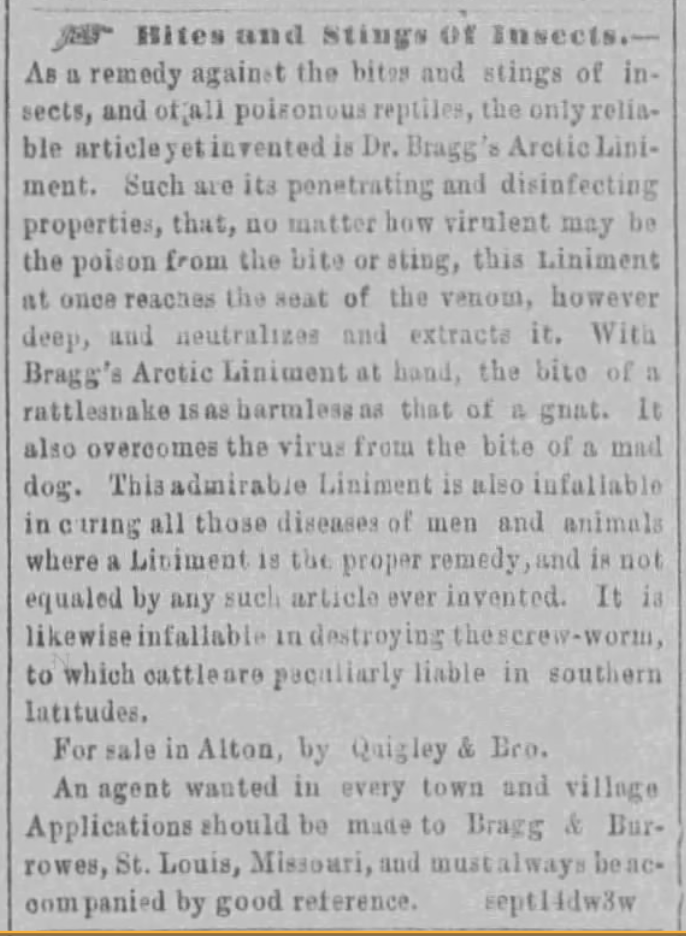
We see a fair amount of, as you would expect, quack cures around screwworm. Here’s one with a clever name.
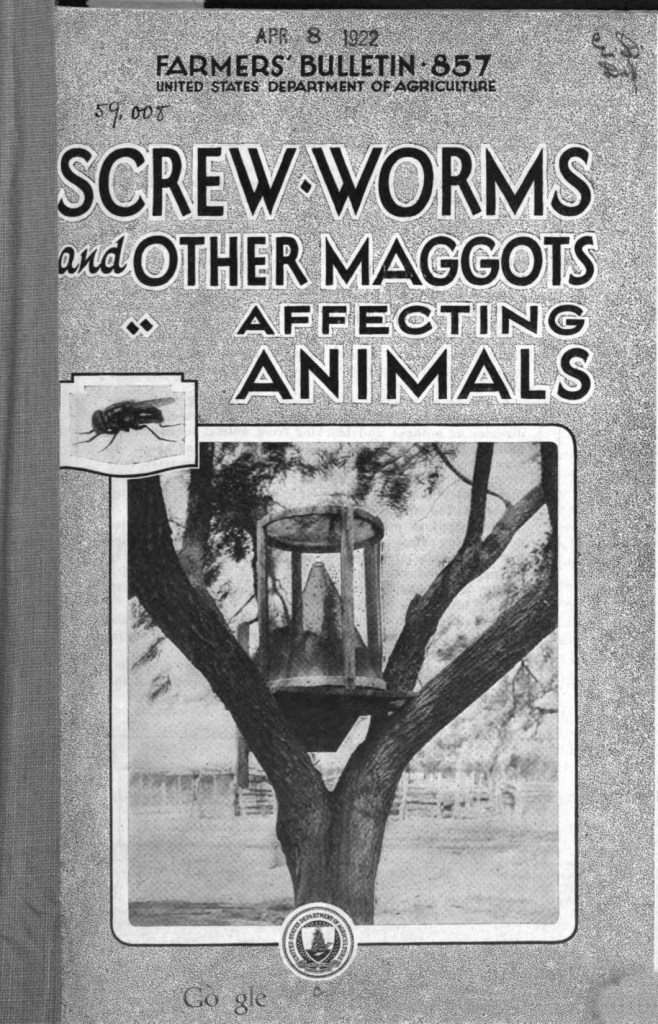
There isn’t a whole lot of news about very early infestations. I suppose, like most things that terrify us now, screw worm was par for the course. I did find some agricultural documents that outline control of screw worm in livestock populations. This pamphlet, put out in 1922 by the United States Department of Agriculture, outlines precautions to take: bury dead bodies two feet deep with quicklime or burn them thoroughly. Clear brush from your land. Use screw worm traps, which there are instructions to build. Examine your livestock carefully and buy sheep with no horns to minimize bruising and injury from fighting. Calve in the early spring, before the screw worm can get a foothold.
It did have one tidbit that I thought was interesting, and it was something I saw in a lot of the ag docs. Screw worm outbreaks tend to follow infestations of ticks. Apparently the size of the wound that the tick leaves is opportunistic for the screw worm. Take that for what you will; the sudden uptick of tick infestations in the United States has been quietly making headlines in scientific journals for months now. Did it cause me to download a map of tick outbreaks that I could refer to later? Yes.
In the 1930s, a study was conducted on the control and potential to eradicate screw worm, and the results were published across the country, but particularly in the south central areas of the country, where the infestations were rampant.
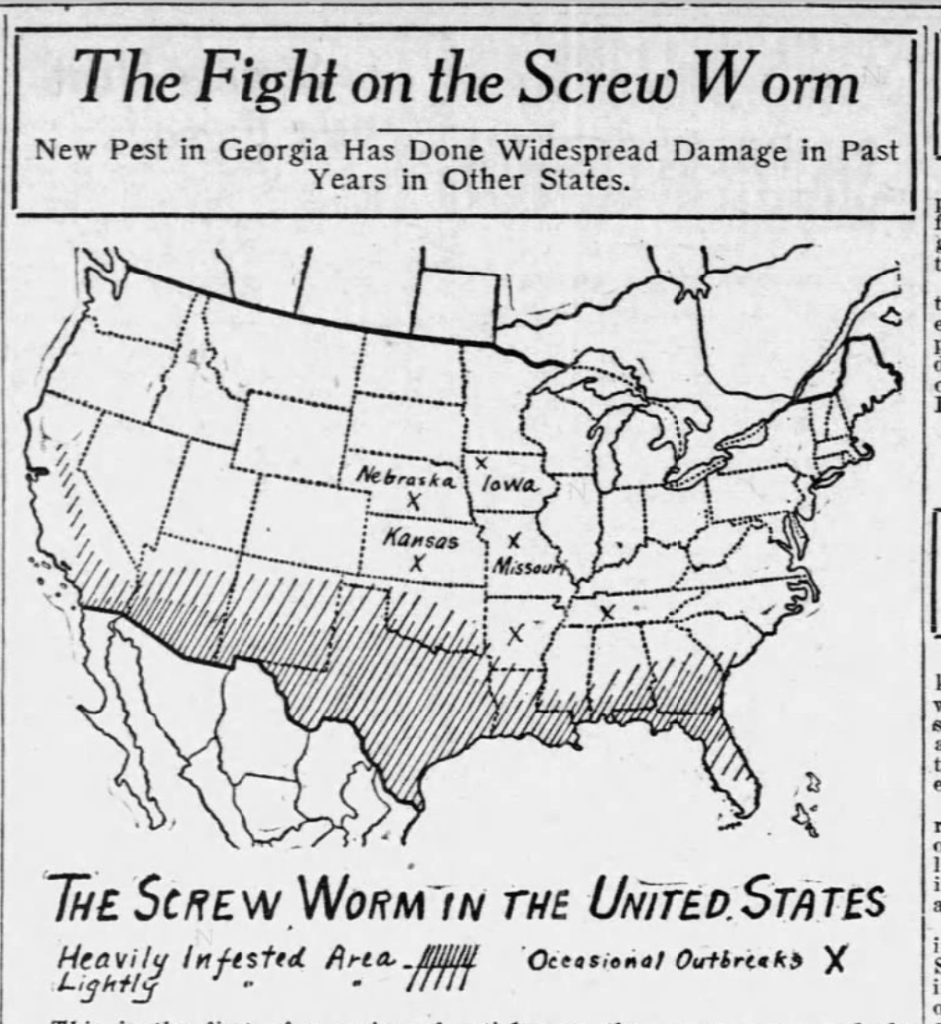
Large articles like this one below (use the link to read it in it’s entirety) published it’s findings, including advice on management and treatment. From here, the US set up a Department of screw worm control and a screw worm control program. Three test ranches in different states. These ranches were designed to test various ways of control and eradication. Here’s a relevant section of the article above that explains how the department and ranches worked, and what they hoped to accomplish. The transparency!
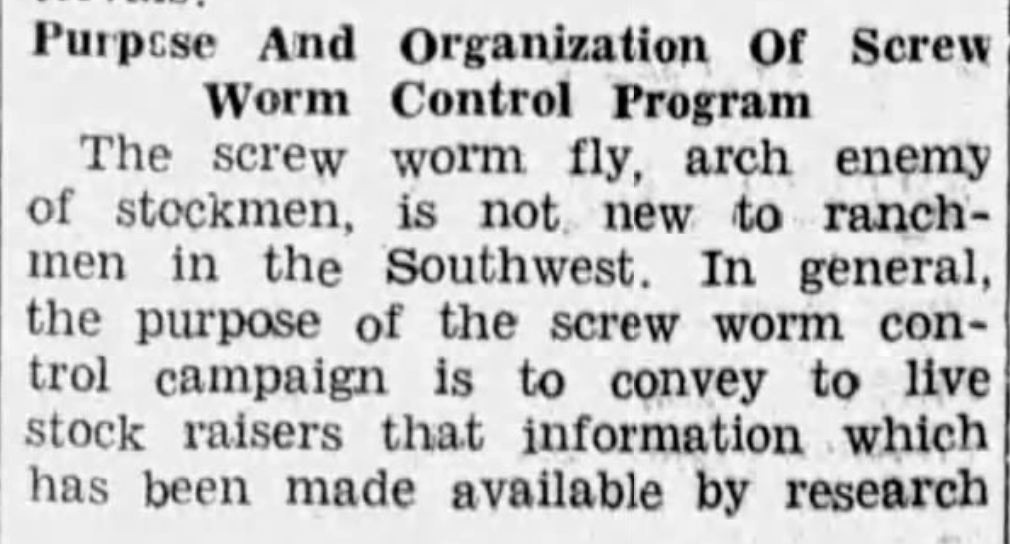
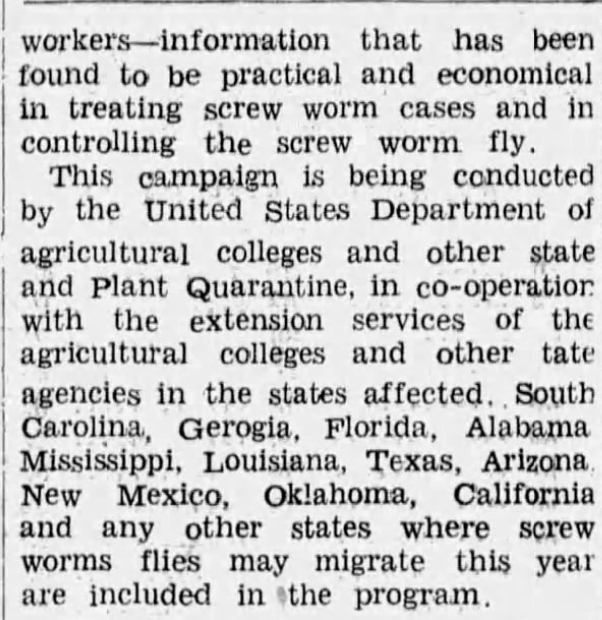
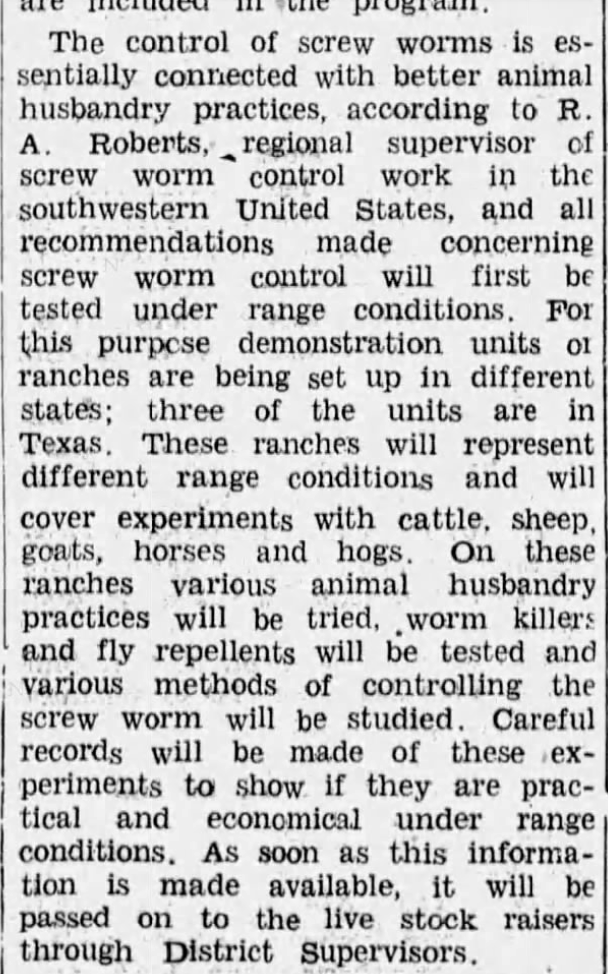
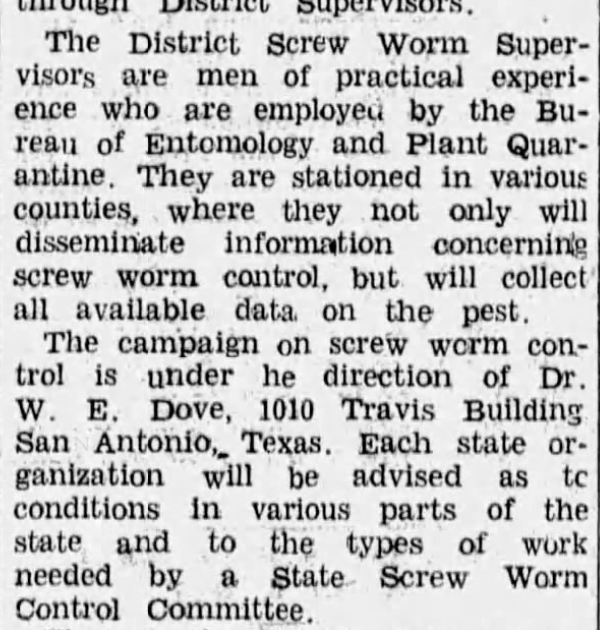
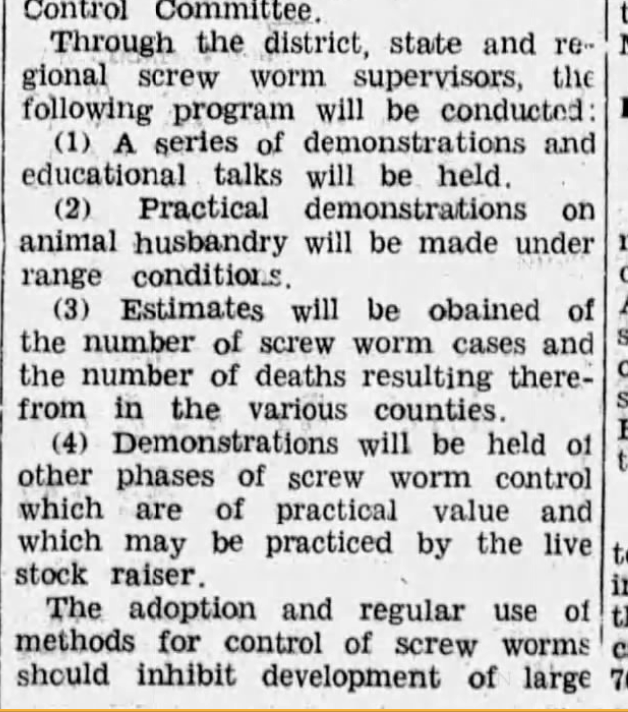
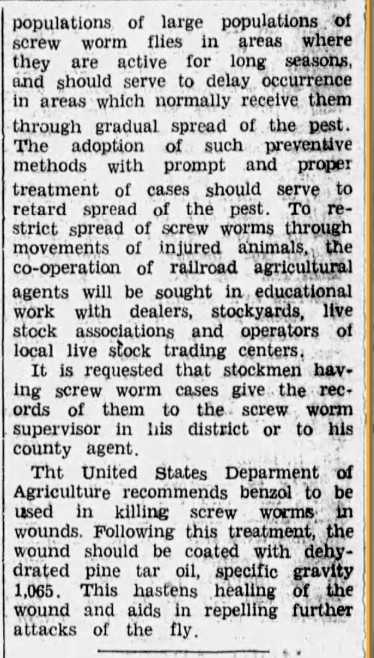
By 1939, the screw worm control agency was putting out relevant information to ranchers to help them control their population.
By 1958, the screw worm control agency had come upon a method of control that worked well; releasing sterilized flies. Since female flies only mate once, if they mate with a sterilized fly, there will be defective eggs that do not hatch effectively stopping the lifecycle. Since the lifecycle of the screw worm is very short, this method is successful in rapidly decreasing the population. The hard part, was getting the flies to the right locations. Farmers were not diligent in reporting locations of outbreaks, and so there was a great cost involved around tracking. A huge production facility for sterile flies was soon opened in Florida to much pomp and circumstance. The U.S. and regional eradication program from 1958 to 1986 cost approximately $650 million.
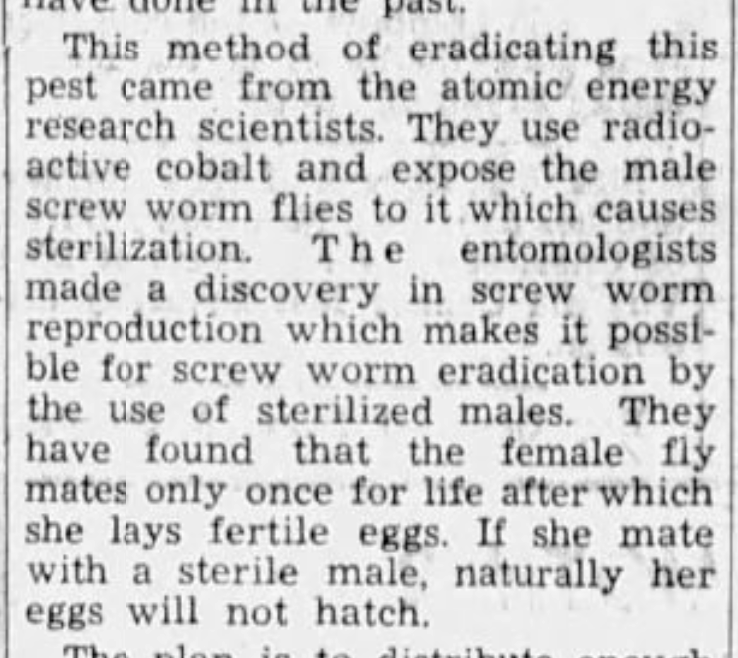
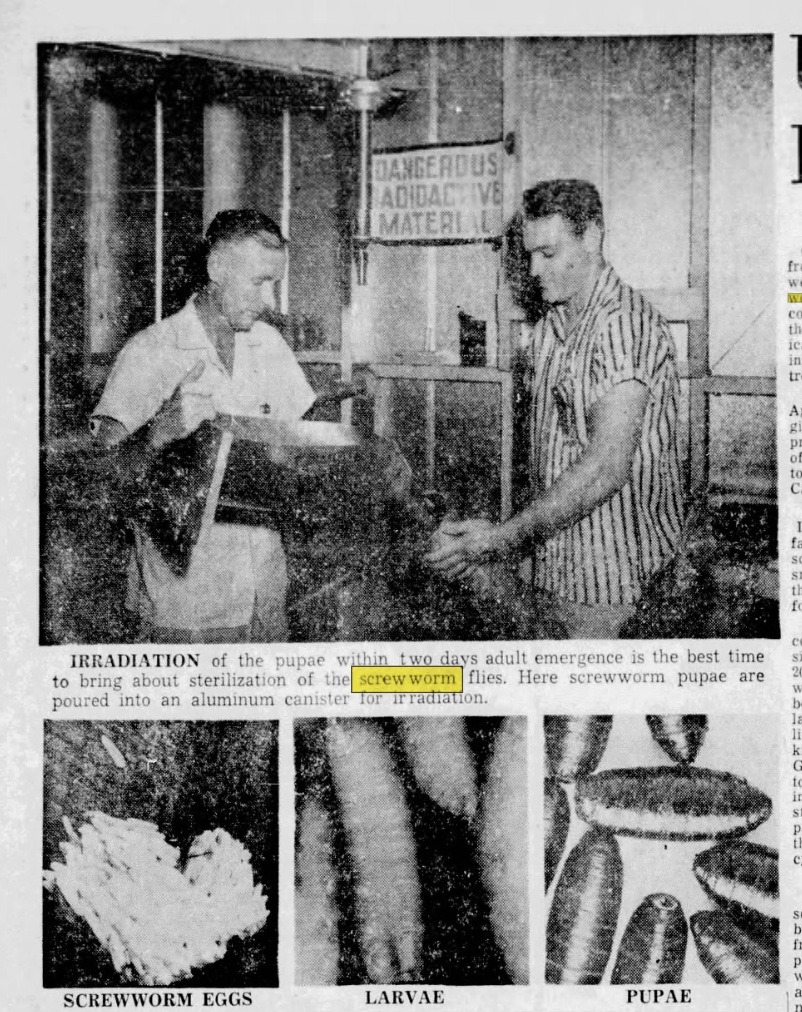
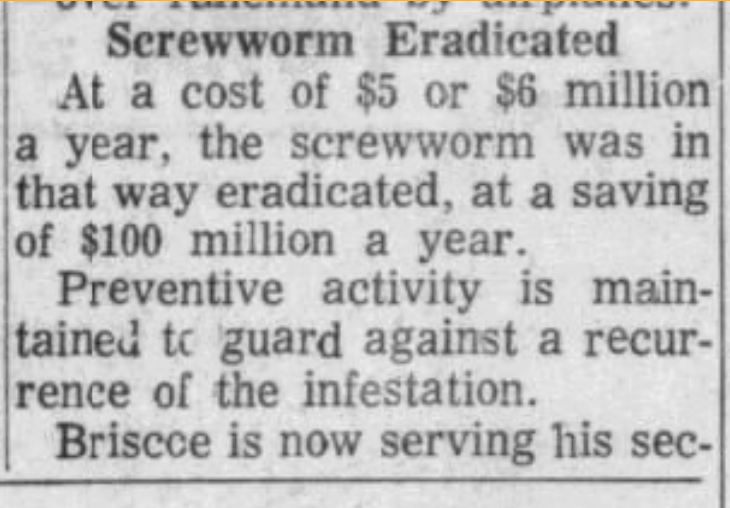
By 1966, after an incredibly costly battle, the United States had successfully “eradicated” screw worm; cases were still happening in other parts of the world, but essentially the barrier of sterile flies between the US and Mexico border has effectively kept them at bay. Since then, we’ve only had a small outbreak in 2016 -2017 in Florida, effecting Key Deer.
And so that, my friends, is the history of the screw worm. During this time, you can help your Texas and New Mexico shelter friends support their live outcomes by donating to help them cover the additional transport expenses that they may incur. If you are in a state without a ban on import, consider taking in Texas shelter pets. It’s safe as long as the pets are properly inspected for screw worm, which a health certificate would cover anyway, and treated with a medication like Nexguard.
And yes, I know I owe you the wrap up on the cat control book from 1916. Next week, pending any other outbreaks, you shall have it.
-Audrey

