Trigger warning: There’s a very unpleasant photo of deceased cats in this post.
I am very much of the opinion that no animal has a more complicated relationship with humans than the domestic cat. We have never quite known how to consider them in relationship to ourselves…which is part of the problem. Humans unfortunately think of everything in relationship to themselves.
Are cats companions? Nuisances? Pest control? Pests themselves? Bird killers? Playmates for kids? Yes, is the short answer, and it’s because of these complexities that today, still, controversies around how to live alongside them dominate so much of our industry. Still, our opinions of cats and our management of them has evolved over time. This month I’ve been down a bit of a rabbit-hole which began with unpacking the word “feral” itself.
Yesterday, I came across a document which seemed to deeply encompass every opinion anyone ever had about cats in 1916, and it’s that document I bring you today. We’re looking at a lovely piece of literature called “The Domestic Cat: Bird Killer, Mouser, and Destroyer of Wildlife. Means of Utilizing it and Controlling it.”
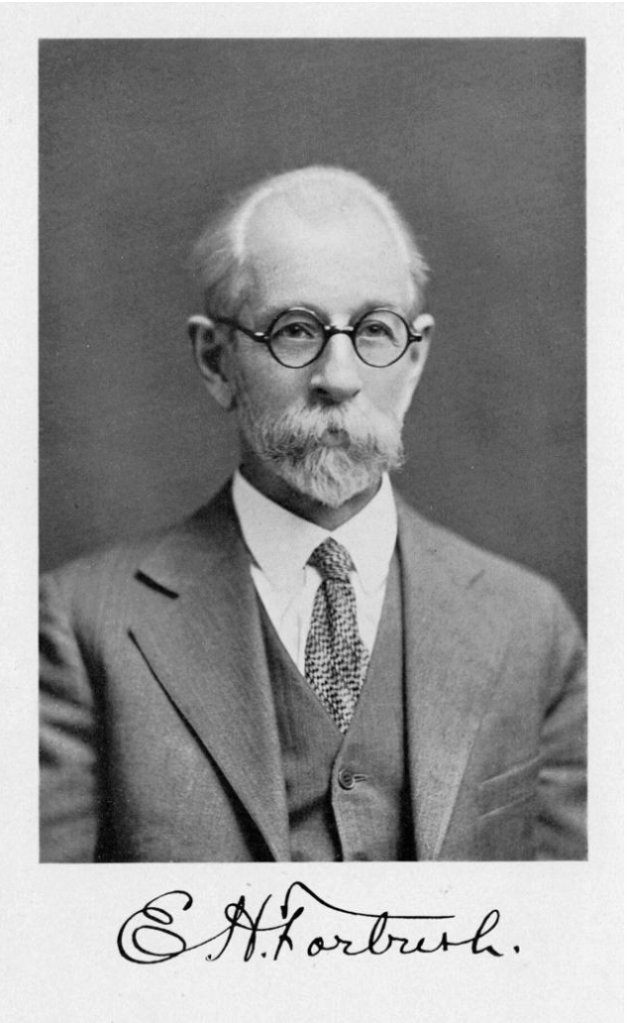
This piece was originally published by the Massachusetts State board of Agriculture, authored by Ornithologist Edward Howe Forbush. Forbush was born in 1858 and was the founder of the Massachusetts state chapter of the Audubon Society, as well as the author of several books that remain well known today, such as “Birds of New England.” Also, he had cool glasses.
You’ll know, of course, that the relationship triad of human, cat, and bird has always been a contentious one. In the aftermath of humans themselves causing the extinction of dozens and dozens of species of birds through hunting and the feather trade for millenary use, the poor cat somehow managed to surface as enemy number one to the Audubon Society.
For reasons that have mostly to do with wealth, who-knew-who, and power, the early Audubon Society and it’s branches had access to government in a way that “our” animal services did not – and to be fair, our animal services was not very interested in protecting the cat. In fact, I’d clock that interest as “almost none” during the time this piece was published.
As such, there are many examples of ornithologists such as Forbush recommending their methods of control of domestic cats under the umbrella of state agriculture divisions. While I’ve linked the entirety of the booklet above (and it’s an amazing read) today we’ll unpack a few passages.
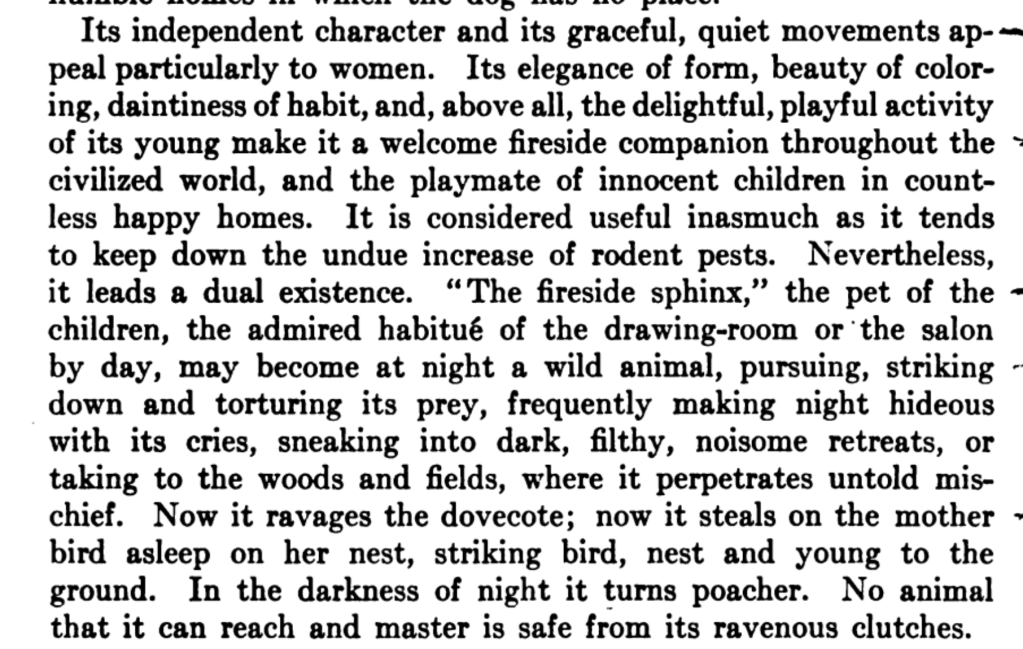
Well. Like I said. We had a lot of opinions about cats, and this passage illustrates it beautifully. Cats ARE beautiful creatures, and I don’t know of anyone who hasn’t admired their stealth and grace even if they don’t particularly want one on their lap. Here, the author is simply laying the foundation for the fact that cats are, indeed, complicated.
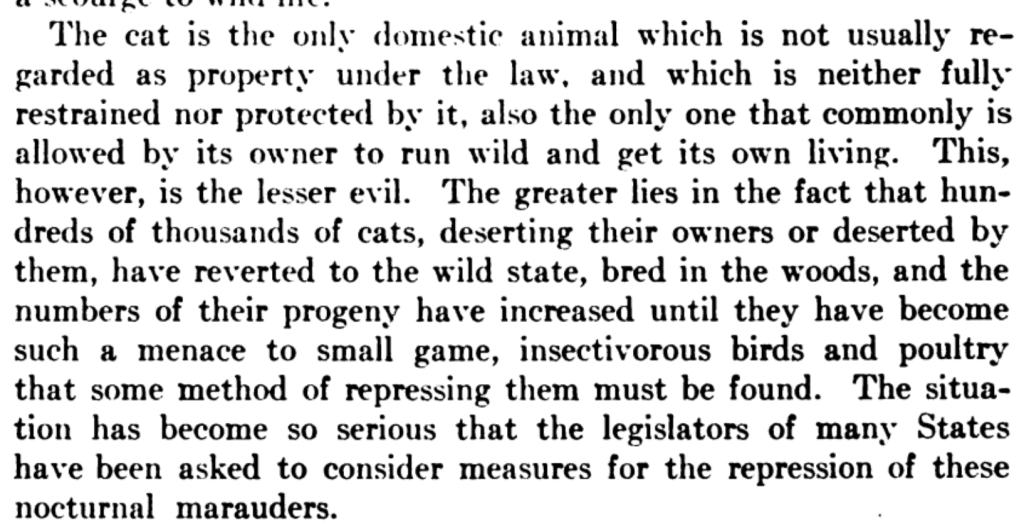
I thought that this passage was interesting in the sense that I’d never really thought about cats being unprotected as property (in function, if not under the cruelty law umbrella) and yet domestic. It’s often that I talk about animals being seen not as pet/livestock/wildlife early on but as valuable/not valuable. Our entire legislative foundation of anti-cruelty laws stem from Henry Bergh’s original adjustment to property laws, and our relationship with animals as property still is contentious today. One only has to look to laws about pets in divorce, or pets that have been injured by other animals, to understand that we have never quite figured out what exactly the worth of a pet might be. One of the reasons cats were then so controversial is that we couldn’t decide if they were valuable or not, and therefore we couldn’t decide if they should be protected or eliminated.
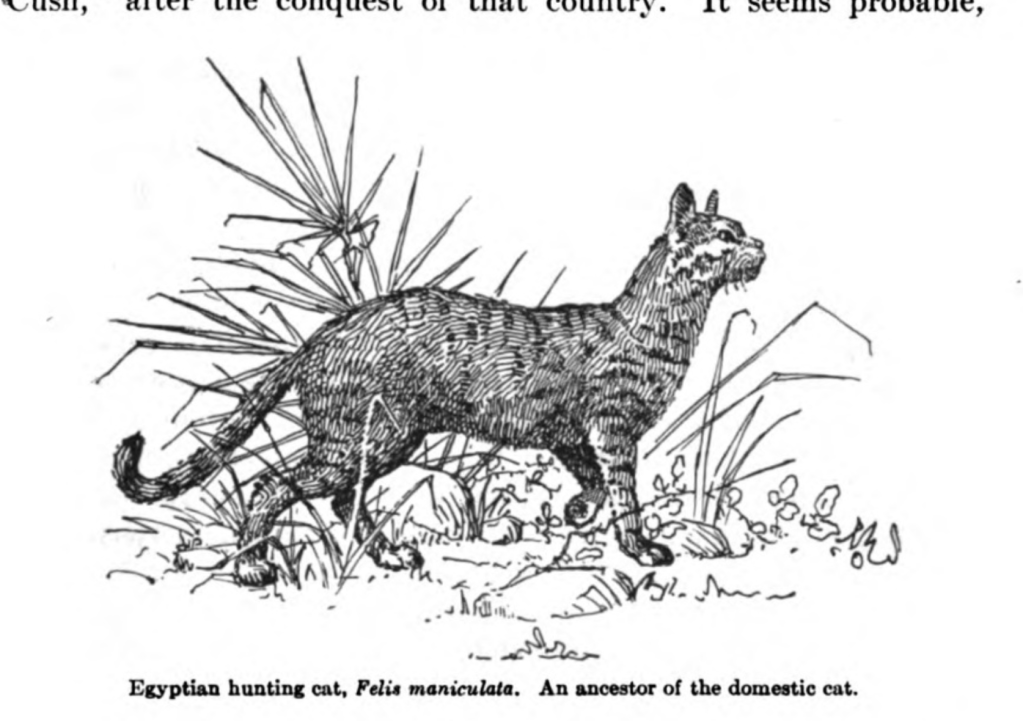
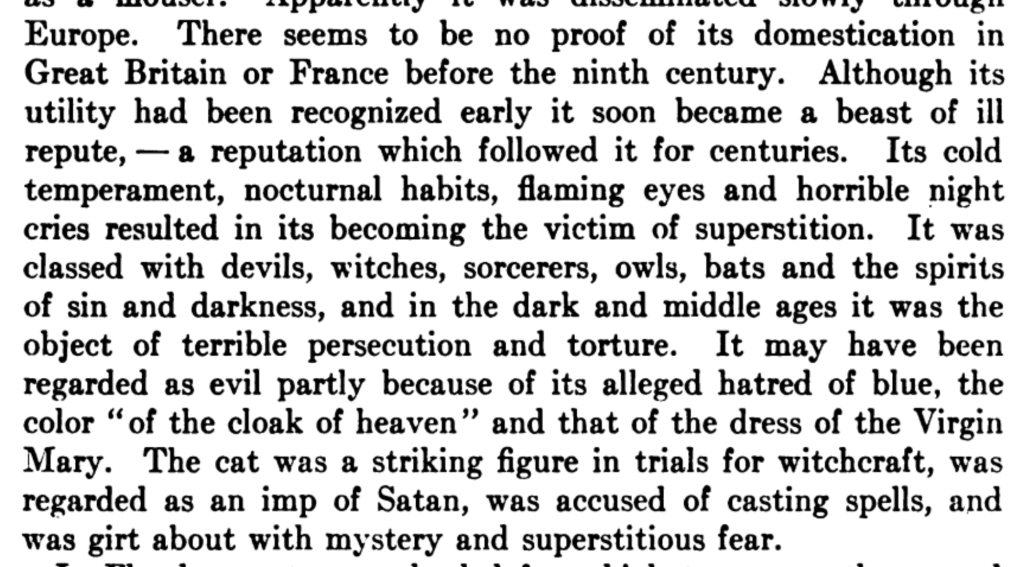
The author moves on to unpack the history of cats, and I have to tell you, you should go and read the whole section here, even if you don’t read the entire booklet. This was my favorite part. Here, though, I’ve picked this part out because, well, look not only at what he’s saying but how it’s being said. “It’s cold temperment, nocturnal habits, flaming eyes and horrible night cries” certainly convey the author’s opinion of cats, and also the opinion of many of the “bird people” who participated in publishing literature like this. Still, credit where credit is due, the historical section is absolutely incredible in this piece.
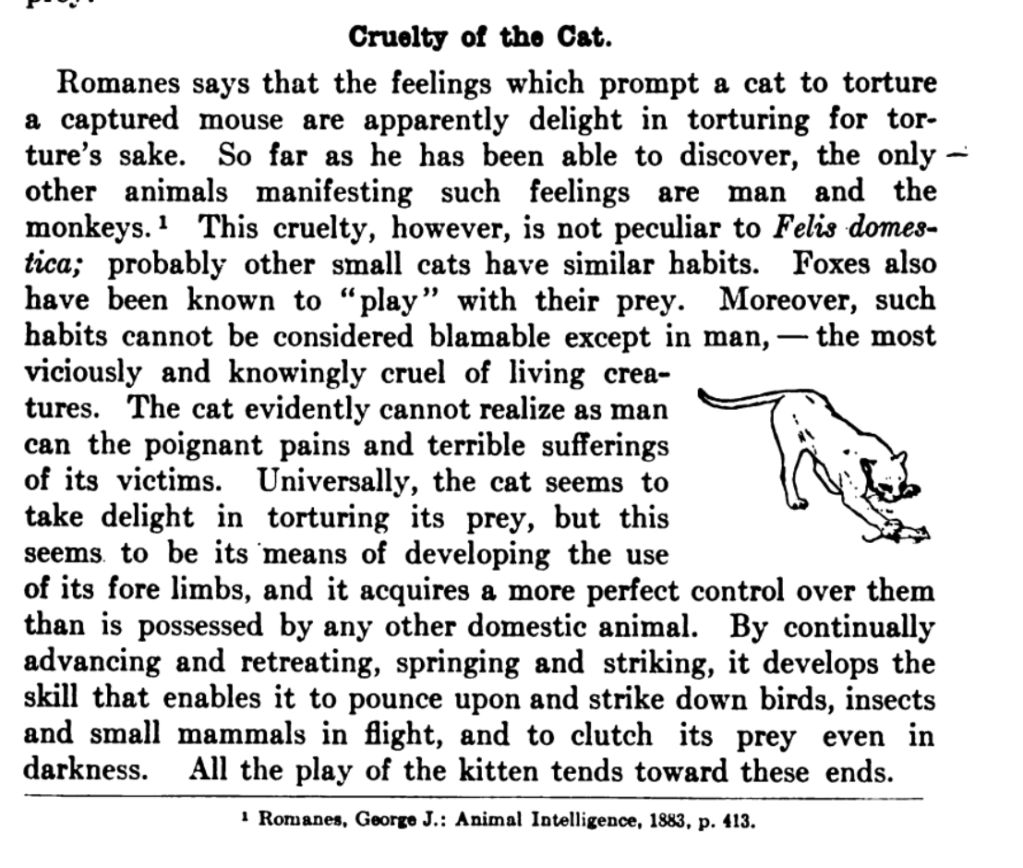
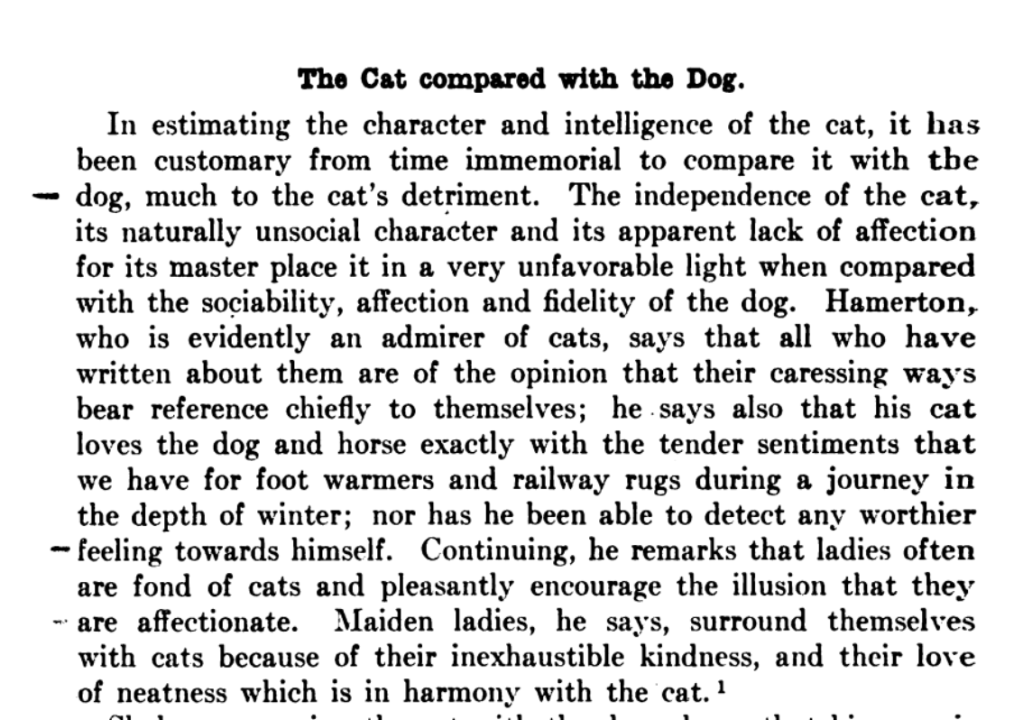
Next, we move to a section that unpacks the characteristics of a cat. Ruthlessly, the cat is described as cruel, unable to form affections with humans, and generally inconsiderate. Interestingly, there is an entire piece that compares cats to dogs. The gist of this section is that dogs are actually interested in having relationships with humans, while cats are not interested in relationships and only use humans for their own gain. Specifically, the section describes that women in particular are subject to the manipulations of cats.
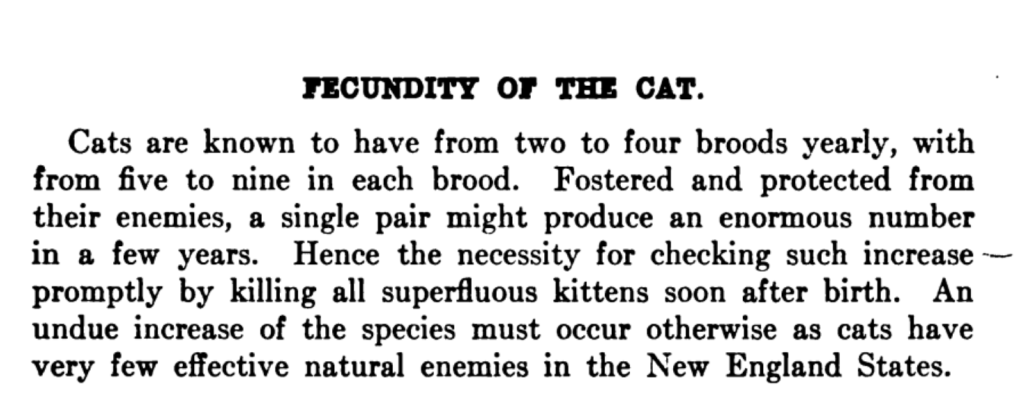
Next, we start to get into the specifics of control, beginning with this charming recommendation to kill all superfluous kittens.
Here, we start to see an attempt at alignment with animal services and the destruction of cats. Notice specifically that there is a sentence that includes the word “rescue” and the word “destroy” – humane death being touted as the only solution to the assumed suffering of the animals on the streets.
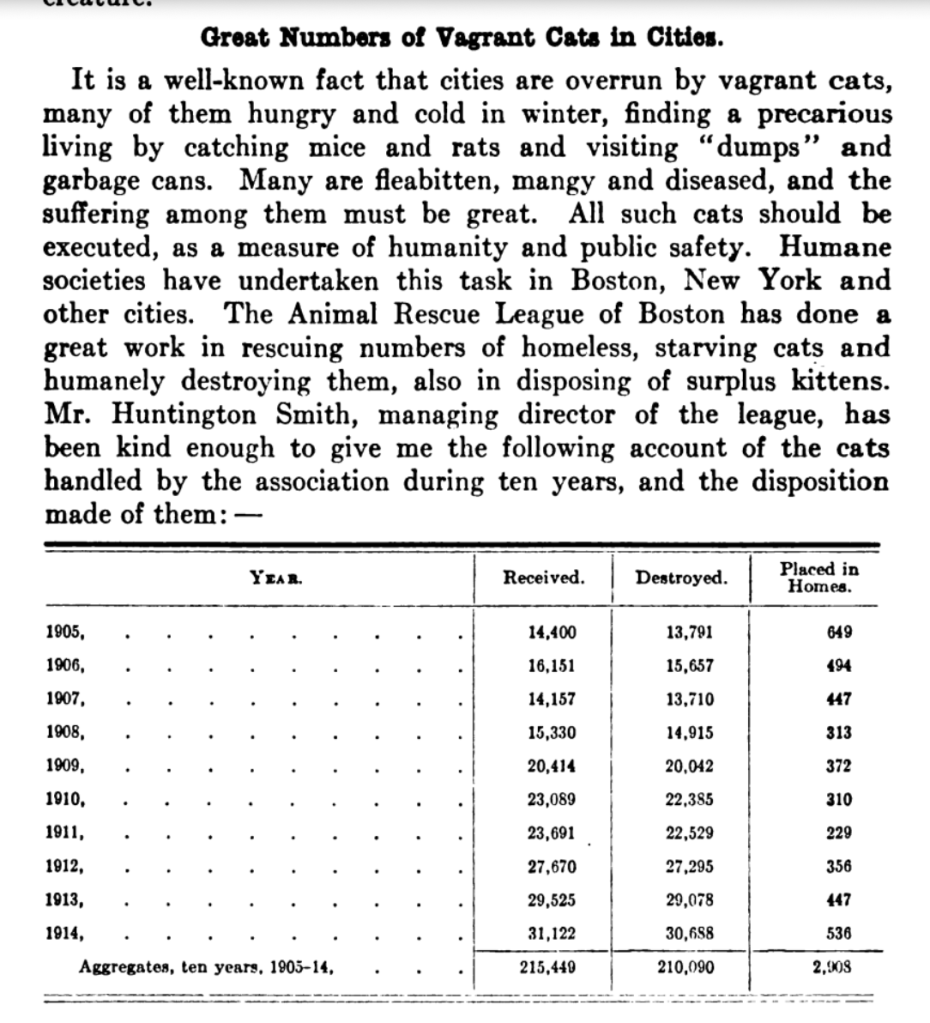
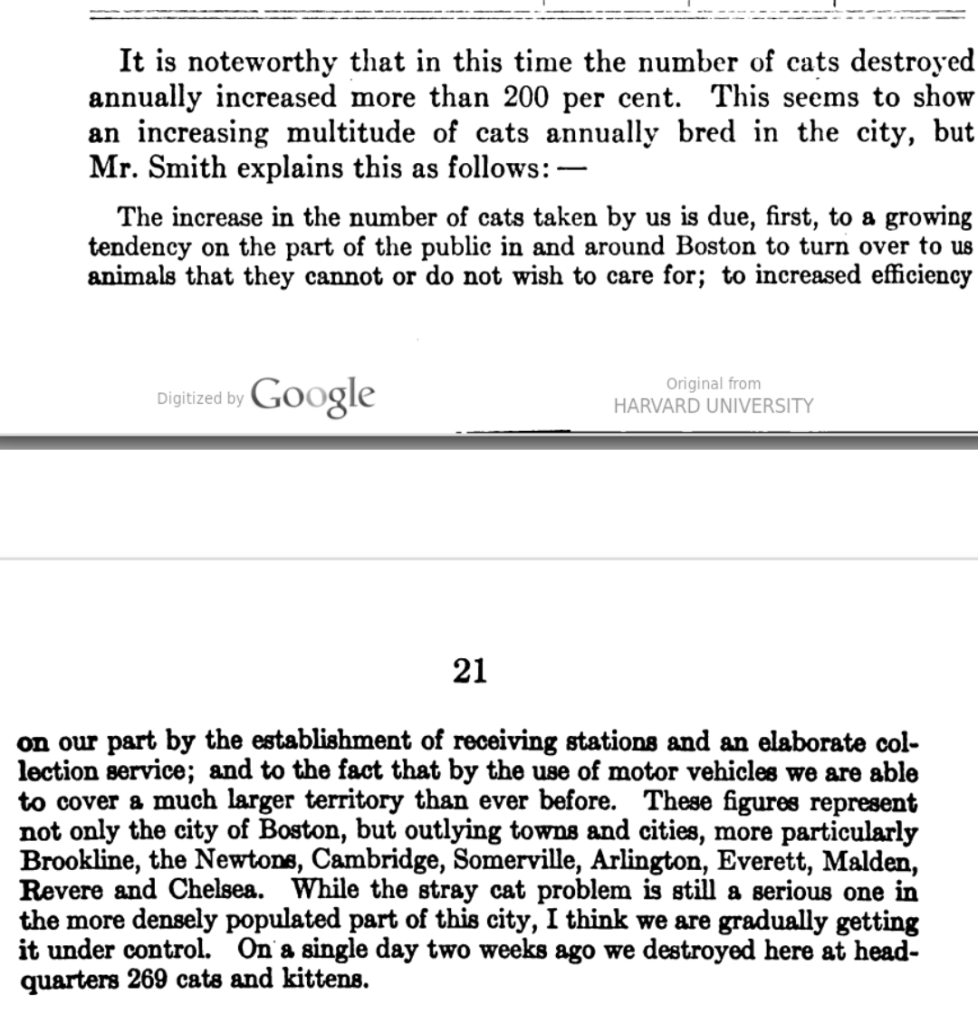
In the second section, we see an explanation of the increase of cats in the city. I’d like to quote my friend John here, because as true as it is today, it was true then. “If killing cats worked, they’d be dead by now.”
Following this piece, we transition to a section about irresponsible ownership and how cats “become wild.”
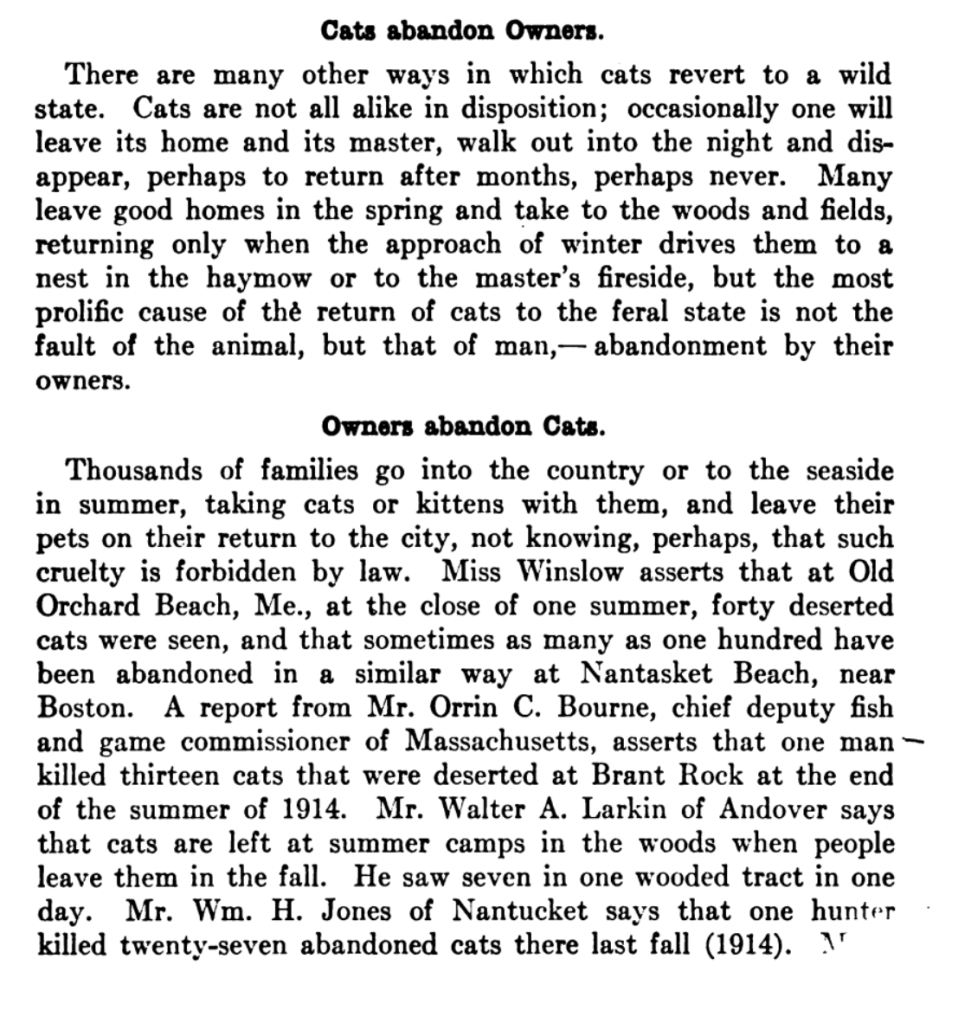
In another post, I unpack the “summer vacation” theory and how the humane movement campaigned to have people bring in either their own pets or strays to be destroyed before summer holidays. That logic is referenced in the above, and we slowly begin to transition from irresponsible ownership to the necessary destruction of cats to protect both environment and birds. I am now very curious what, if any, involvement the Audubon Society had in those campaigns, and that’s a rabbit hole for me to travel down another day.
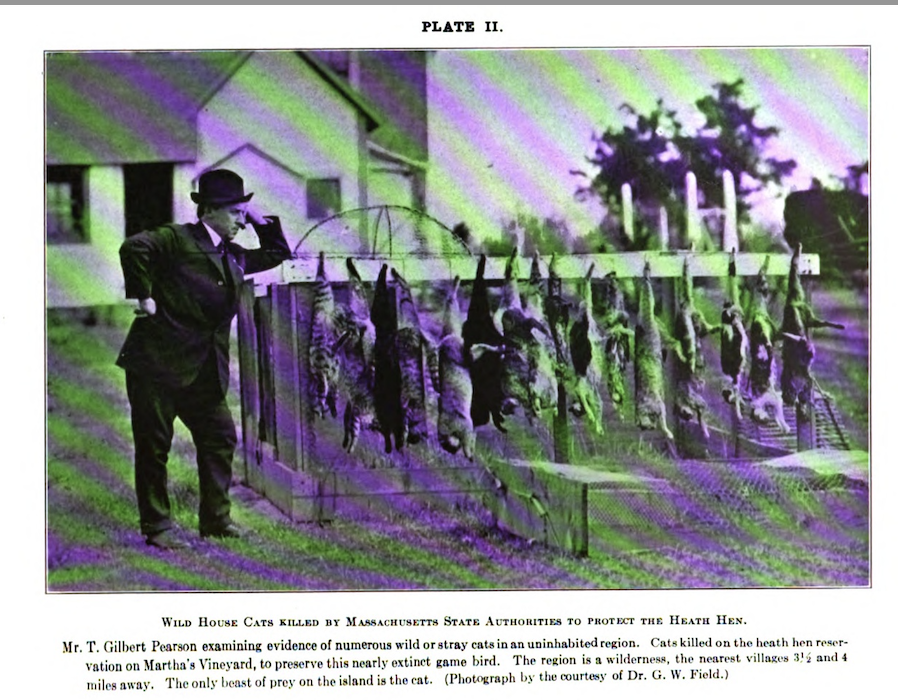
Next week, we’ll take a look at the second half of this booklet and learn just what sort of control was specifically recommended in 1916 by the Audubon society.
And with that, I do hope you enjoy your holiday weekend.
-Audrey


One response to “The Domestic Cat: Bird Killer, Mouser and Destroyer of Wildlife – Part One”
[…] of Wildlife” and you can check it out in it’s entirety here. You can also find part 1, part 2, and part 3 of the blog at the respective links included […]
LikeLike