
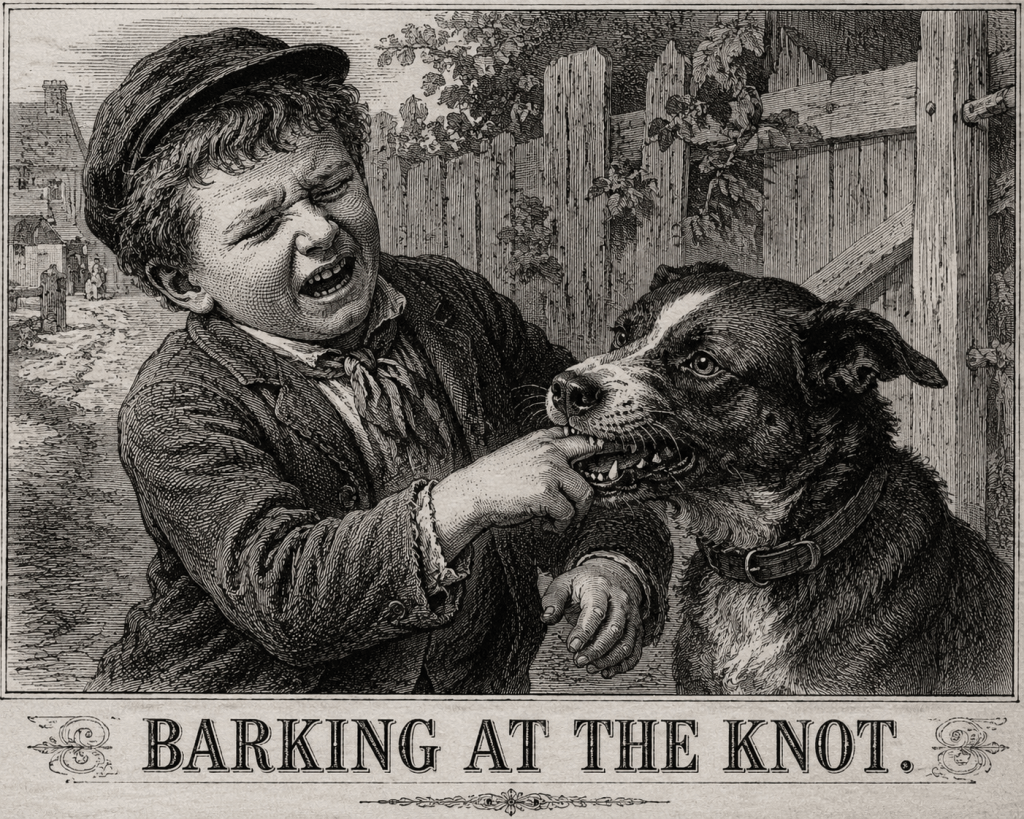
Hello, friends. I’m happy to be back after a bit of a necessary break. I wanted to offer a bit of context and let you know about some changes that will be coming to the blog. For the last year-plus, I’ve been extremely dedicated to publishing this blog on a weekly cadence in order to establish some searchable baseline context around the history of our movement. While building this site has been extremely rewarding, the reality is that the things I’m interested in writing about now are a bit further down the rabbit-hole of history than a week of research can accommodate between posts. In addition to that, I have found that some of this stuff is so horrific and depressing that it’s impacting my mental health. See example.

I took some time off in July to really think about the themes I want to explore and to reset. Along with a long list of specific subjects I want to dive deeper into, I also want to do some work on the gallery and archive on the website, and I have a bigger project idea on the horizon, too. I’ve decided that moving forward, at least for the next little bit of time, I’ll be publishing every other week or maybe even once every three weeks. That being said, this blog is not going anywhere. I’m very dedicated to keeping it as a resource for our movement and to document my own research. Thanks for understanding.
Moving on to today’s article – what better topic to come back with than your favorite and mine (OK, maybe it’s just mine)…it’s rabies! (Who is surprised? No one!)
Dr. William Brady was an extremely popular physician and medical columnist syndicated in newspapers across the country. Born in Canandaigua, New York, he wrote his syndicated column for more than 54 years, beginning in 1914.
For the purposes of today’s piece, I want you to think of this guy like a viral (no pun, I swear) influencer, because effectively, that is what he was. His column appeared just about everywhere and was widely read. And let’s think about what he has to say in terms of how influencers can spread information today, which may or may not be true. What do we take as gospel?
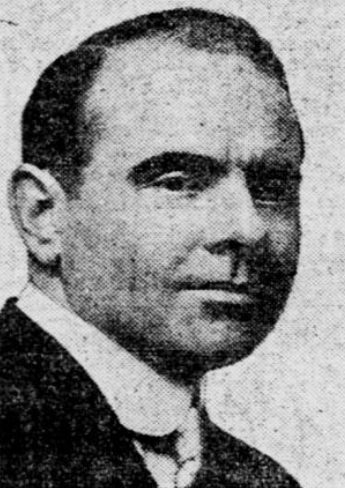
William Brady was often criticized by other physicians for giving very unorthodox medical advice that sometimes flew in the face of proved scientific theory. This quote is directly from the a 1946 article in the Journal of the American Dental Association:
“For years Brady has tried to pit his stupid assertions against tested scientific knowledge; he has often given dangerous advice that could have a serious detrimental effect on those who heeded it. Time and again leading medical and dental journals have called attention to Brady’s inaccuracies and proved them to be such, but for some reason otherwise reliable newspapers have continued to print his notions and superstitions as a guide to sound health.”
His column follows a format that most of us are familiar with; someone writes in for advice and the columnist answers. In July of 1934, he received the letter below about a young boy with a scratch from a dog. Let’s read the article and then compare his uh, medical knowledge with what was known at the time.
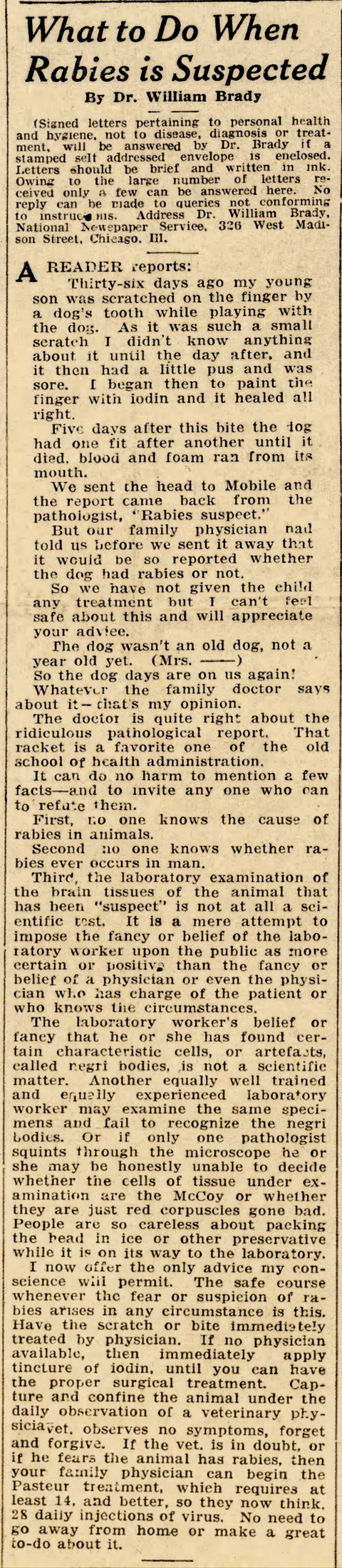
“No one knows the cause of rabies in animals.”
Well, this is a wild statement for a doctor to make in 1934. This is something you commonly might have seen prior to about 1910 when the Pasteur treatment began to be an accepted treatment for bites. Louis Pasteur had proved that rabies was transmissible between animals due to a virus. True, no one had seen the actual virus yet because the appropriate microscope had yet to be invented…and while some people had difficulty accepting that a viruses existed at all and were therefore the cause of the disease, those folks tended to be of the “folk medicine and religion” ilk. By this time, science had proven that there were viruses, and a virus was what caused rabies. Doctors, for the most part, were working to convince people that science was accurate.
“No one knows whether rabies ever occurs in man.”
Er…at this point, thousands of cases of hydrophobia linked to animals had been documented and in fact, by now, there were concerns that ill-produced versions of the rabies vaccine itself, known to be simply attenuated viral material harvested from rabid animals, could cause rabies in humans. So yeah, we did know that.
Laboratory examination of the brain “is not at all a scientific test.” Negri bodies “may simply be artifacts.”
The scientific examination of the brain to determine rabies was common in 1934. The brain was sliced and examined under a mircoscope for “negri-bodies” – they look like this:

Negri bodies were first discovered by Italian biologist Adelchi Negri in 1908, but he called them “brain lesions” and thought they were the causal agent of the disease itself. Slightly later, Anna Wessels Williams and other researchers determined that negri bodies were useful as a diagnostic tool, even though they were not the causal agent. By 1934…they were a thing that science accepted widely to be the primary way to diagnose rabies. And while it’s true they were not always present, if they were present, it was certain that rabies was present too.
“Capture and confine the animal under the daily observation of a vet-physician and if the vet observes no symptoms, forgive and forget.”
So here, since it was accepted that dogs carried rabies and this was well before dogs began being vaccinated, it was recommended that every dog bite be treated with the Pasteur treatment immediately. After ten days or so, the virus may have progressed too far for the treatment to be effective, just as today. And yet the incubation period could be months. This is not only bad advice for 1934, it’s potentially deadly.
All this to be said, he does eventually say that if the dog is indeed rabid, your local doctor can provide the Pastuer treatment but there is “No need to go away from home and make a great to-do about it.”
We may never know what happened to “Mrs. -“‘s bitten son. Let’s hope that the early treatment of his finger with iodine was enough to kill the initial traces of the rabies virus before it progressed.
My point here, friends, is that while “influencers” may have a following, it’s important to listen to fact, reason, common sense, data and science before we take what they are saying as gospel.
Too often I see “influential people” parroting something idiotic without even slightly understanding what it is they are communicating about to thousands of people. This “documentary” trend on tik-tok is a recent example grating on me deeply. Media, now and in the past, has always given permission to people to say anything and portray themselves as an expert. It’s not the quality of the information that people are receiving that matters in this context – it’s the amount of people who follow them and repeat their words or share their posts. In this age of amplification, it’s even more important that we make an effort to retain the critical thinking skills that humans were blessed with. Dr. William Brady is a great reminder of what can happen when we don’t.
Until the next time,
-Audrey

