This week I had a conversation that I’ve had many times. A neighbor’s relative was having some trouble with cats in her yard, and I was tapped in to help. A new house, 7 feral cats, one momma with brand five new kittens born near the road, two more potentially pregnant females, and an angry neighbor. If you’ve been in the industry, you know it well.
I was a little out of practice, to be honest. My first shelter job was at a cats-only animal shelter and I had a TNVR conversation about ten times a day then. Still, like riding a bike…I explained the concepts of TNVR, how to build a feral cat house, wait ’til 8, rehoming kittens yourself. It turns out that I was not the first person she had talked to; I was the fourth. The three folks before me had told her the same thing. One person affiliated with a rescue had offered to come help with the TNVR. Provide the traps and food, pay for the surgeries. She had offered advice about moving the kittens to a safer location. The shelter had offered to intake the kittens when they were older.
Our caller referred to the rescuer by quite a colorful name, angry for the suggestion that the kittens be kept in her garage until they were a bit older. She simply wanted the cats removed.
She said to me “But you are the shelter. That is what you are supposed to do is remove them.”
Me: “The shelter is not a safe place for feral cats. If the cats come to the shelter, they don’t have an option for adoption because they are not pets. They are wild animals.”
Her: “So, what, these cats are my problem?”
Me: “It sounds like you want to help them. No one is going to come and remove the cats, but we are still offering humane help. If you want to help the cats, you will have to participate. They are a community problem, and all of the community has to participate in the solution.”
In the end, I sent her some information and suggested she call the person back who had the resources to complete the trapping project for her. I’m not sure what will happen. But I do know that realistically, she probably is going to participate in the TNVR process because she was worried about the kittens, she didn’t want the cats to die, and it’s the option that’s available to her.
This is what reframing expectations for the community around what animal sheltering looks like – even with a topic as widely accepted as TNVR. It reinforced for me exactly how well trained the public is to expect catch and kill.
It’s messy. It’s uncertain. It’s frustrating. I was really grateful for the conversation because working nationally as I do now, it’s easy to forget just how stressful and time consuming each individual situation can be. S
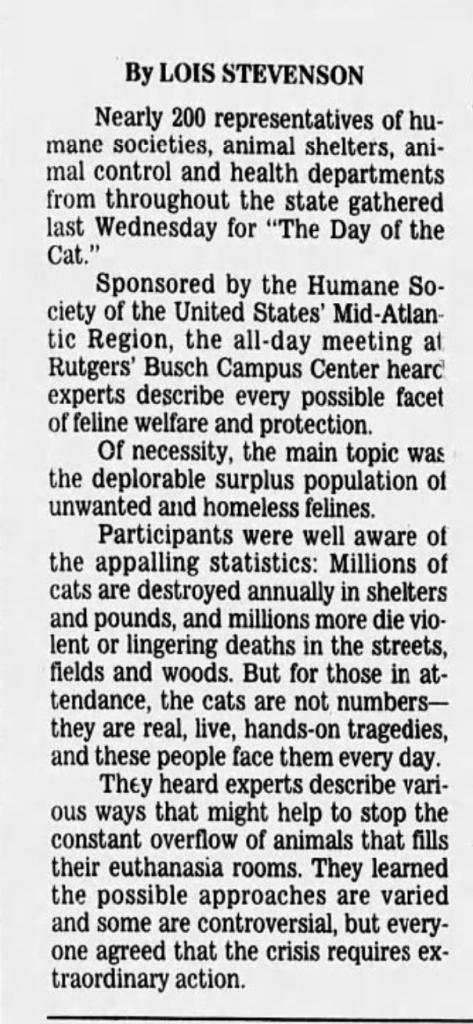
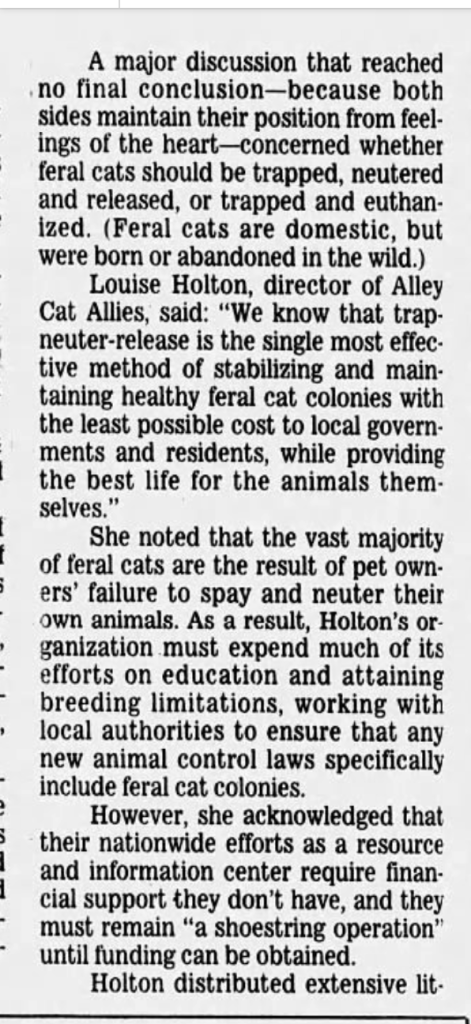
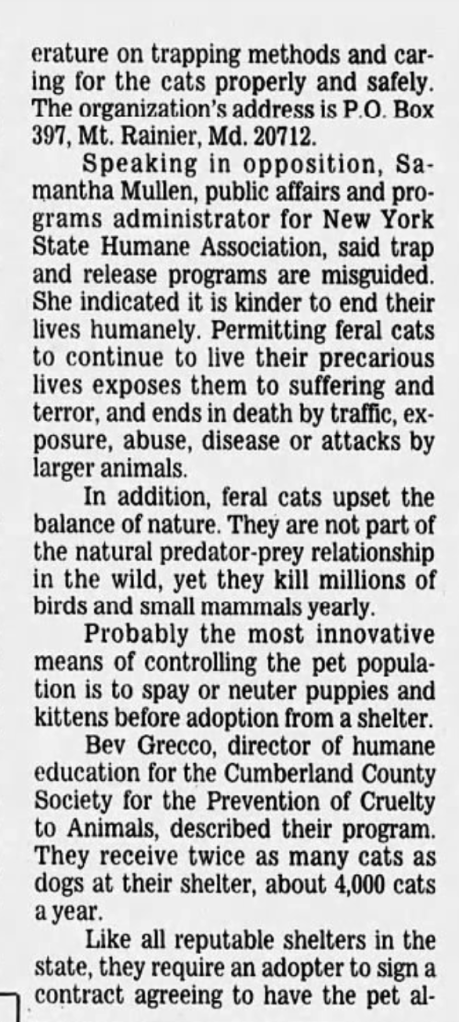
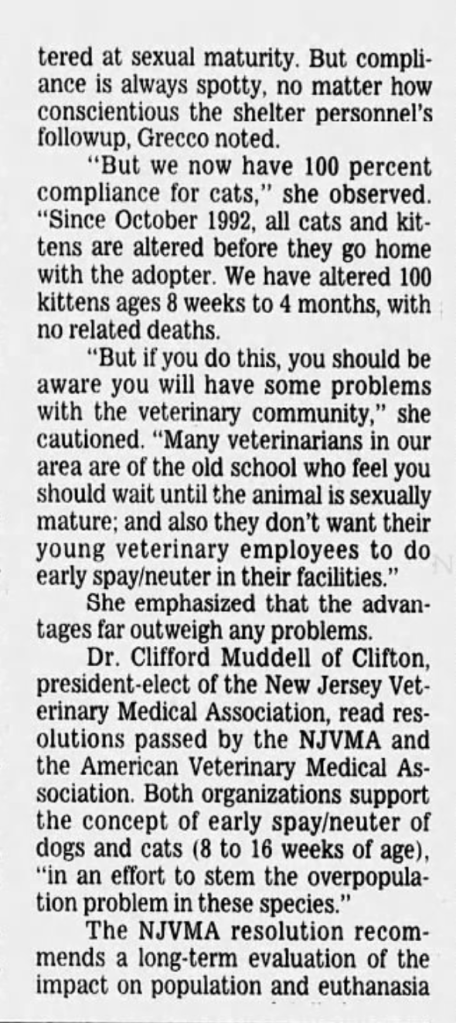
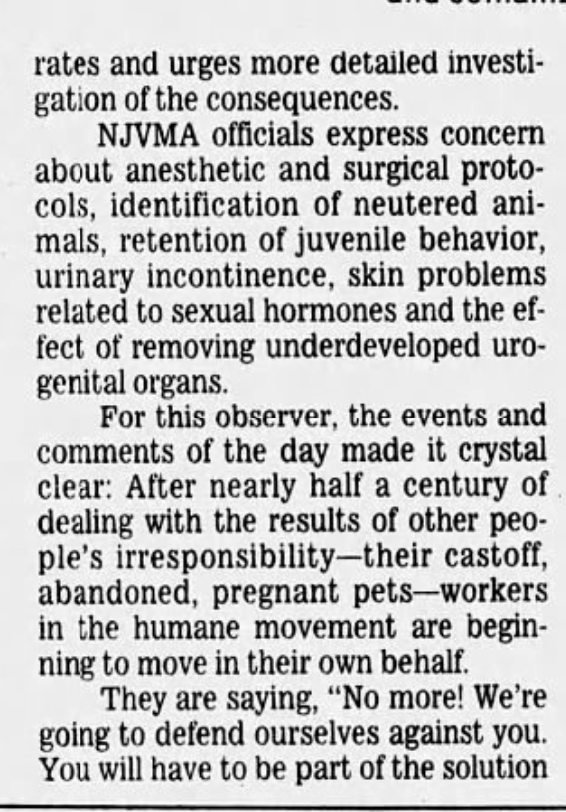
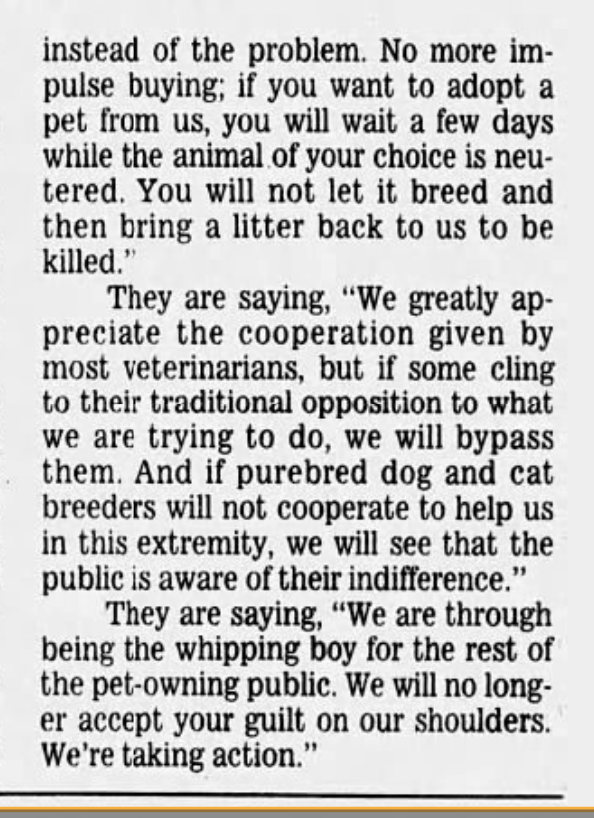
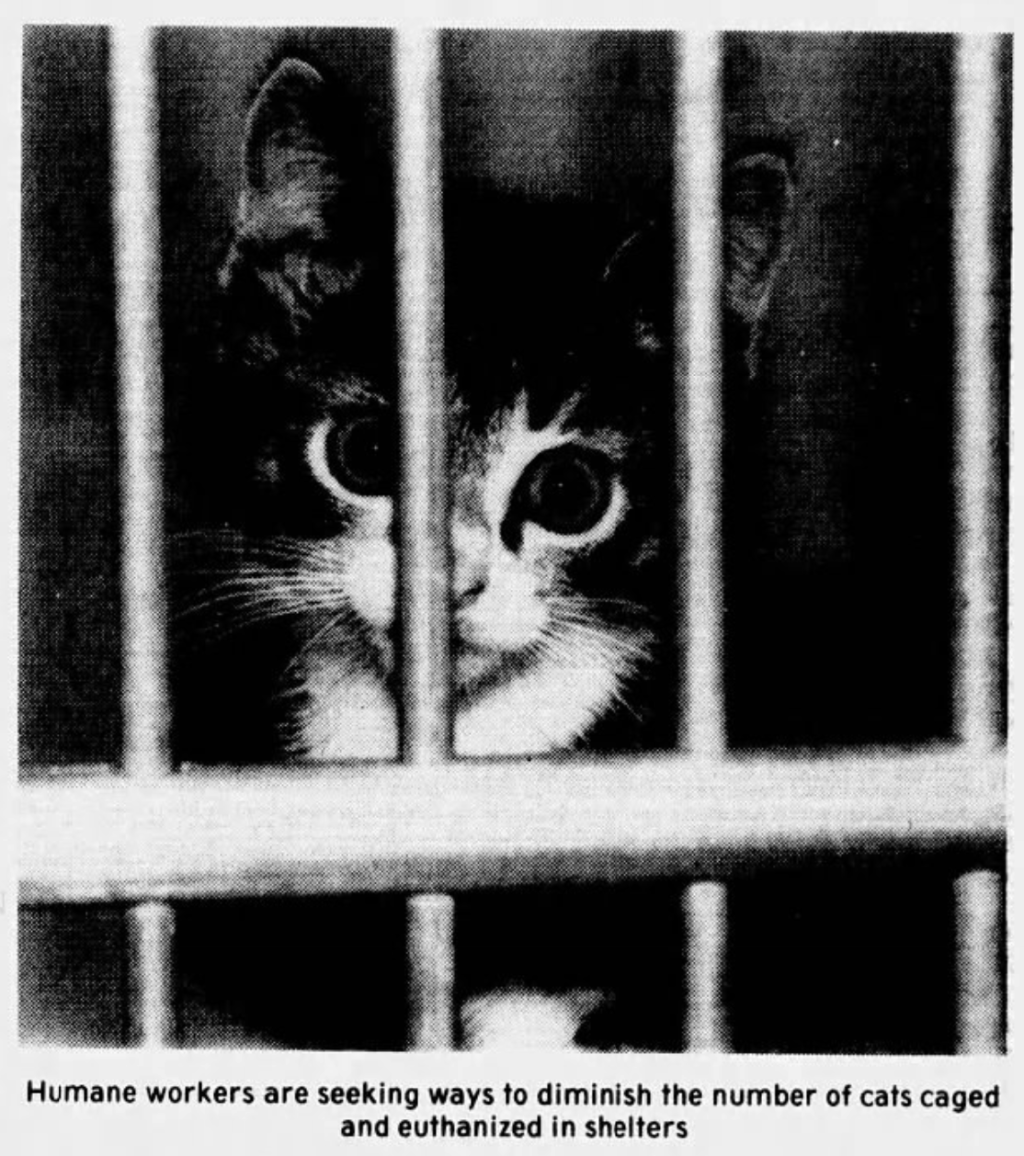
ince TNR and changing expectations was on my mind, I am bringing you this piece from 1993’s Star-Ledger, covering an event called “The Day of the Cat.”
It provides a deeper look at a conference held in 1993 by (then) The Humane Society of the United States surrounding cat issues taking place in shelters. It’s long, so I’ll leave you to read it. Let me know what stands out to you.
-Audrey