On April 5, 1943, Mrs. Josephine Rosa, age 55, was bitten by her own three year old fox terrier and treated at a local Cleveland hospital with anti-toxin. It was the first recorded case of rabies in Cleveland in two years.
Ohio, like most of the midwest, was no stranger to both rabies outbreaks and dog quarantines in the 1940s. 1943 was a time when rabies vaccine as a preventative for dogs was still highly controversial and not widely recommended.Leslie Tillotson Webster’s book, Rabies, intended to be a resource for government and animal control across the country, had just been published to great influence, and within it was a recommendation against using the rabies vaccine as a preventative for dogs due to lack of evidence of it’s effectiveness. I unpack that here, if you’re interested.
During this time, if a rabies outbreak occurred, in most places and especially in Ohio, a dog quarantine was the usual course of action. During a dog quarantine, the community is notified that any dog off leash will be rounded up and destroyed. The quarantines usually lasted anywhere from 30-90 days and, in alignment with the newspaper hydrophobia days of old, were covered heavily by print media. Today, I’m going to explore one such outbreak in Ohio, centered on Cleveland.
Just days after the first incident, on April 8, The Cleveland Press reported a second rabid dog, picked up as a stray in the University Heights neighborhood. Meanwhile, just over the line in neighboring Lake County was already under a quarantine and rounding up stray dogs. Just that day a rabid dog had been discovered in the community, having been imported in from Texas. Lake County dog warden Dale Rust reported 10 arrests for quarantine violations and 70 strays rounded up.
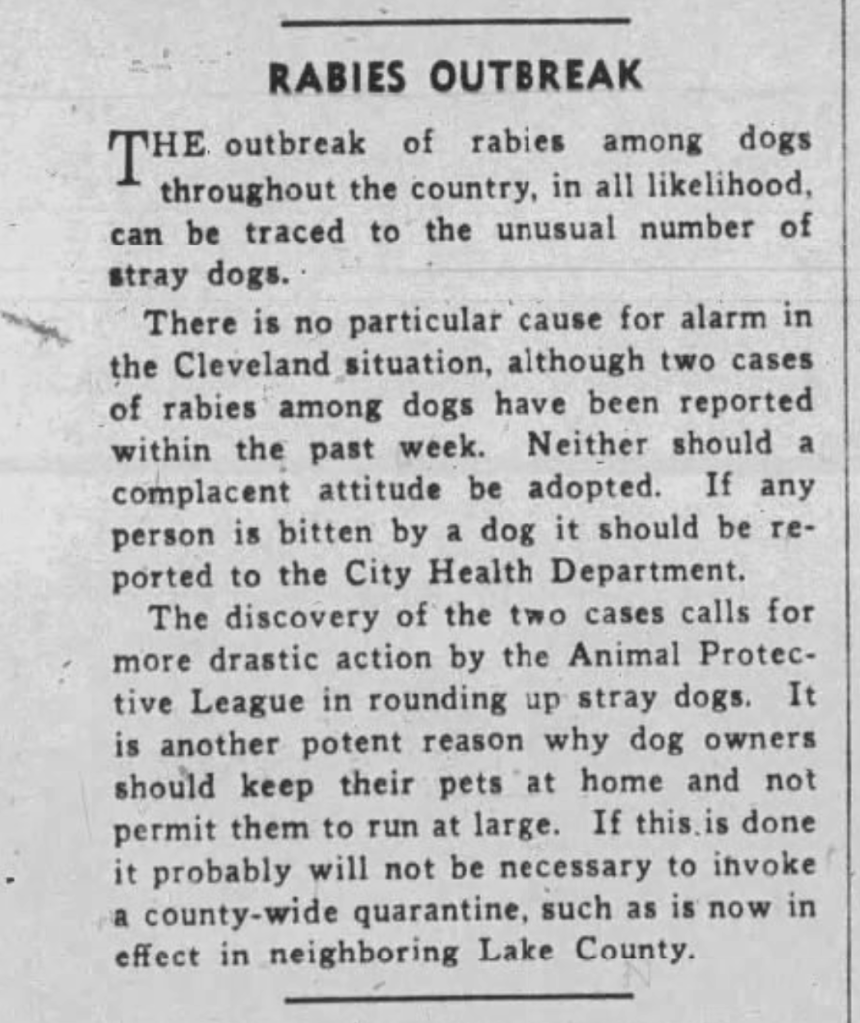
Still, Cleveland held off a quarantine, issuing this message to residents on May 9th via The Cleveland Press.
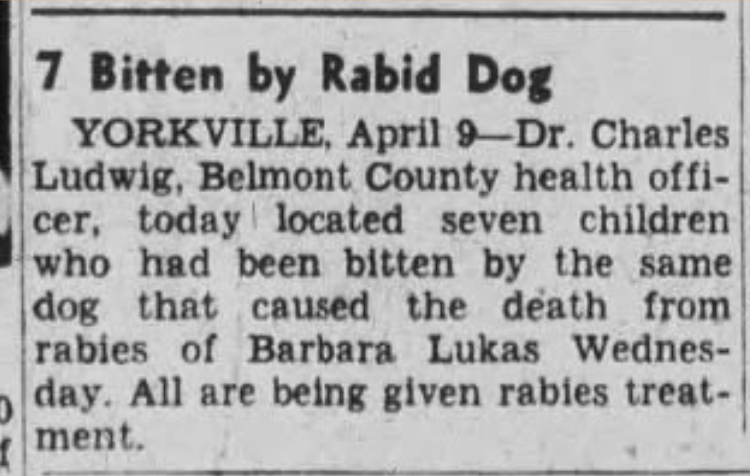
The same day, in the same paper, this small blurb mentions 7 children bitten by the same dog in Yorkville, a community located south of Cleveland near Wheeling, West Virginia.
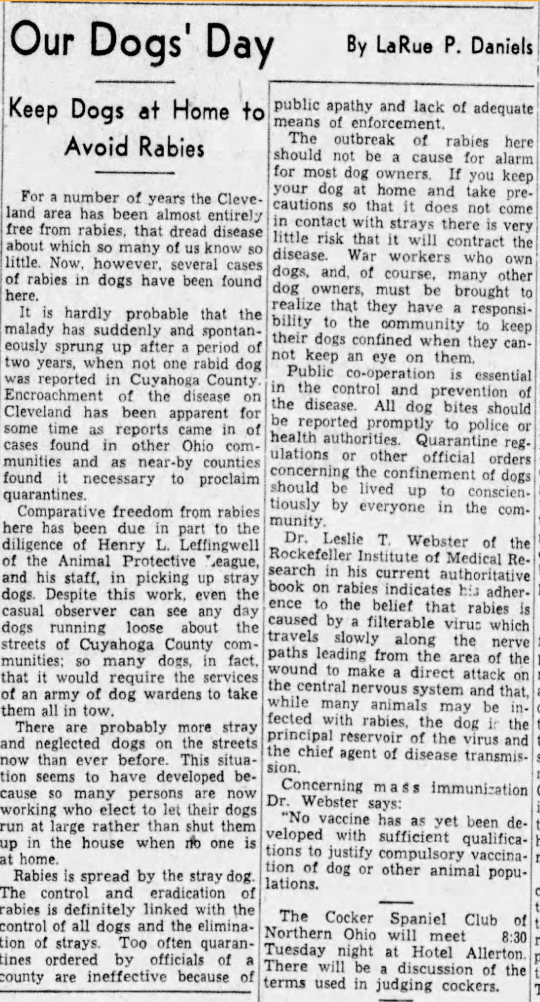
By Saturday, local Cleveland paper The Plain Dealer had published a piece praising the efforts of the local animal shelter director Dr. Henry Leffingwell, and his staff, for thier diligence in picking up strays. (And also, curiously, that the local cocker spaniel club would be meeting Tuesday night at 8 at the Hotel Allerton. Don’t miss it.)
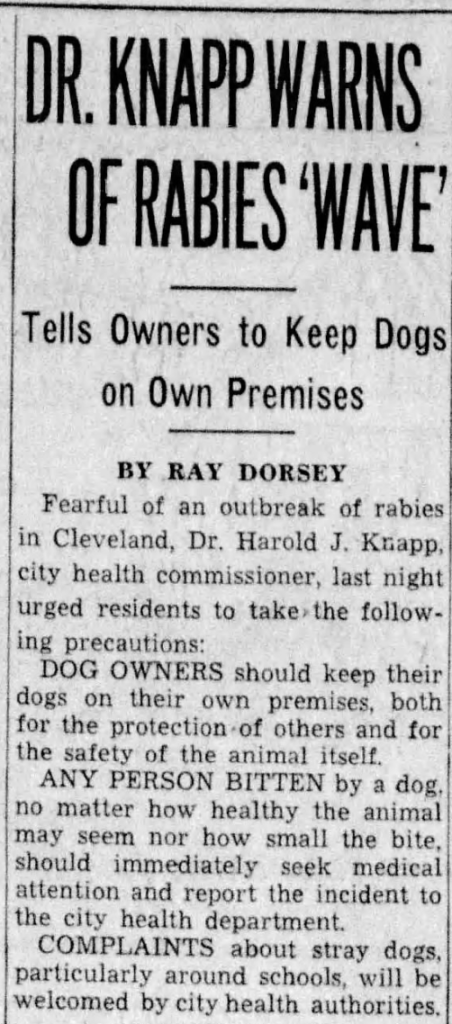
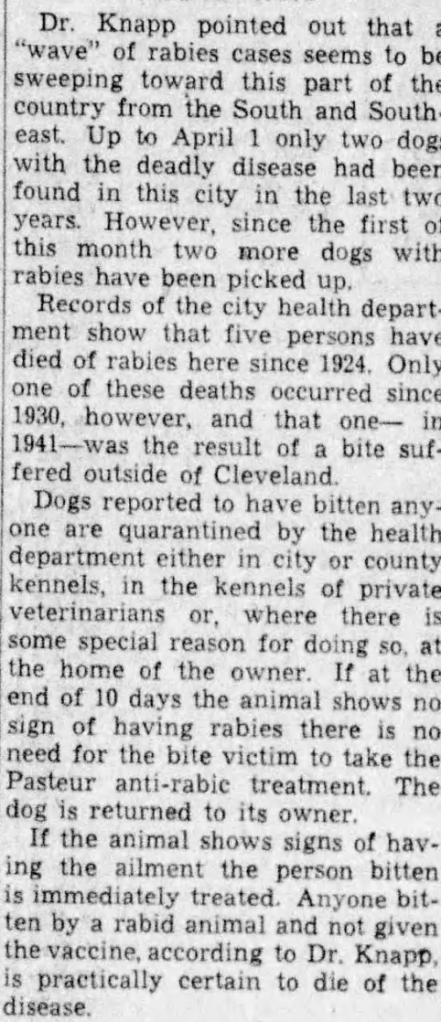
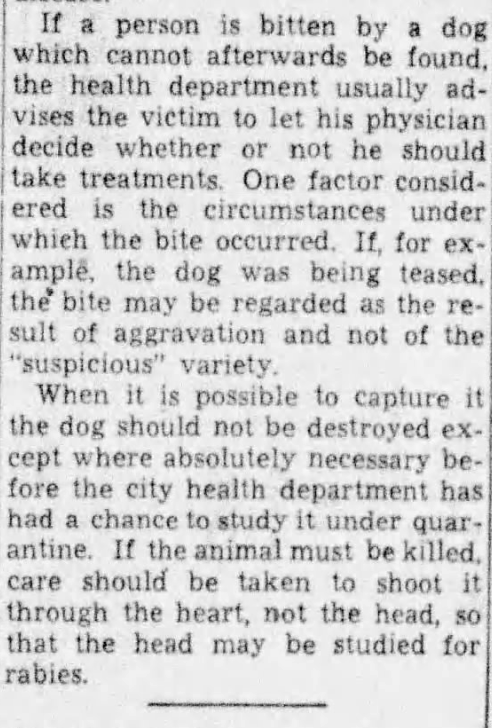
And on Sunday, the Plain Dealer published an additional piece after interviewing city health commissioner Harold J. Knapp.
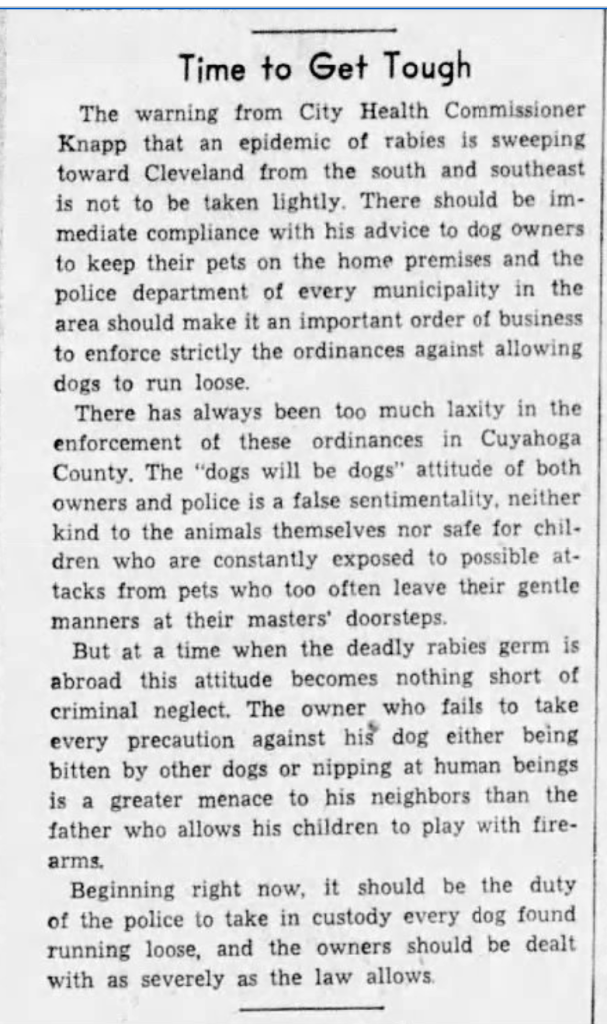
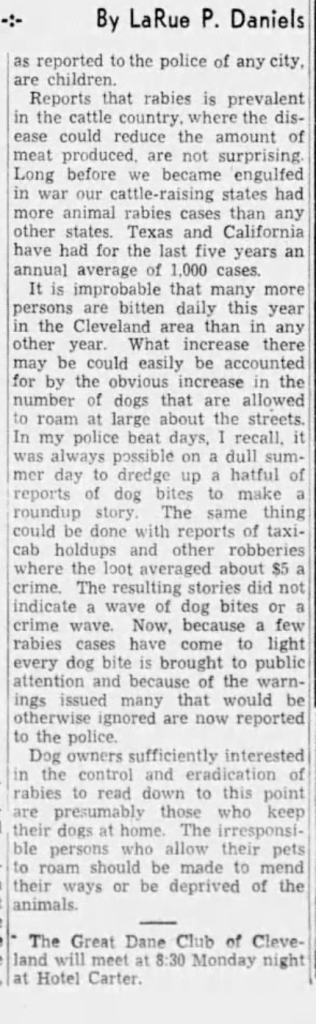
By Monday, the Plain Dealer published this…piece. I can’t quite tell if it’s supposed to be an op-ed or what, but the author recommends police step in to enforce the ordinances. He has a…unique opinion on the dangers of dog owners who let their pets run at large.
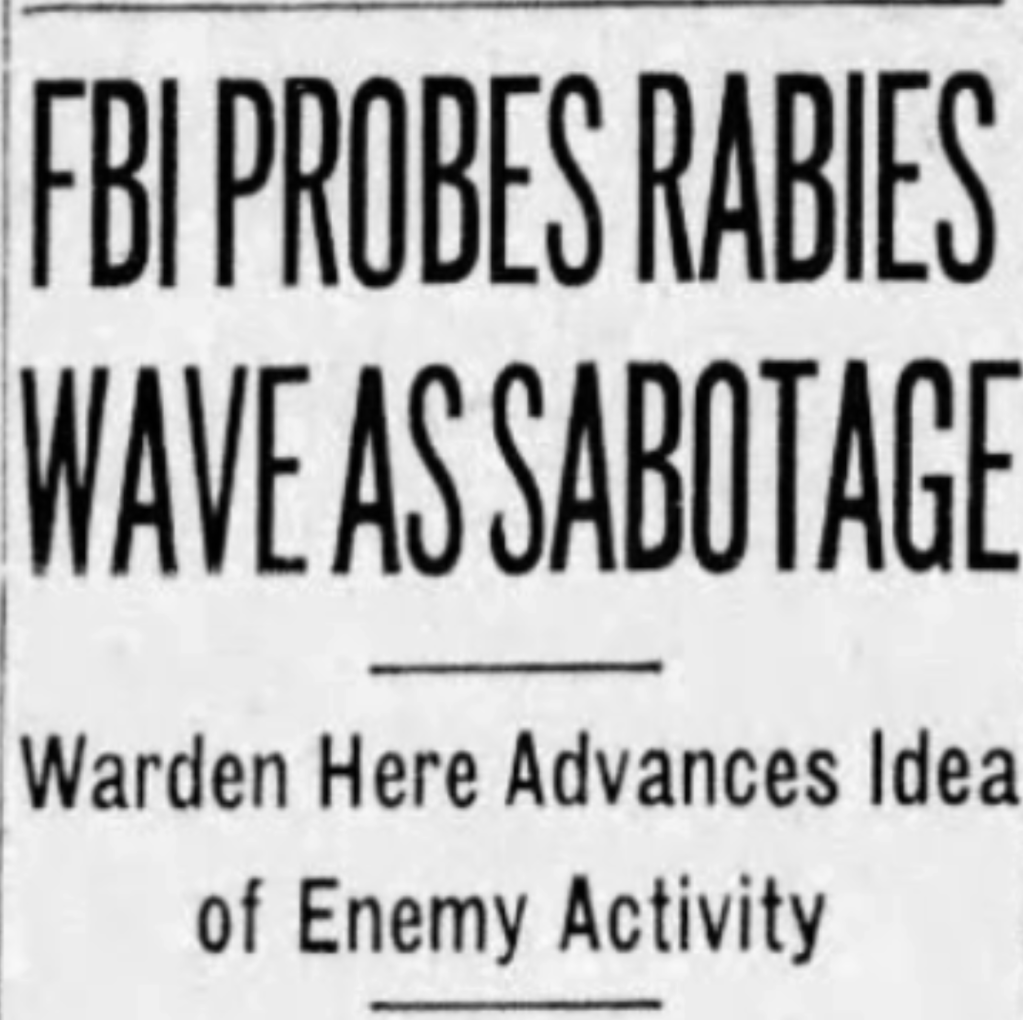
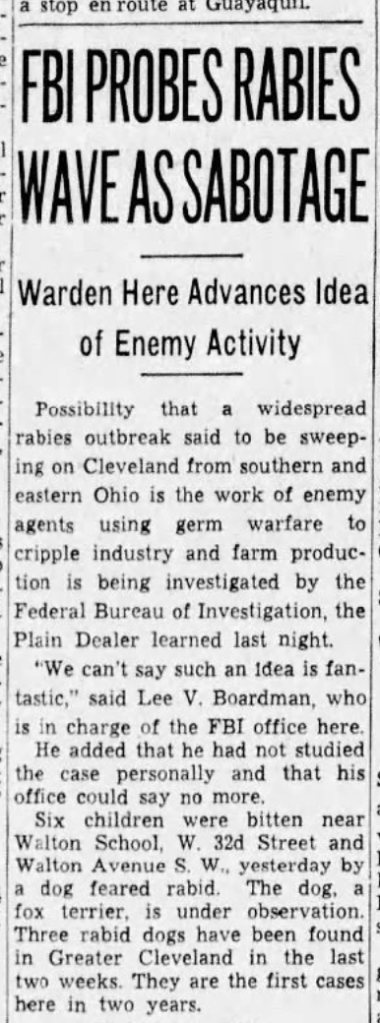
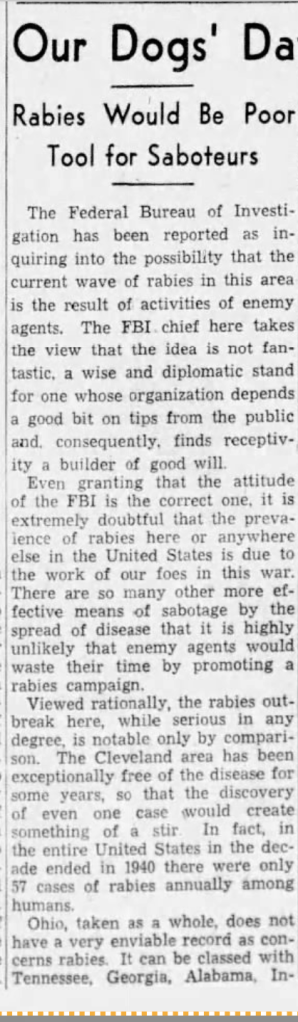
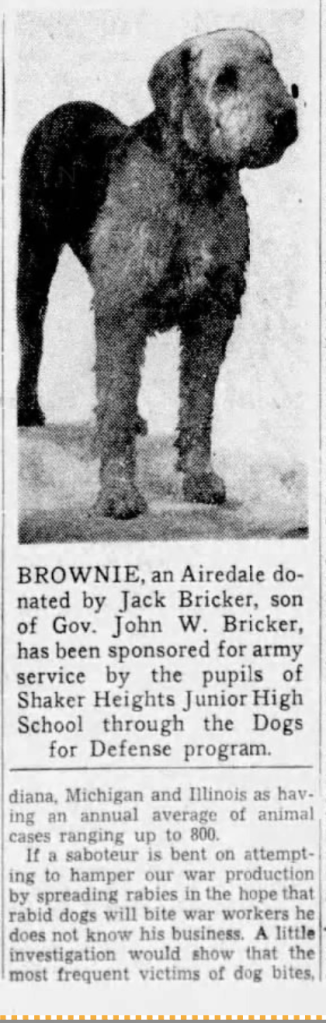
And on Thursday, April 15, the Plain Dealer releases the piece referencing the F.B.I.’s involvement. It’s an interesting thing to see the societal overlay of the war in relationship to animal services. Apologies for the poor quality of the below. It was the best I could find.
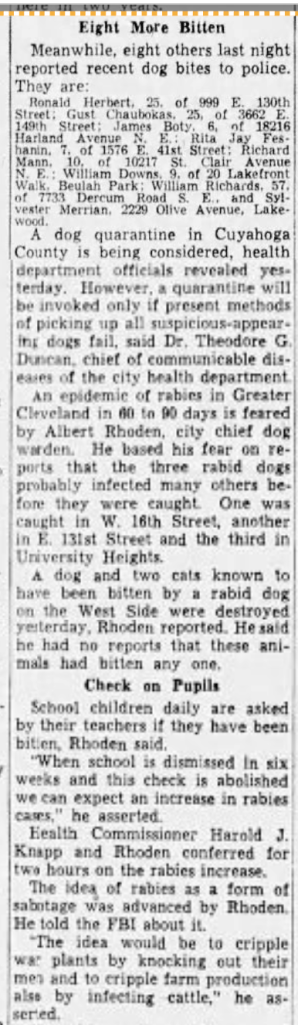
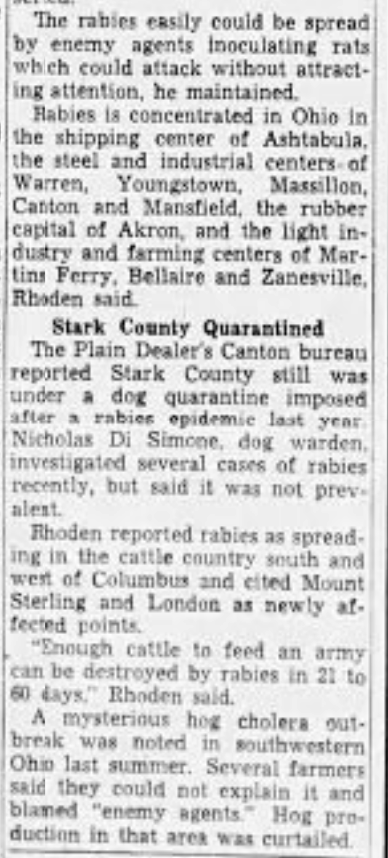
The next day, April 16, The Plain Dealer’s “Our Dog’s Day” opines “If a saboteur is bent on attempting to hinder our war production by spreading rabies in the hopes that rabid dogs will bite war workers, he does not know his business.”
Also, the Great Dane club meets 8:30 Monday at the Hotel Carter. Do you guys think there is a beagle club? Cleveland sounds great.
On Saturday, the 17th, The Cleveland Press also weighs in on the F.B.I.’s involvement.
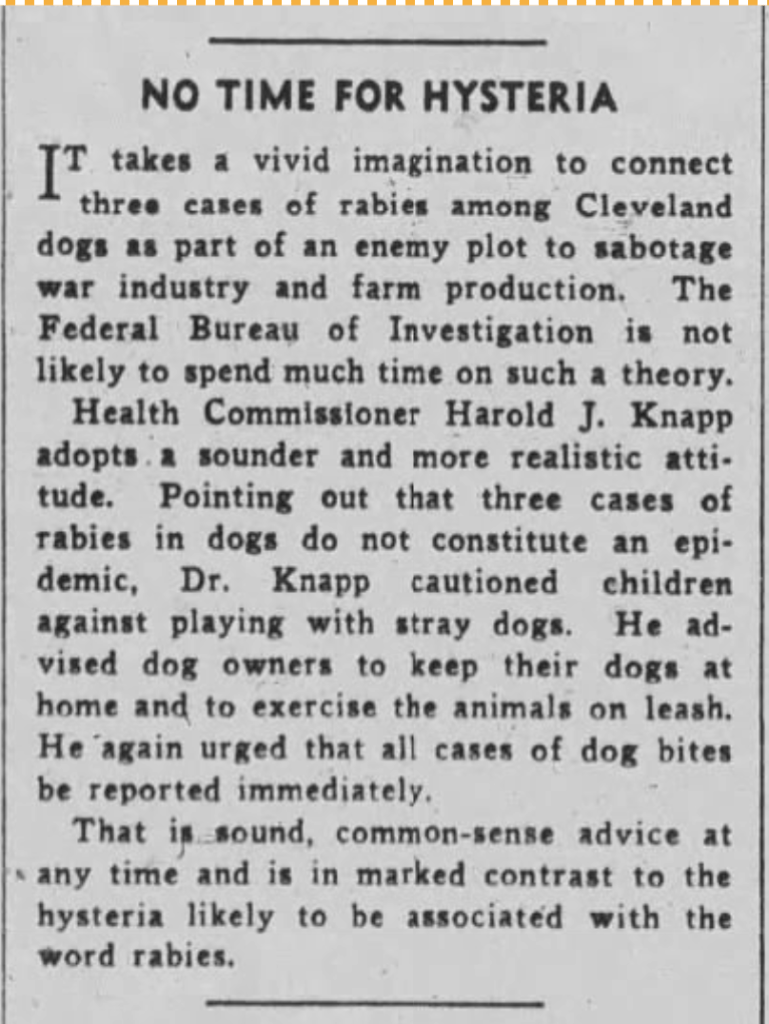
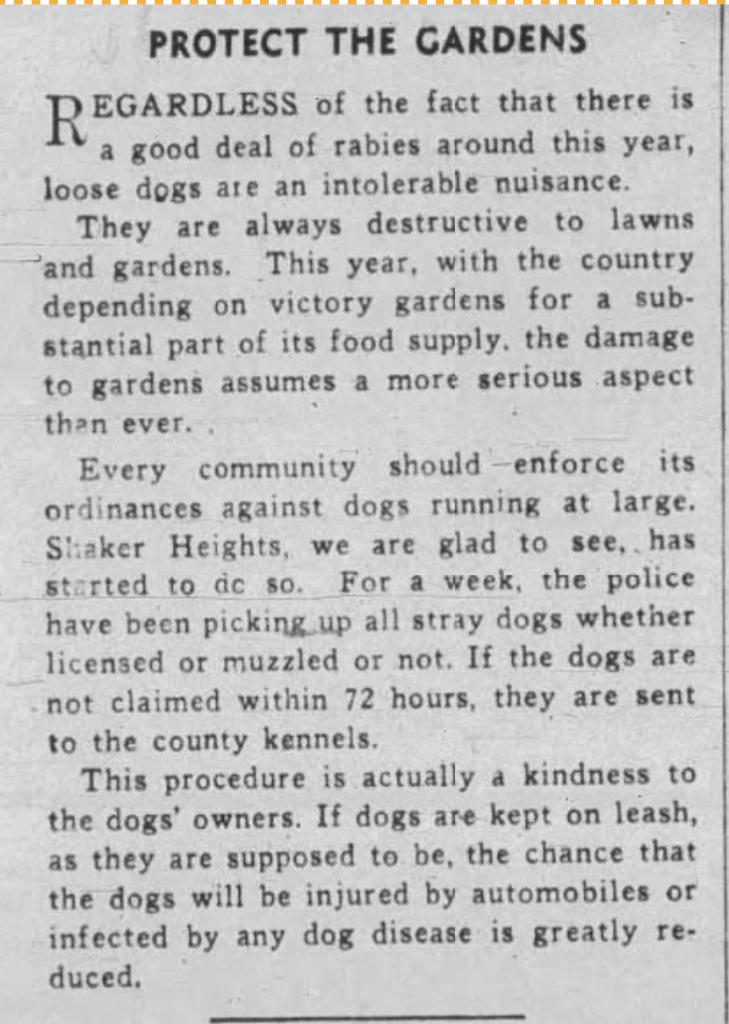
Following the F.B.I. articles, things largely quiet down in the Cleveland papers for a few weeks. A piece complaining about the impact of stray dogs on victory gardens is published on May 7 by The Cleveland Press, and there are a couple of opinion pieces here and there about the effectiveness of the dog warden, the hysteria around rabies, and other complaints that frankly are not interesting enough to publish.
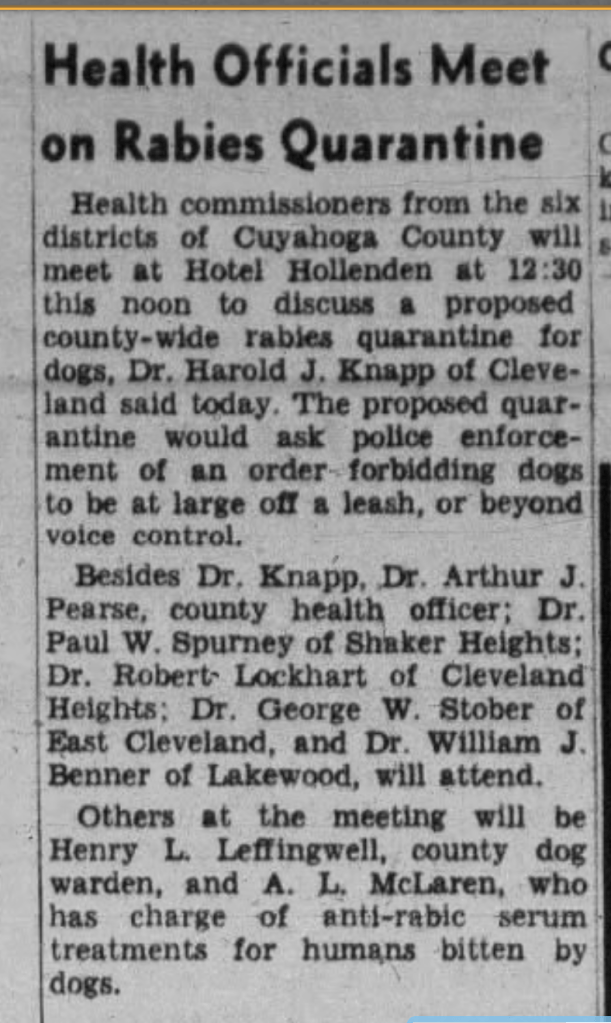
Still, by June, Health Commissioners are discussing a dog quarantine for Cleveland. Ultimately, it was decided against.
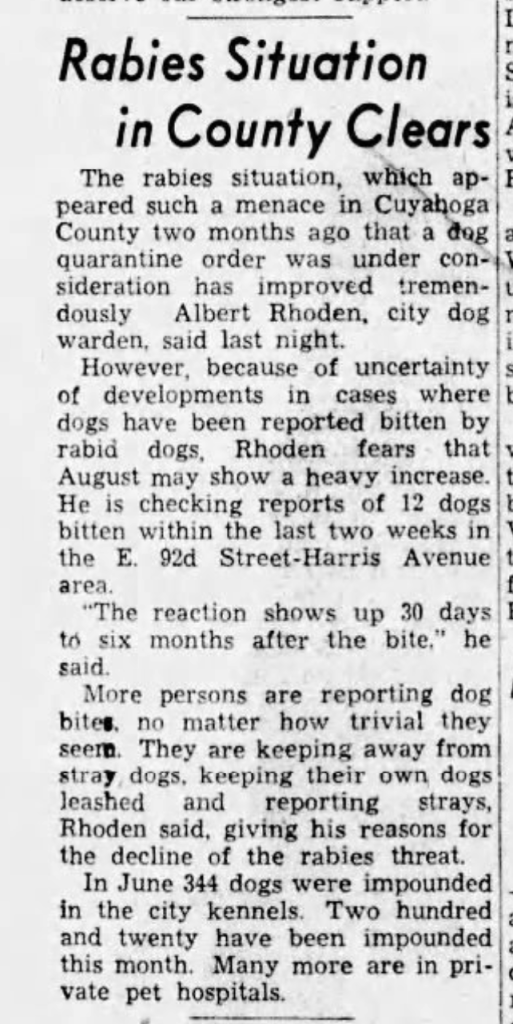
By July, The Plain Dealer reports that the Rabies situation in the county had “cleared.”
What stands out in looking at Cleveland in 1943 is not just the presence of rabies, but the way the community chose to respond to it. The default tools used by animal services agencies were enforcement, arrest, fines, and the rapid removal of dogs from the community. All of this amplified by the familiar rhetoric of print media driving the fear and anxiety the public was feeling.
This case study is a useful reminder that our responses to animal related challenges are always shaped by more than the problem itself.
In 1943, without vaccination or a consensus on public health strategy, communities like Cleveland leaned on the tools they had leaned on for more than 150 years; removal and destruction of stray roaming animals.
Rabies vaccines finally came to be widely recommended in 1949, and with that recommendation should also have come changes to the catch and kill model that existed for circumstances like this one. Still, we battle with a model that leans on enforcement instead of lifesaving and partnership.
I hope you’ve enjoyed this deep dive into Cleveland’s rabies outbreak in 1943. Comments welcome.
-Audrey

