Good morning to you. I’m home after several weeks of travel and so grateful to be sitting in my own sunny dining room writing this post.
Last week, I attended the New England Federation of Humane Societies conference in Portland, Maine. Since I myself live in upstate New York and will take any chance I get to road trip through New England, I decided to drive to the conference. My route took me through Bennington, Vermont, where I was delighted and surprised to discover a National Humane Alliance fountain right on the side of the road. Did I turn the wrong way down a one way road accidentally and park in someone’s driveway to run across and get a few photos? Yes, I absolutely did.
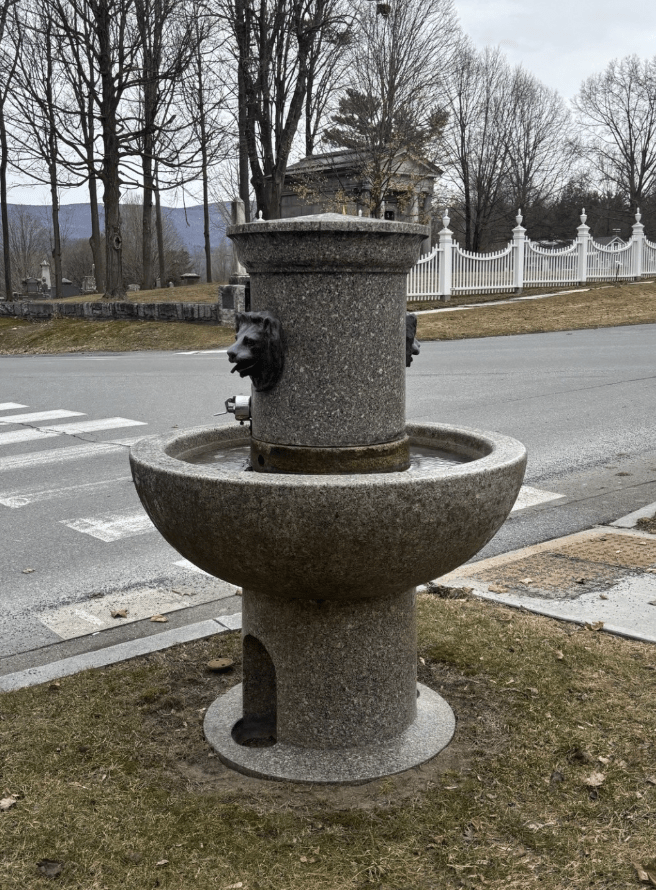
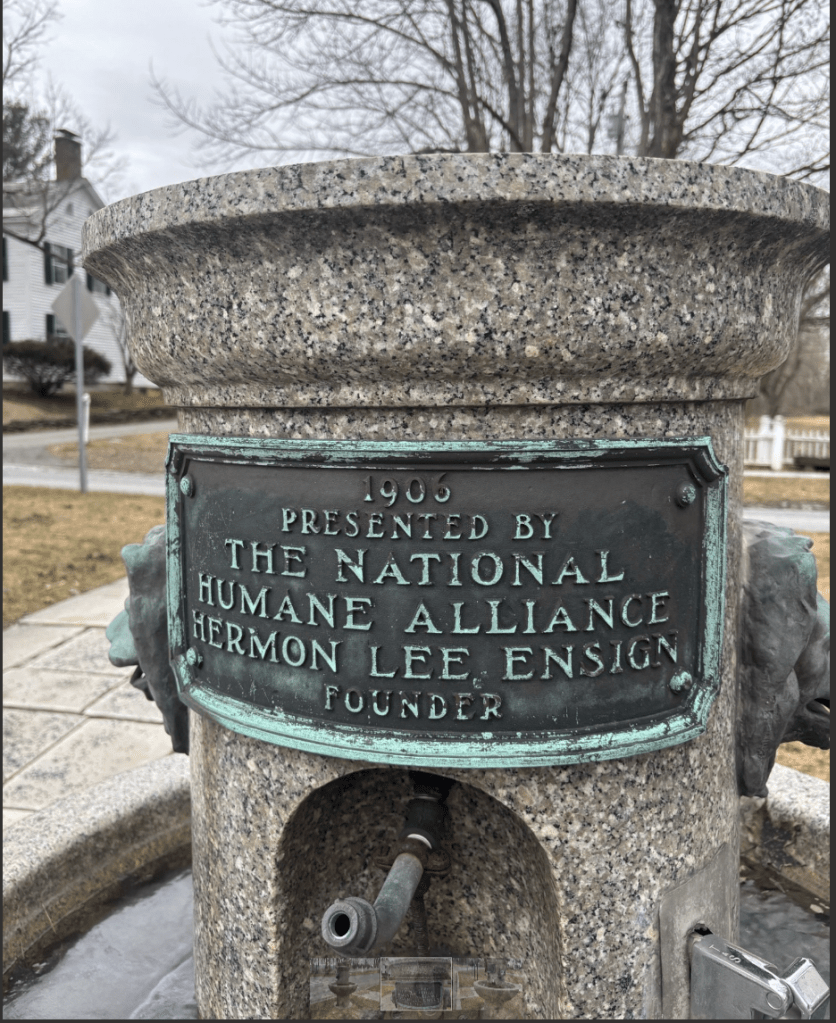
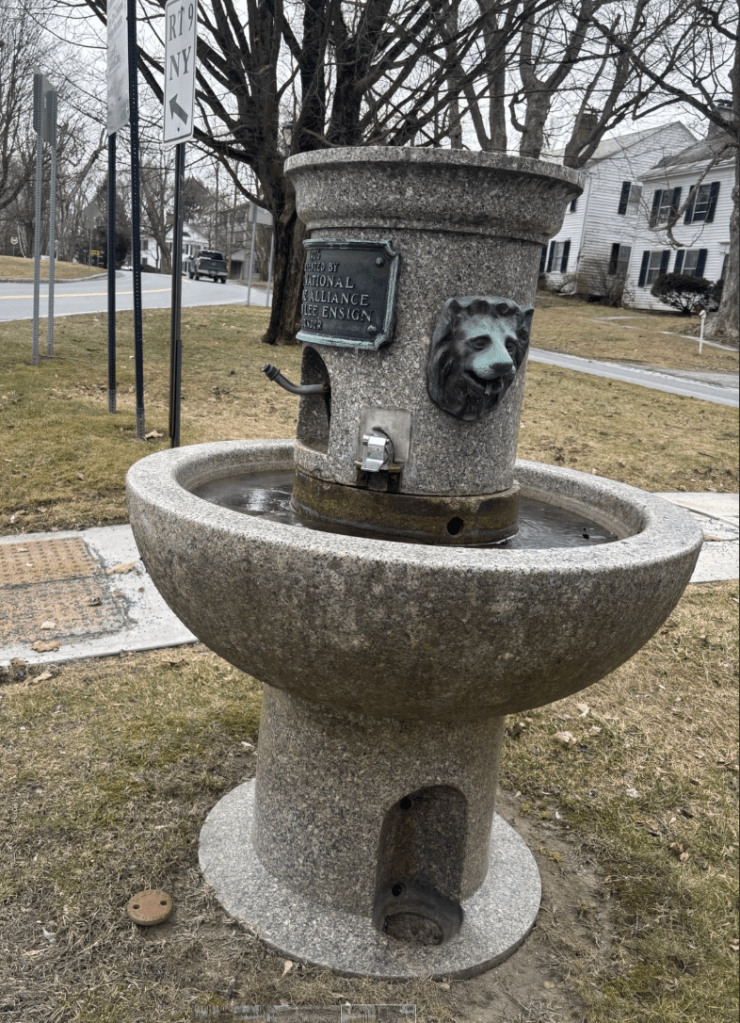
These fountains exist across the country; I found this extremely cool map on a Connecticut town website showing their known locations. (I’d love to credit the maker of this map but I can’t seem to figure out who it is. If you know, please let me know.)
I’d also like to make a record here stating that my husband said he will not drive to Albany with me tomorrow to go look at the two fountains located there because “That’s like an hour away.”
Anyway, there were 130 of these particular fountains. They were donated by Herman Lee Ensign, the founder of the National Humane Alliance, upon his death, to cities across the United States (and one in Mexico City) between 1902 and 1915. It was required that they be placed in high traffic areas where they could be reached from all sides, and the cities receiving them had to agree to their continual maintenance. The fountains were made in Vinalhaven, Maine by the Bodwell Granite Company, which is the same company that supplied the granite to the Brooklyn bridge. Here’s a photo of an Ensign fountain right after it’s install. I’m unsure if they all had lights.
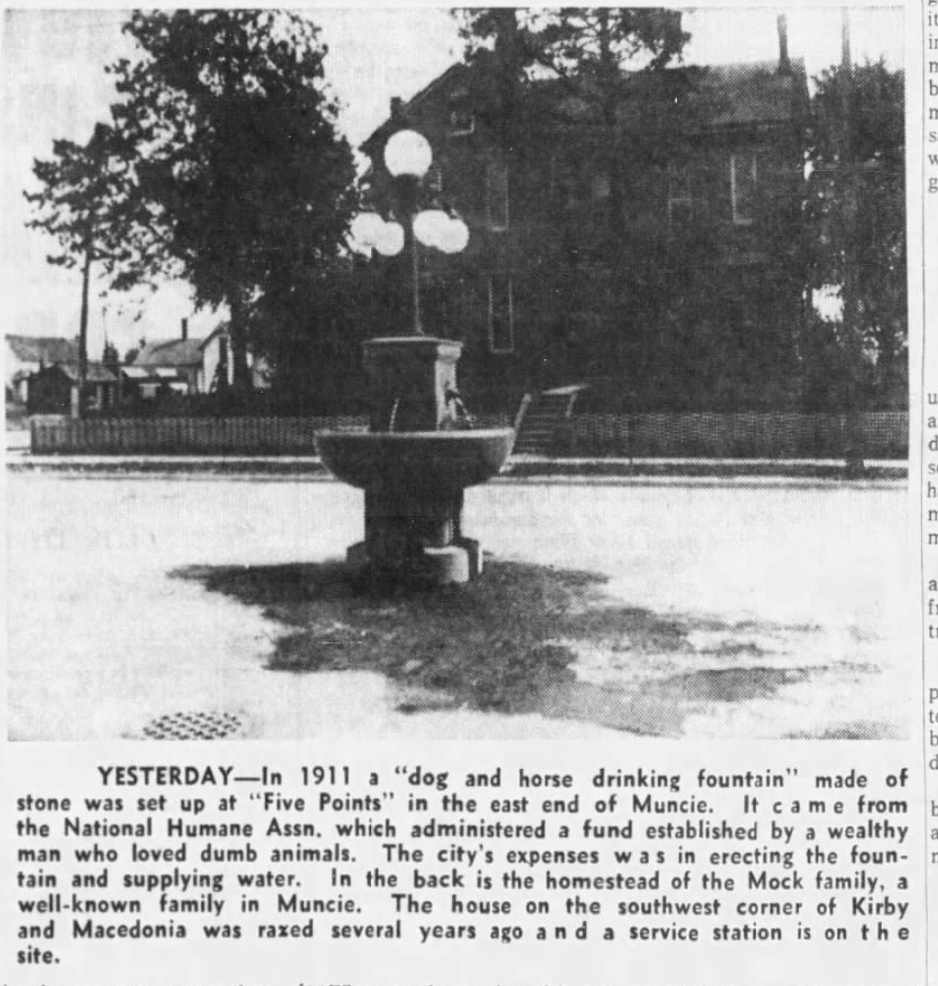
The way that horses lived with people before the advent of the automotive cannot be underestimated. Horses were the ones that pulled the trolleys, the delivery carts and wagons, and they were used for private transportation, Cities and towns simply did not run without horses, but humane care for them was not an expectation and many horse were abused to the point that they died right in the streets, overworked and overburdened. Heat exhaustion was a well documented problem.
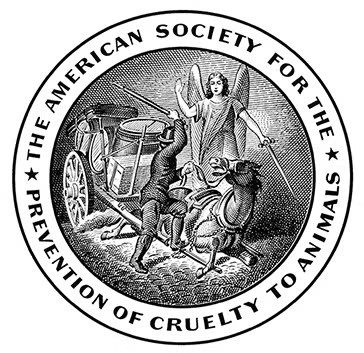
One of the first changes the humane movement toward was the humane treatment and care of horses. In fact, the seal of the American Society for the Prevention of Cruelty to Animals even depicts a carriage horse being abused, with an angel of mercy above.
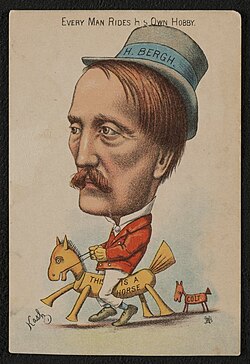
Henry Bergh and his original agents spent much of his very early time after the founding of the American Society for the Prevention of Cruelty to Animals personally inspecting horses and arresting their neglectful owners, and he was known to stop overburdened trollies right in the street, demanding the horses be sent back to the stables. This delayed traffic and caused people to have to walk in all kinds of weather, so of course it drew him all kinds of hatred in the papers, and cartoons like this one were abundant.
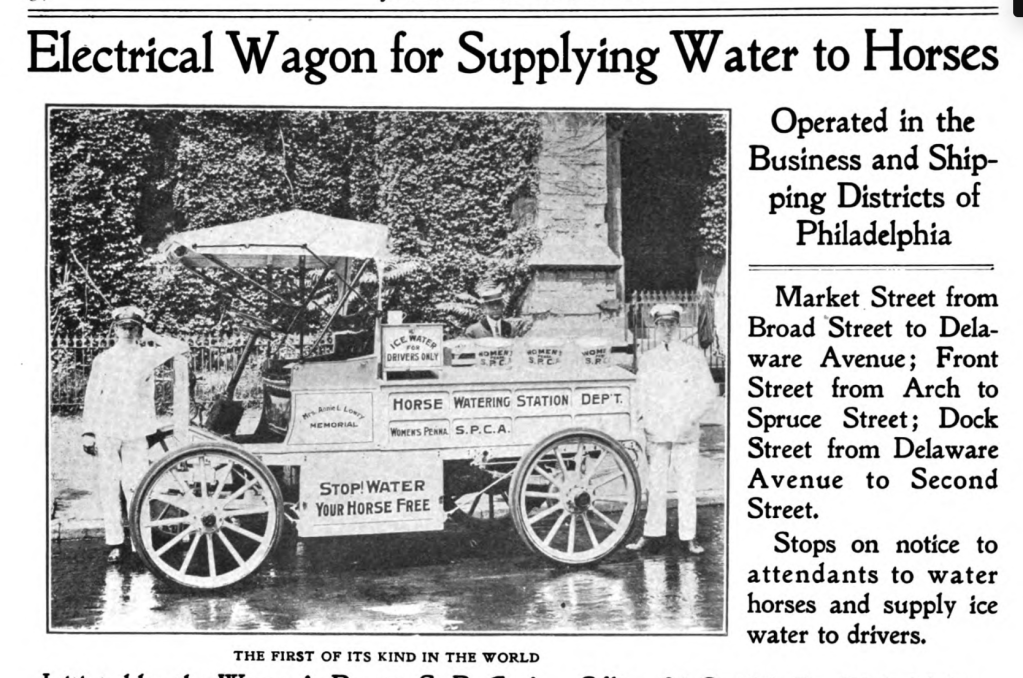
And, obviously, water for horses in the streets was not something that was readily available or prioritized. As such, the early humane movement worked steadily to provide water for horses and many different solutions were enacted. Here’s a photo from the 1915 issue of the Journal of Zoophily which shows an Electric Wagon for watering horses in Philadelphia.
Over time, the donation of a fountain, and particularly a beautiful one with an engraved dedication or motto, became a popular way for philanthropists to contribute to the movement. Many fountains contained an attached cup for the use of humans (germs be damned) and a basin at the bottom of the fountain to water dogs, cats and other. Some of the fountains, like these in New York City, were especially elaborate.
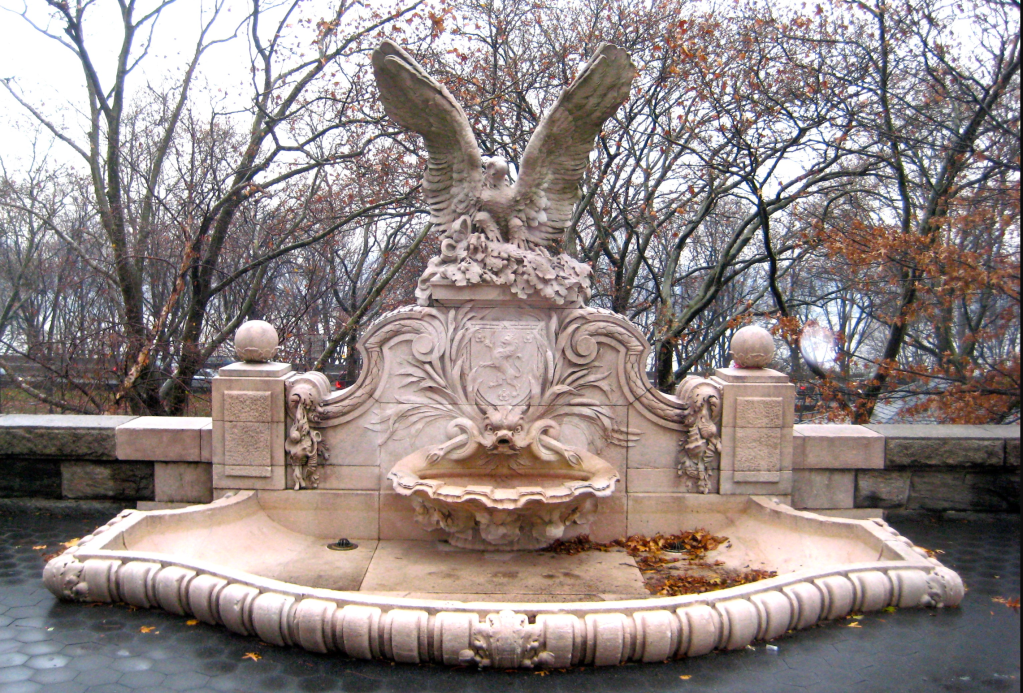
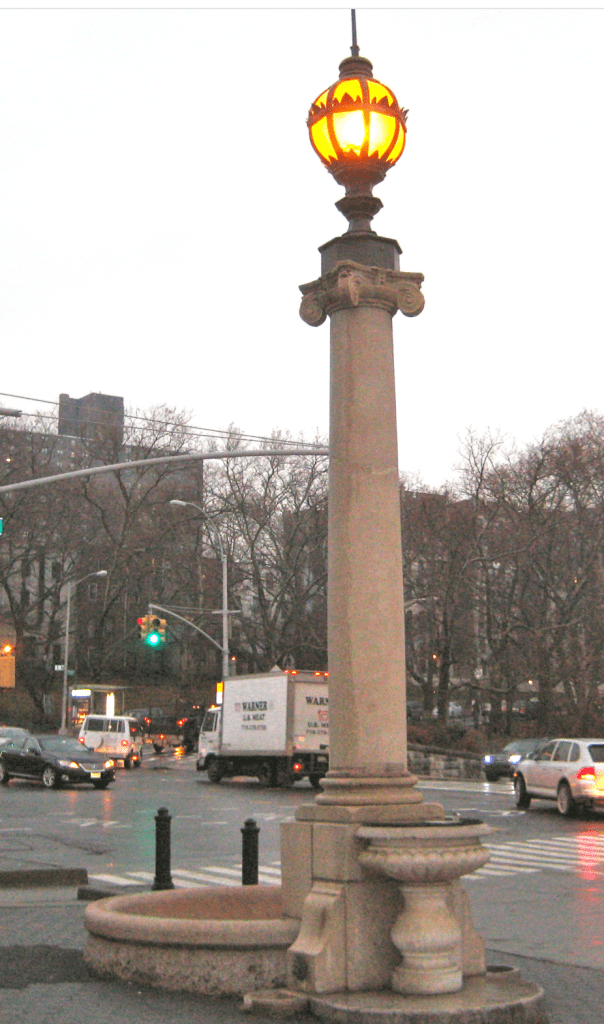
Below is a photograph of Caroline Earle White, the founder of both the Pennsylvania SPCA and the Woman’s SPCA, at a dedication of a horse drinking fountain.
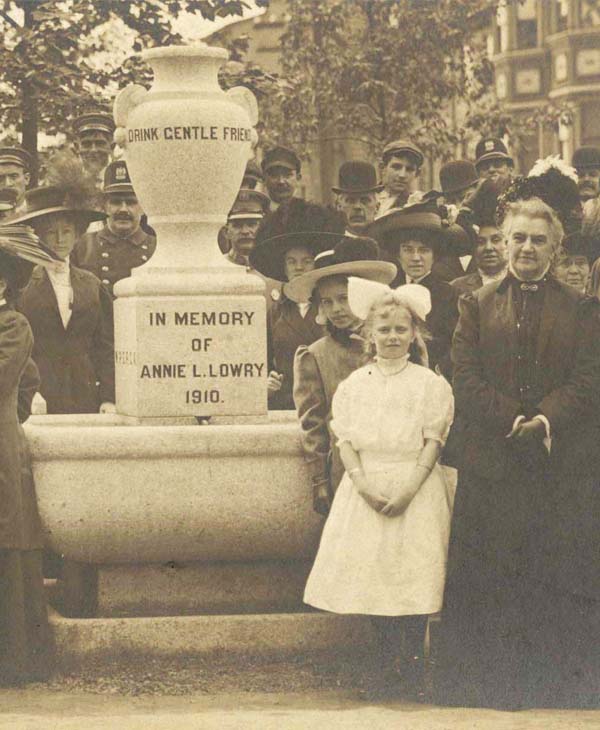
The cities themselves often struggled to maintain the fountains after their installation. In Buffalo, they were under the responsibility of the bureau of water, who employed several men to clean and repair the 150 fountains their city held.
Here you will find the contents of this special feature article from the August 13, 1910 edition of The Buffalo News.
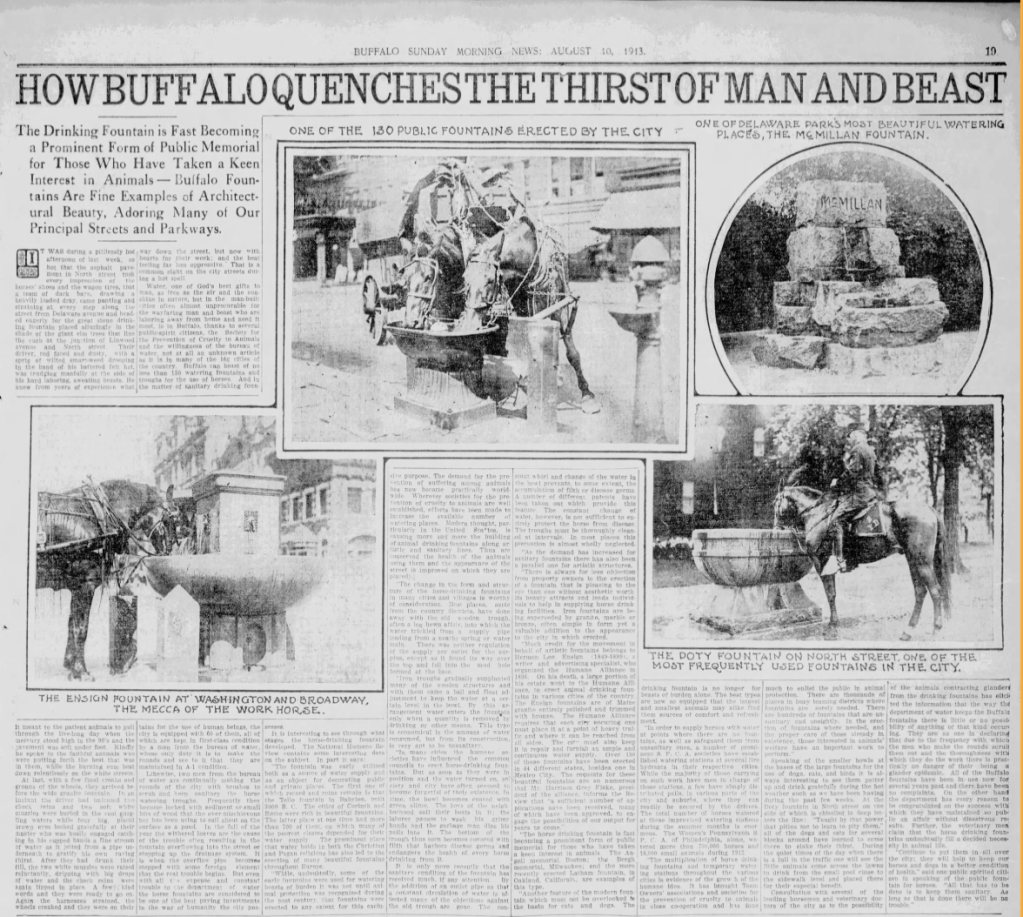
Most cities still have some vestiges of horse drinking fountains today in the areas where horse traffic was heaviest. While the map I posted above will guide you to the Ensign fountains, there are many others to be discovered, each unique in their own way. I’d encourage you to take some time to go and see if any exist in your corner of the world. It makes for a fun weekend adventure…at least in my opinion.
If you find one, I’d love to see it. Please send me a photo to Audrey.Lodato@gmail.com.
And with that, happy weekend, my friends.
-Audrey
 Barking at the Knot
2 responses to “Horse Drinking Fountains”
LikeLike
Do you know about the fountain in Ansonia, CT. I discovered it while doing research for a project that I am working on about Black Beauty. I went and visited it last summer. https://www.facebook.com/photo/?fbid=10242775168821716&set=a.2000010206307
LikeLike