I am, as of late, obsessively reading through all manner of newspaper and periodical from 1894-1895, when New York City transitioned animal control to the ASPCA, and I keep uncovering new pieces.
There is much that happened in these few short years that set us up for what sheltering looks like now; one of the most interesting things about the whole transition is how it was relayed to the public; carefully, intentionally, thoughtfully and with much consideration to why the policies and changes were set about. We could learn a thing or two about transparency, even if the policies were not necessarily for the benefit of the people. At least they were transparent.
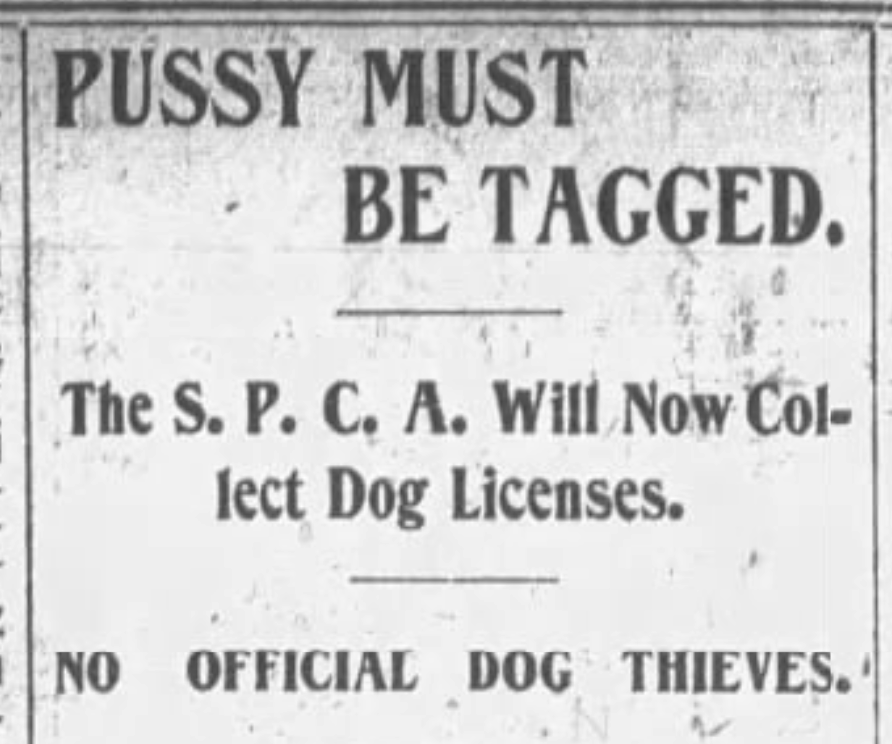
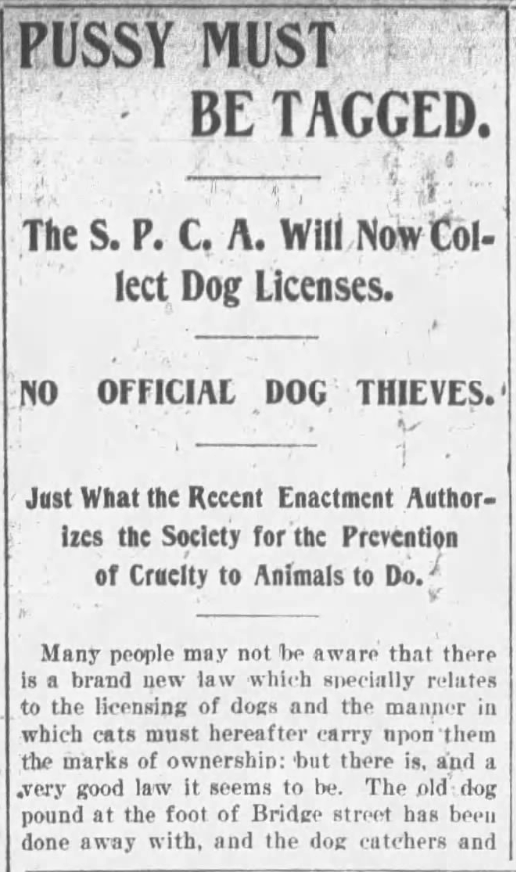
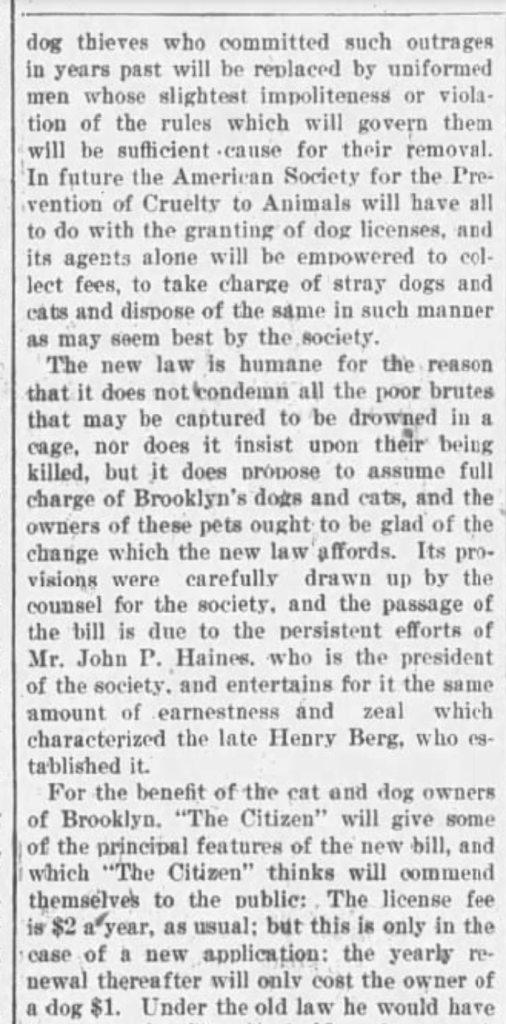
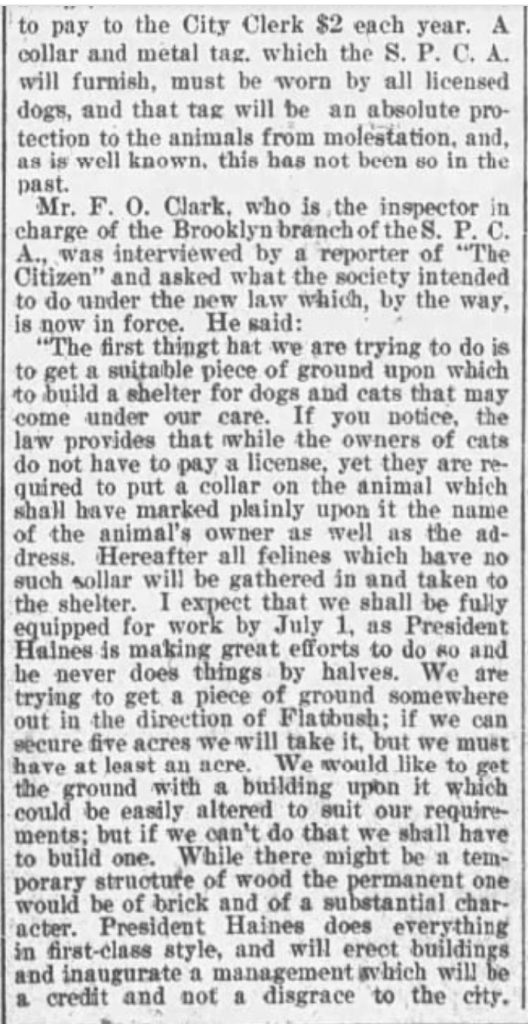
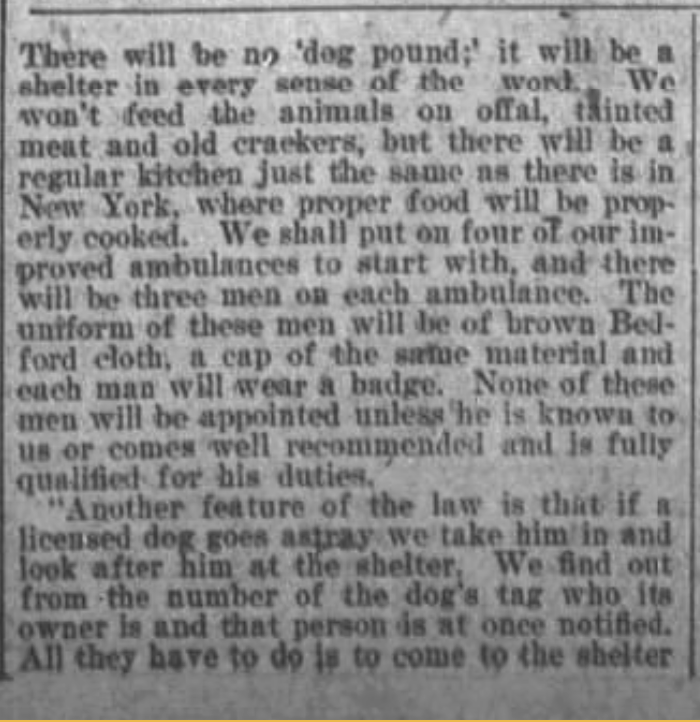
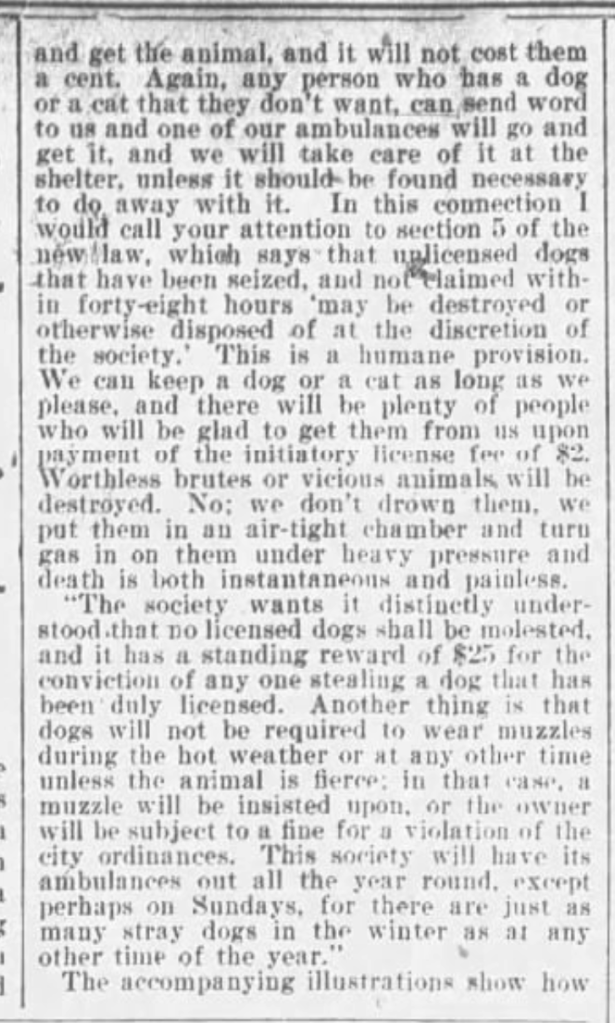
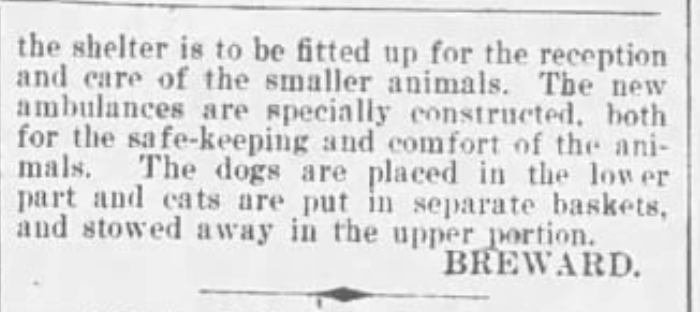
This morning, by way of example, an article from June 16, 1895, conveying to the public new laws about licensing for dogs and collaring for cats.
A few nuances to note in this one:
The professional expectations of the officers are clearly outlined, noting that the “slightest impoliteness or violation of the rules” would lead to the officer being summarily fired. This is directly in response to the public pressure that led to the shift to the public-private partnership. As the previous dog catchers were contracted and paid by the nose for each animal they brought in, they were brutally stealing owned dogs, sometimes directly from the arms of people walking them.
The first NYC dog licensing law was passed in 1894 in conjunction with the transition and it was the solution pro-offered in a direct response to this public outcry around theft. Licenses could be used to prove the dog was owned, and therefore not a public safety risk, particularly for rabies. (Which really wasn’t true, since the dogs weren’t vaccinated, but…rabies was confusing. There was definitely a prominent, if not universal, belief that owned dogs didn’t carry rabies, only strays did.) The law also excluded licensed dogs from impound.
The article explains the removal of the muzzle provision, which had never been well enforced to begin with because many people, including the dog catchers, were afraid that muzzling the dog would upset them and lead the dog to develop rabies.
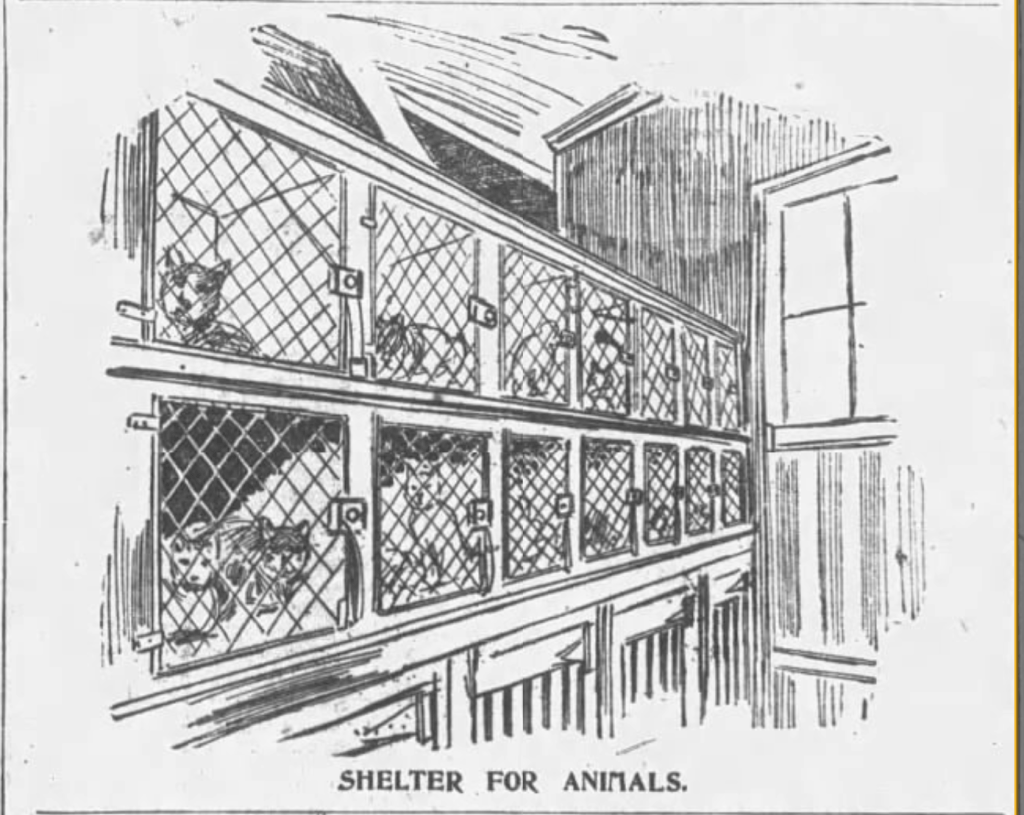
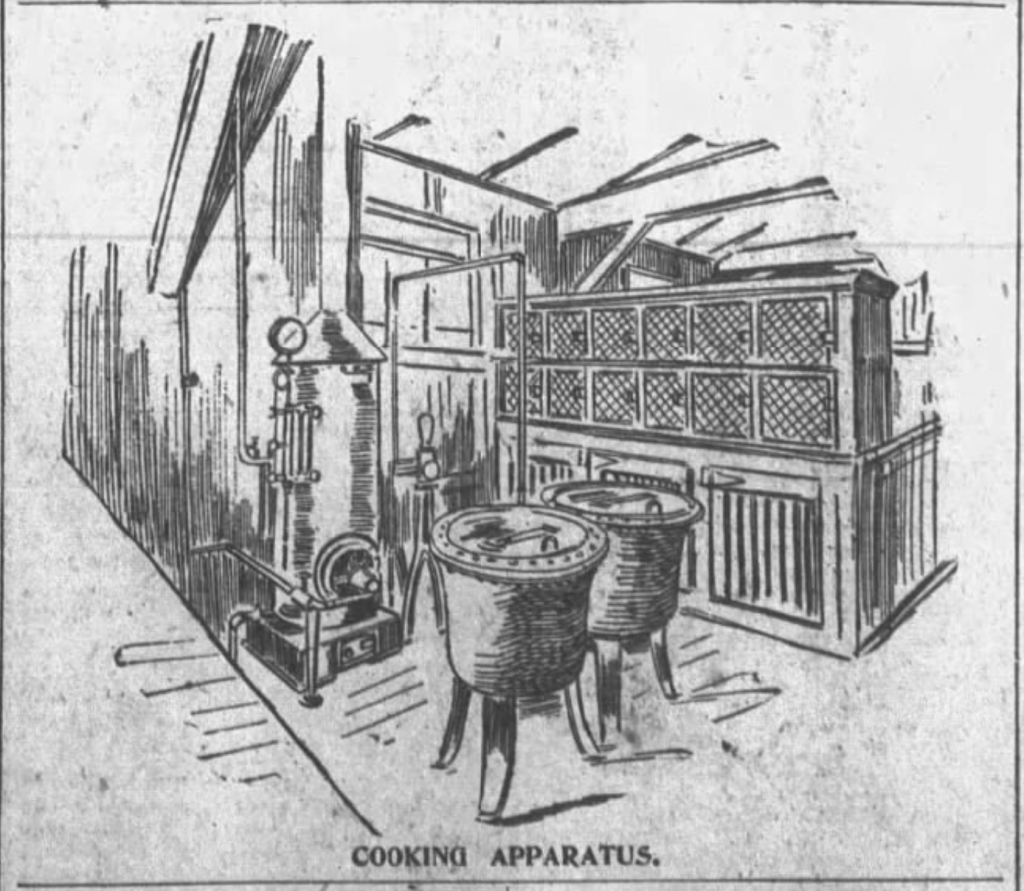
The article goes through great pains to explain the process of a dog moving through the future facility, as well as the new laws around licensing – the fees, the process. It specifies what very well may be the first stray hold period of 48 hours. It also points out that the drowning cage from the bridge street location is longer, and goes through the new process to dispose of pets, calling it “instantaneous and painless.”
I’ll leave you to read the article. I love when I see comments about what stands out to you, so please do share your thoughts.
Apologies for the way the piece is pasted below. The Brooklyn Citizen gets zero points from me for the strange way they were printing columns in this time period, with images overlapping other articles having nothing to do with the subject matter of the illustration, making it impossible to clip the article neatly in it’s entirety. I did my best but if you want the full page to see the layout, email me and I’ll send it to you. Audrey.lodato@gmail.com.
Further, I probably should have published this article before the last, as chronologically, it would have been about four months earlier. Sorry about that – I just find things as I find them, and the path to discovery is a bit haphazard. This article is talking about the future construction of the shelter I wrote about yesterday. Anyway. Enjoy.
-Audrey

 Barking at the Knot