
Animals are often also the victims of human conflict; This was especially true of horses, donkeys and mules during wars prior to the wide adoption of the automobile, when they were subject to the same horrors of war as humans. Even though automobiles were in use during the first world war, horses were often more adept for the terrain and faster than a car.
In 1916, America had not yet entered the war officially, but we were supporting allied troops with steamships of supplies. Among the first aid we sent were mules and horses. After we officially joined the war in 1917, this number escalated sharply. An estimated 243,000 horses and mules were sent overseas during the duration of the war, pulled from ranches and owners around the country. It’s estimated that more than 8 million total horses served in the war effort. Of these, it’s estimated that more than 6 million died during service.
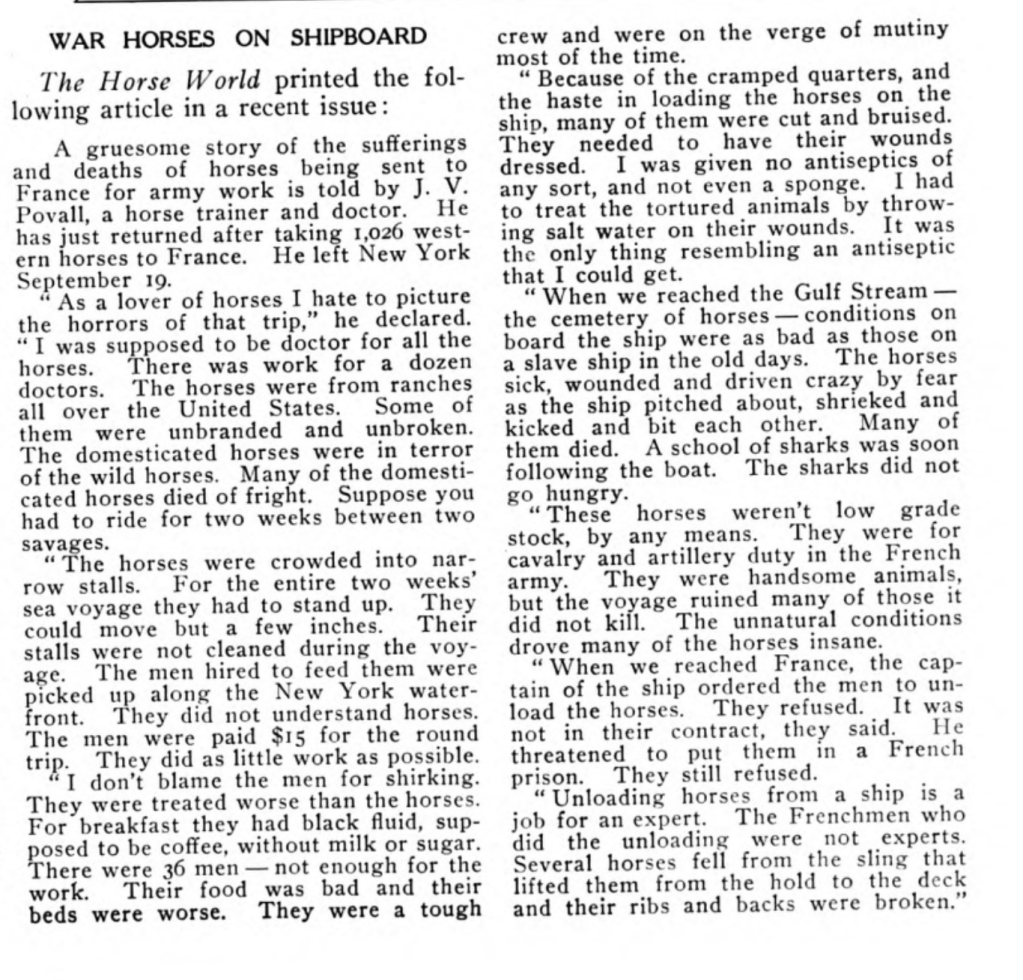
Those from the US were often shipped overseas in horrific conditions. A first hand account of this can be found in the February 1916 edition of the National Humane Review, the periodical of the American Humane Association.
Once they arrived, they were set to work as part of the war effort; calvary, transport, hauling artillery and supplies or serving as ambulances. Many of these horses died from exhaustion, disease, starvation and injury.
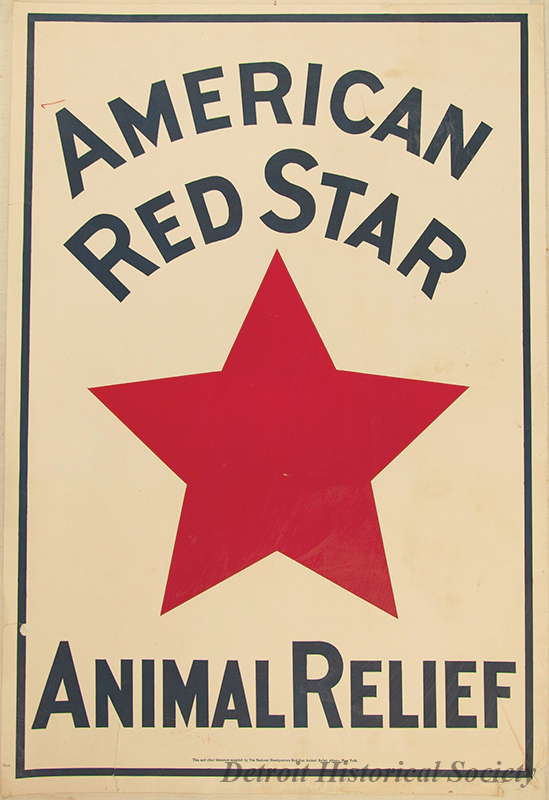
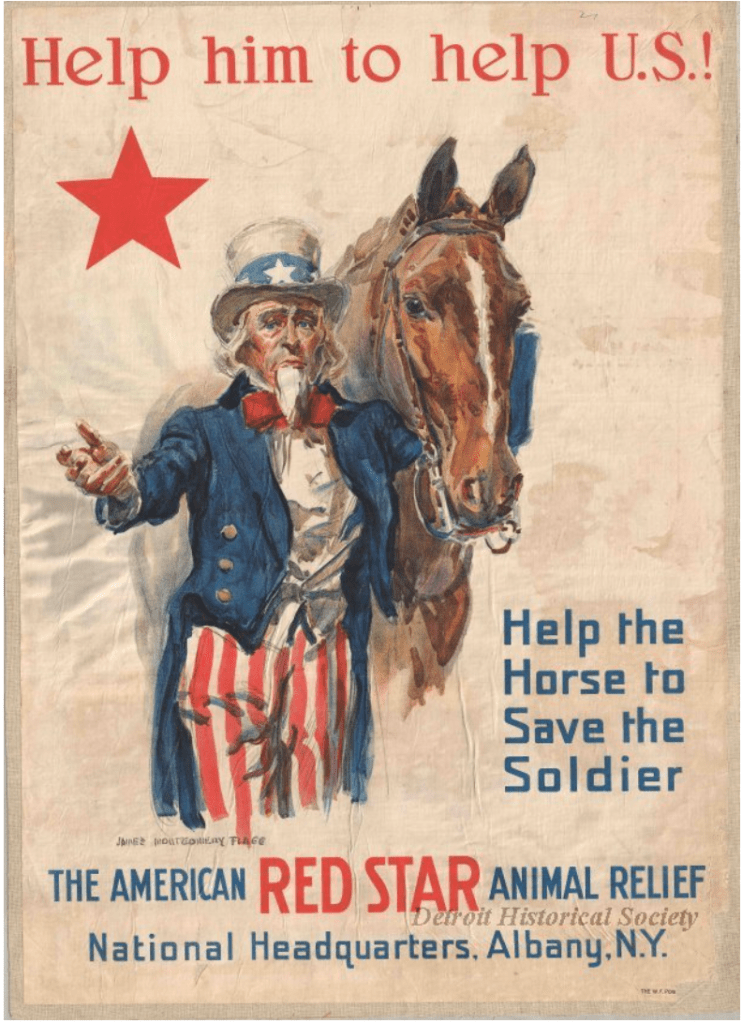
The Red Star is an organization formed in 1916 by the American Humane Association when the concerns for the horses dying overseas were making headlines around the world. when U.S. Secretary of War Newton D. Baker invited American Humane to assist horses in the same manner that the American Red Cross assisted soldiers.
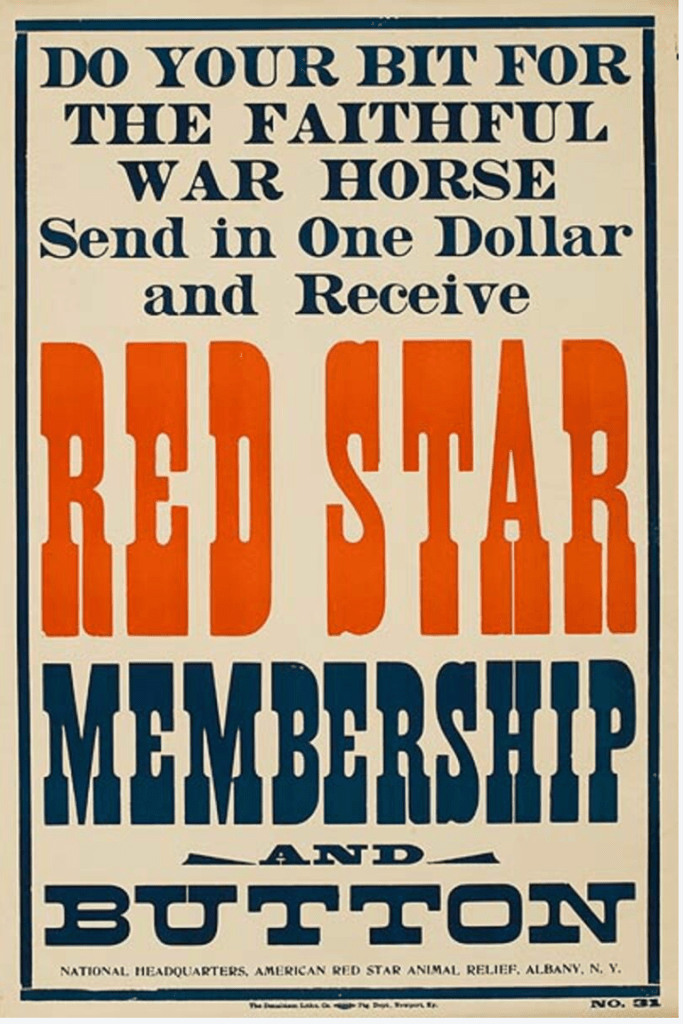
The logo, a simple red star, was modeled after the Red Cross, in order to be easily recognizable as aid. A collection of all of The Red Star posters can be found here.
While the organization is listed as being broadly founded by AHA, Doctor William O. Stillman, the then-President of the AHA, was a central figure in it’s creation and mission. Dr. Stillman was a physician and humanitarian who was deeply committed to preventing cruelty to animals and advancing humane education. He was instrumental in gaining government recognition for funding animal relief during wartime. He was also the president of the Mohawk-Hudson Humane Society in Albany for 36 years. This organization is still in existence today as the contracted shelter for the county of Albany – and remains a beacon of lifesaving in the state of New York.
The American Humane Association still offers the William O. Stillman award to animals who in the face of danger have saved human lives or vice versa. The award is given “for recognition of a humane act of rescuing animals at personal risk or of the rescue by an animal of human life by virtue of extreme intelligence in an emergency.
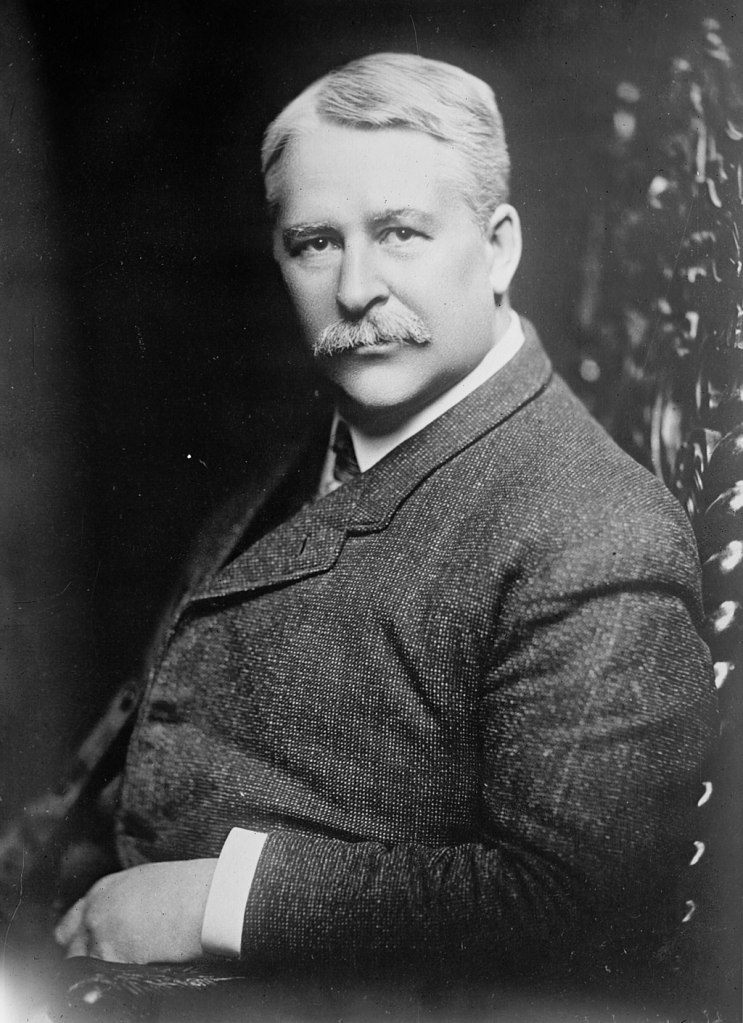
The Red Star partnered with the war department under Dr. Stillman’s leadership and provided feed, first aid kits, and surgical supplies primarily to the front lines in France, where horses were heavily in employ. They established field hospitals to serve injured horses, complete with quarantine pens and surgery suites.
The Red Star also helped support and form the newly created US Army Veterinary Corps, and provided training for civilian volunteers. In addition, the organization advocated for humane care and treatment of animals serving in the war, including rest periods and medical care as well as humane euthanasia.
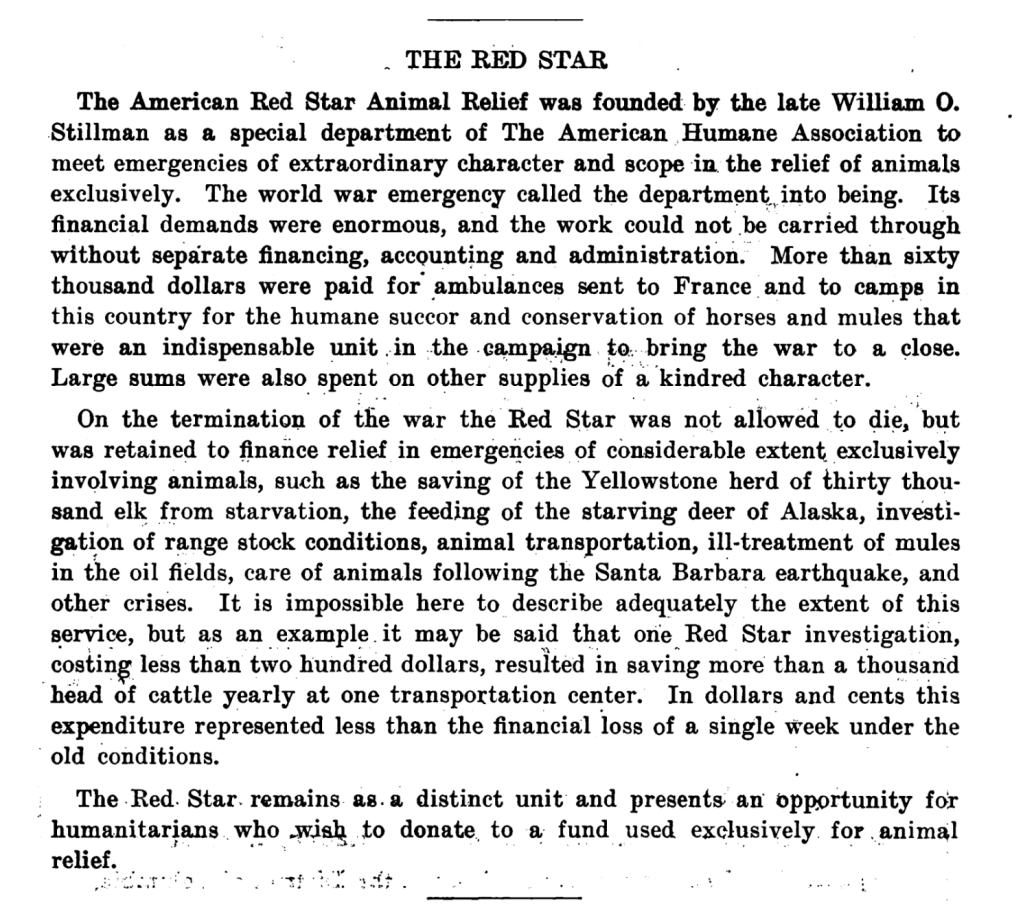
Following the war, the Red Star remained a beacon for animals in disasters. This excerpt from the annual report of the AHA in 1923 describes The Red Star this way:
While The Red Star no longer carries the same name, in function the organization still exists under the umbrella of the AHA under the name “American Humane Rescue.” They still use a distinctive red star in their logo. Today, they respond not only to war, but also to natural disasters, cruelty situations, and other instances where animals need help due to extreme circumstances. Recent deployments involved Hurricane Katrina, the California wildfires and the war in Ukraine. The Red Star Rescue Team is one of the oldest humane rescue teams in the world.
Disaster response often is something that creates an environment of pure cooperation between national organizations in a way I wish deeply could be achieved as a matter of course. The Red Star laid the foundation for our ability to provide resources and defend animals placed into these circumstances. Their motto, “First to Serve,” truly embodies the spirit of the humane movement.
-Audrey
 Barking at the Knot