
Friends, I am just back from a much needed vacation and when it came to this week’s post, admittedly I was short on ideas. When this happens, inevitably I type random animal welfare words into Hathi Trust (which is a repository of many historical documents) and I read things until I find something interesting to talk about. This week, I found a 1910 issue of The Dog Fancier magazine.
Dog breeding and it’s relationship to the humane movement and to animal shelters is complex and storied. In the US, this world really began to gain traction in the Victorian period.
The American Kennel Club was founded in 1877 by a group of men who met at the Westminster Hotel in Manhattan. The first show, called the “First Annual New York Bench Show of Dogs”, was held at Gilmore’s Gardens (a precursor to Madison Square Garden) from May 8-11, 1877. You may notice that this timing is just 11 years after the founding of the ASPCA, very close to the beginning of the humane movement. You may be interested to know that Henry Bergh was a speaker at the first AKC show. Rumor has it that no one could hear him, because the barking was so loud. His logic, and the prevailing logic of the time, was that any attention to dogs was good attention – breeding and overpopulation had not yet been correlated to this world, although there certainly was already the stigma of some dogs being more valuable than others.
Regardless, this dog show marked the beginning of a period of time where pure-bred dogs became “trendy.” Certain dogs prevailed over others in popularity at different times, and it was fashionable to promenade with your pet on the more presigious avenues of certain cities. The Dog Fancier capitalized on that trend and marketed to the world of people seeking, purchasing, breeding and obsessing over purebred dogs.
The magazine has three main components; ways to purchase dogs, advertisements about dogs, and stories and photos of dogs doing dog things.
Below, you’ll find two advertisements around spay and neuter. Now, remember that surgical spay and neuter was barely (almost not at all) available during this time period. Spaying would have been considered major surgery and extremely expensive. While neuter was more accessible, it certainly was not common. I could find nothing at all about “The Pronto Process.” I’m all ears if you know anything about it.


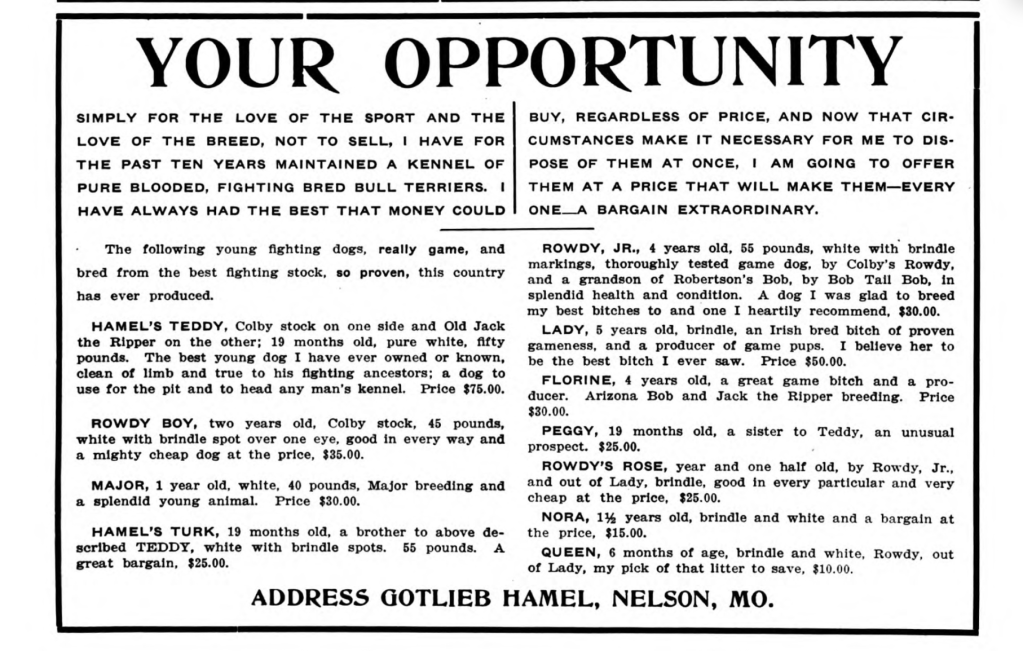
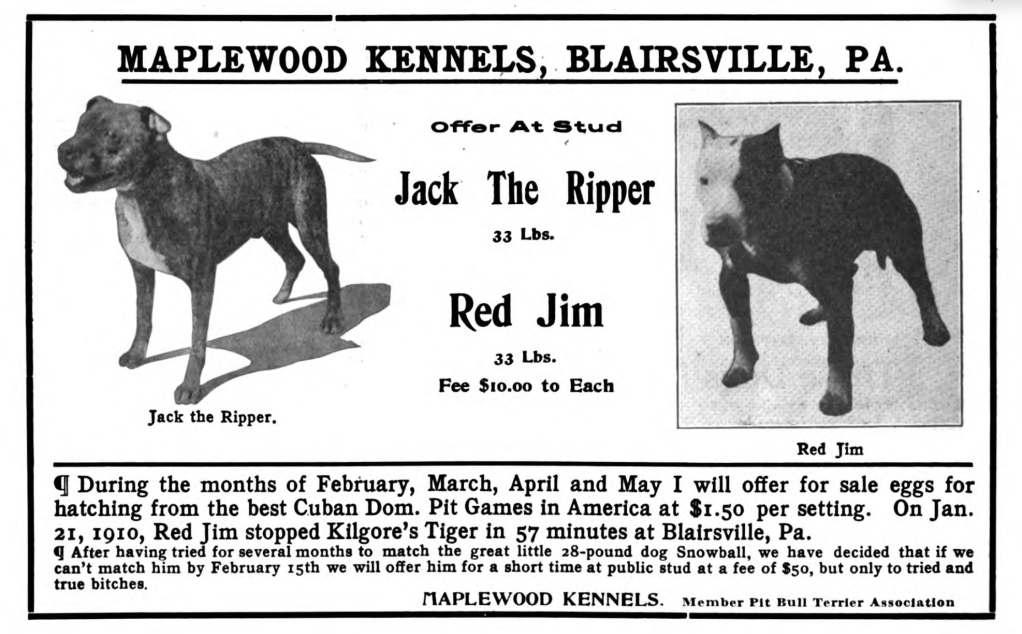
There were also a tremendous amount of advertisements for Pit Bulls; Dogs purpose bred for fighting, dogs bred for game hunting, and dogs bred for other purposes. What was most striking about this is that in at least some of the United States, dog fighting had been outlawed, at least on paper, by 1910. It would not be illegal in all 50 states until 1970.
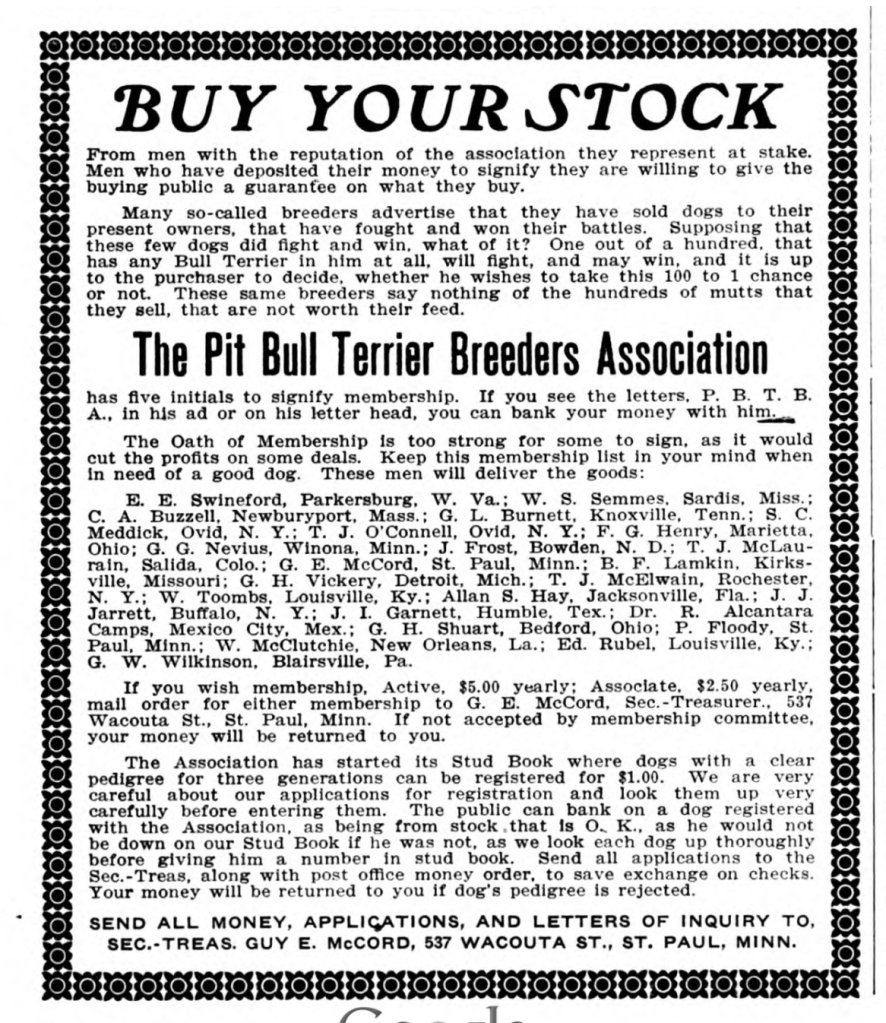
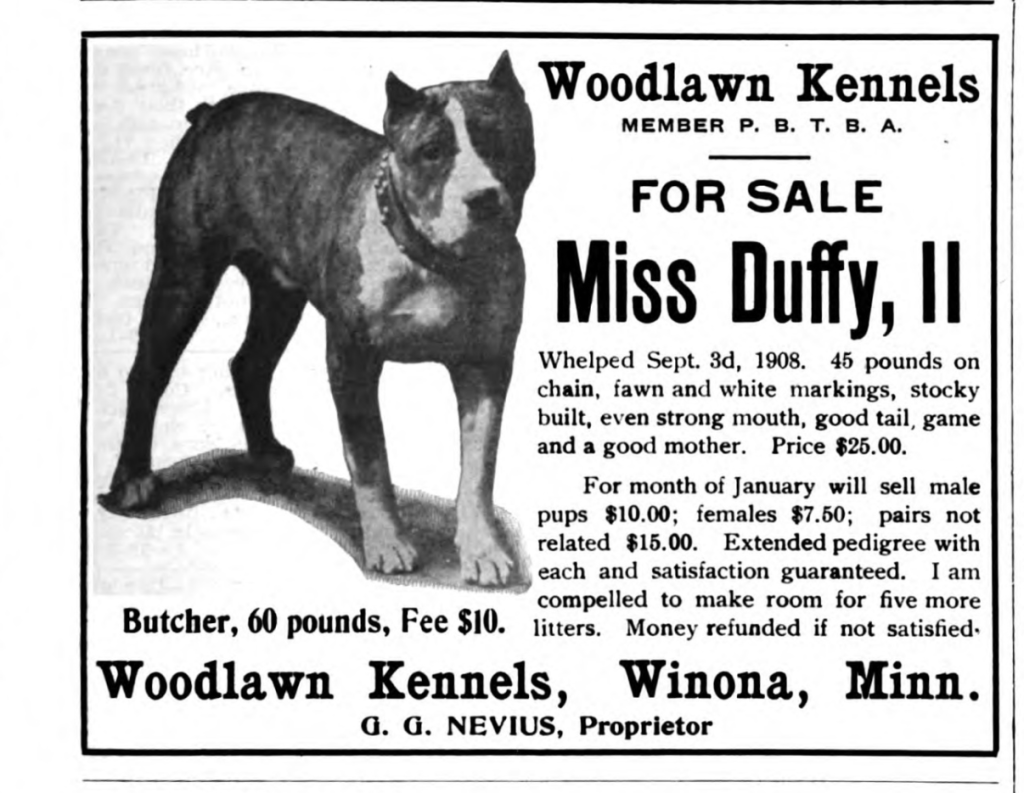
There are also a number of ads, articles and letters to the editor suggesting very questionable medical treatments for common ailments.
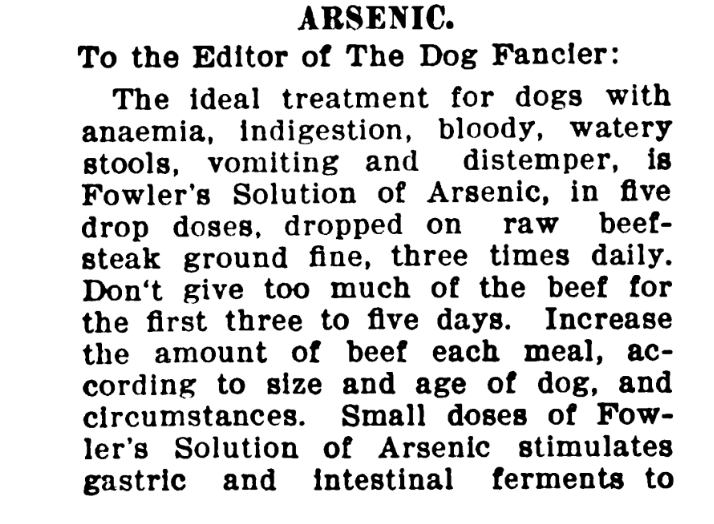

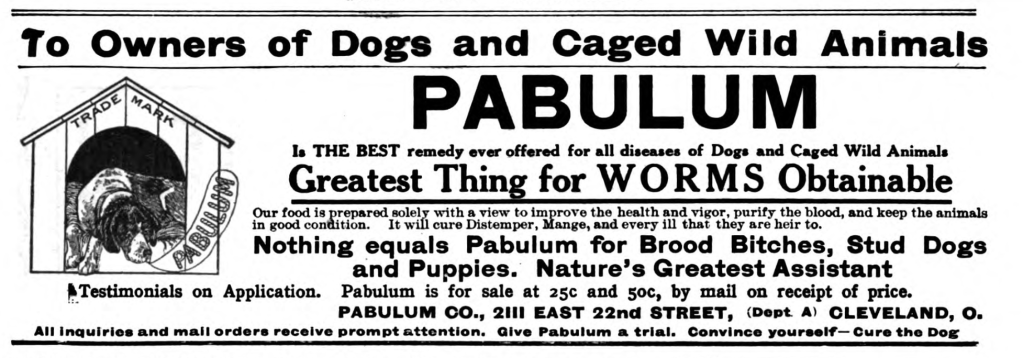
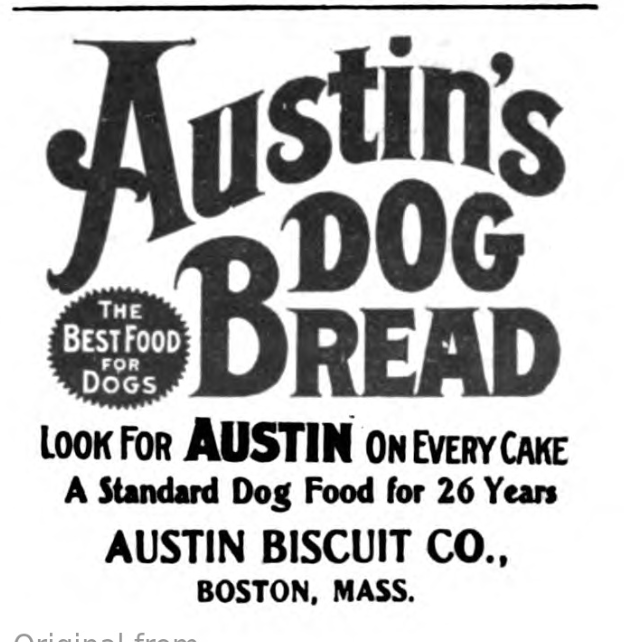
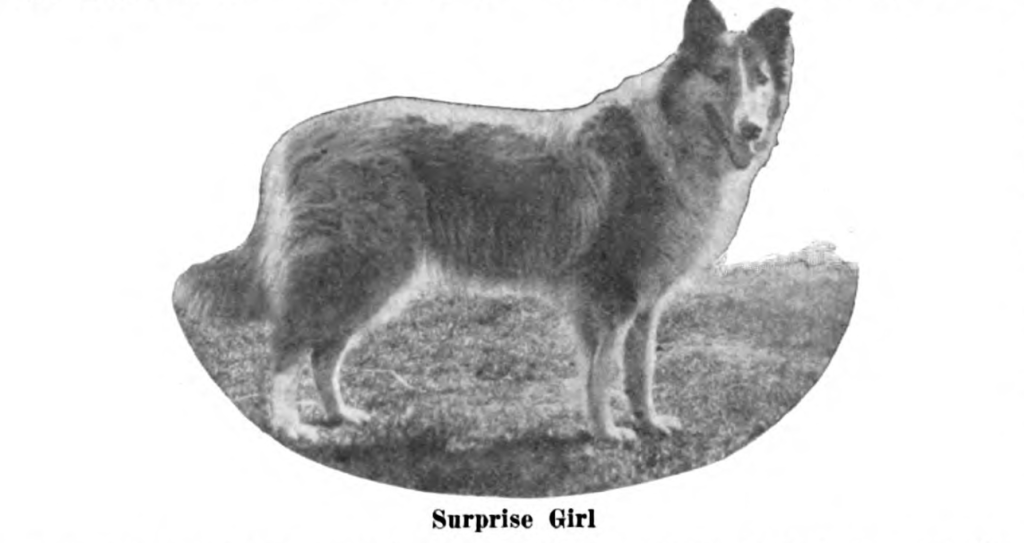
The names certainly didn’t disappoint. Maybe we should recycle some of them. “Surprise Girl” would look lovely on Petfinder. Maybe not “Jack the Ripper” though.

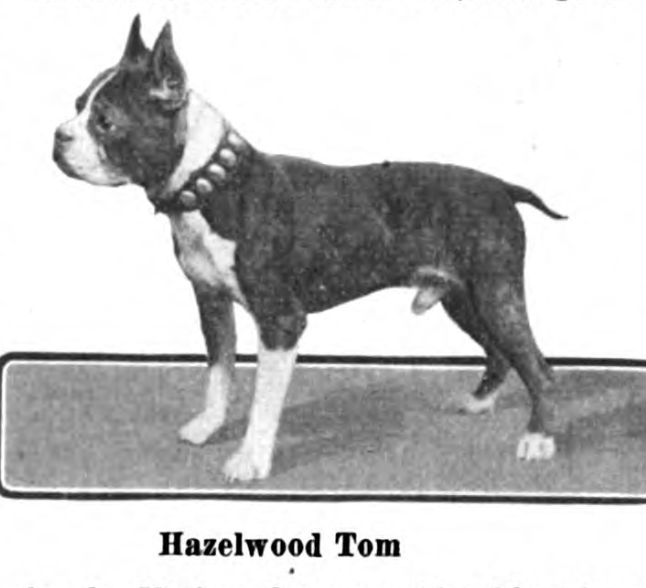
The notably longer snout on this Boston Terrier is certainly notable compared to today’s dogs and the effect that selective breeding has had on the purebred population.
The magazine contains almost no information about the temperament of the dogs or their suitability as pets; It stands out greatly to me just how extremely they were seen as a commodity. They were advertised in the same way you might advertise a pair of shoes or a new dress.
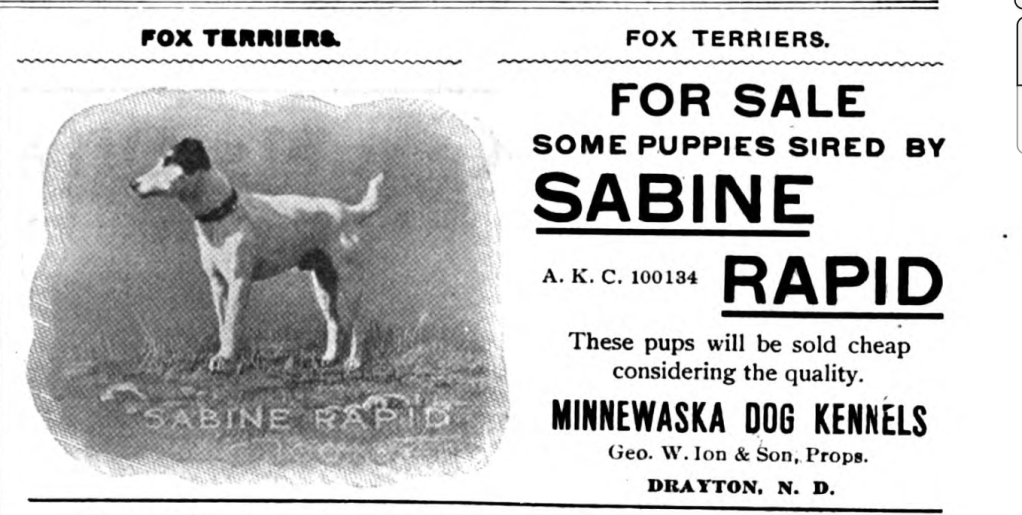
I’d love to know what stands out to all of you looking at these ads, and I hope this gives a glimpse into the early foundations of purebred dogs. This has been amusing to put together, if not necessarily profound. Hope you enjoyed!
-Audrey
 Barking at the Knot