As the humane movement began to establish itself and spread westward, with humane societies establishing themselves alongside new states, we see a frequently used tactic in the efforts to educate around appropriate treatment for animals; Stories and literature written from the first hand perspective of the animal themselves. The theory was that through anthropomorphism, empathy for animals could be garnered.
Doubtless the most well known example is Black Beauty, written by Anna Sewell and published in 1877. This story, narrated by the horse himself, is autobiographical and was written with the intention to convey that horses had similar emotions to humans and should be treated thusly. Black Beauty was particularly relevant for the movement, describing his time as a working horse and his feelings about harsh equipment used commonly on working horses of the day. The line between extending kindness and compassion to animals and using animals to our benefit is a frequently surfacing theme in the humane movement, and one that all too often surrounds horses due to their ability to work.
I like to remind people that our movement was not at all founded on animals having intrinsic value; it was founded on not being unnecessarily cruel – the the key word there is “Unnecessary.” It’s up for interpretation.
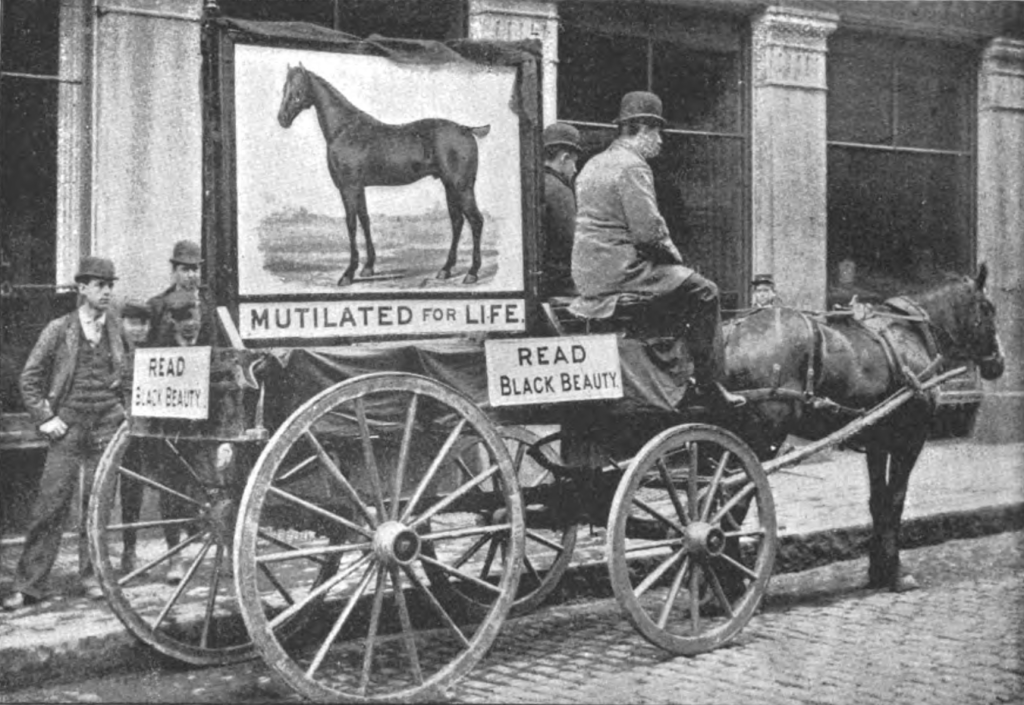
Here below we see a bid for increased compassion and care for horses, with Black Beauty as a reference. This photo is relevant to the anti-docking movement, which focused on the inhumane practice of docking a horse’s tail so that it would not get caught in machinery. You can read much more about tail docking and Black Beauty in this issue of “Our Dumb Animals.”

Following the success of Black Beauty, George Angell held a writing contest, solicited through “Our Dumb Animals” and the result of this was another commonly recognized piece of humane literature; Beautiful Joe. I recently was able to purchase a very early edition of this book at an antique shop for just 8 dollars – quite a bargin, if you ask me. Beautiful Joe, similar to Black Beauty, is an autobiographical tale written by a dog and describing first his suffering at the hands of cruel masters, and then his rich life in the country. You can read it in it’s entirety here: https://en.wikisource.org/wiki/Beautiful_Joe
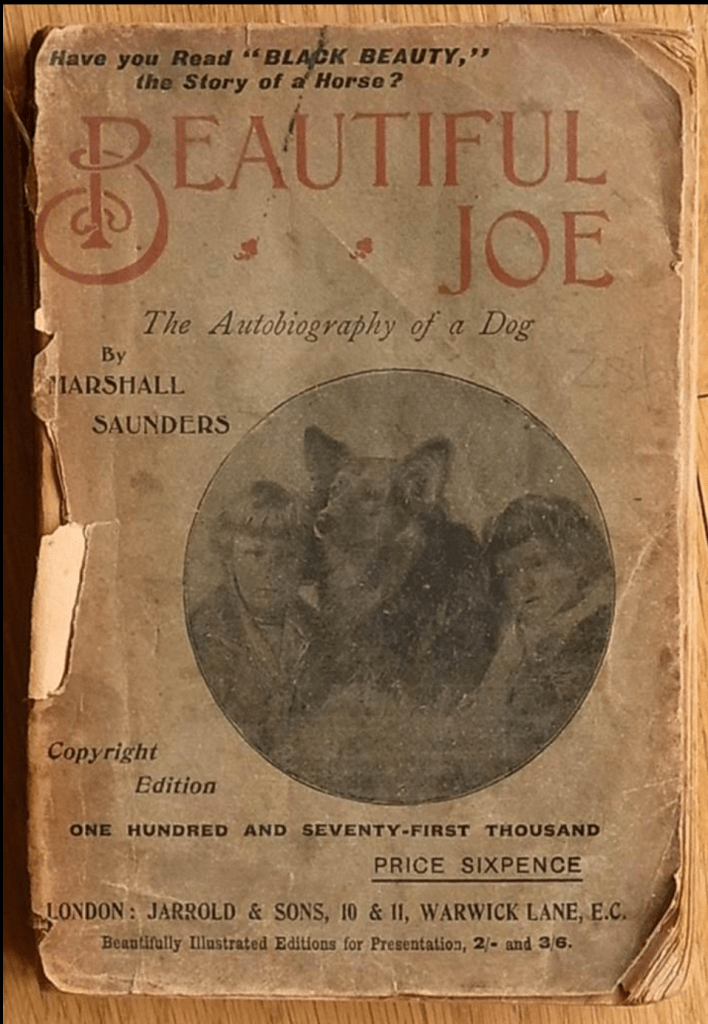
Written in 1893 by Margaret Marshall Sanders, it was published under the name “Marshall Sanders” in case anyone might be offended that a woman wrote a book. It was based extremely loosely on a true story, and sold more than seven million copies. Below is her photograph.

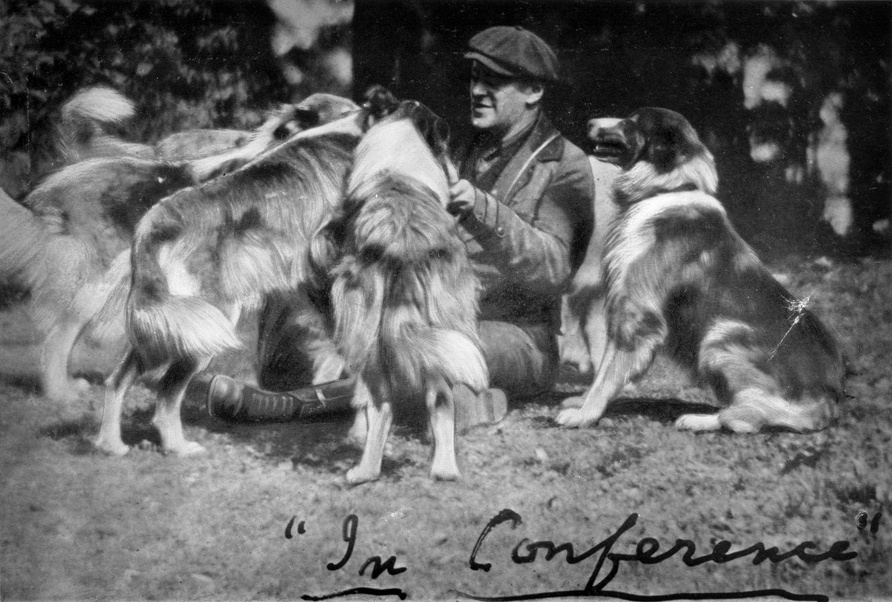
However, not all of these books were written specifically with the intention of generating compassion to animals; Some were just meant to tell a fun story. One of the more interesting examples of this type of literature is called “The Critter and Other Dogs,” written in 1936. This book is a compilation of short stories about Collies, written by Albert Payson Terhune, pictured below. It’s an incredibly entertaining read, giving such an interesting snapshot into how people viewed pets in the time period it was written.
My favorite story in the book is called “Wild Heather.” This story is absolutely charming and also utterly ridiculous at the same time. Here’s the short version:
An expensive but very naive purebred collie dog named Heather is picked up by a dog catcher after a latch is left open and she goes for a stroll. She has no collar or license tag, so the dog catcher decides she is fair game. We are told he earns a dollar for each dog he picks up and an additional dollar for killing them.
The collie is brought to the pound, which is just a square, open pen with a dirt floor; A far cry from our individual housing units we know today. She’s tossed in with another dog described as a mongrel. Great pains are taken to describe him as a “bull terrier” with an “ugly and wrinkled face.” Our heroine collie then escapes the pound pen in the morning, when that same ugly dog attacks the dog catcher. She runs far and fast, through a town where she is chased and has sticks and stones thrown at her. Because she has some foam on her muzzle the townspeople think she is a mad dog, and attempt to kill her. Fortunately, she is faster than they are and escapes (again!) She runs until she is quite lost, then goes into the woods, where she subsists on food from a farmer’s pig pail. Soon, she also learns to hunt. However, before long she gives birth to three puppies as we learn she was impregnated by the mongrel dog while at the pound. Two of the pups, which look like the mongrel, are dead and the story describes how she eats them. One pup, who passes for a pure-bred collie, lives. The story goes on to describe how she and her son heroically rescue some sheep by fighting off a different mongrel on behalf of some shepherds, and live happily in the woods ever after.
This book is fairly widely available, both on Ebay or on Amazon, and I’d definitely recommend checking it out. It’s an easy dive into history without a lot of the harder to stomach things that most of us working in the field have plenty of exposure to in the day to day.
These stories and others like them helped to capture the changing relationships between people and the animals they lived with and worked alongside, all framed by the societal norms and beliefs of their time. Understanding them, and the things that happened to these animals within them, inside of the historical context offers a unique way to explore the early roots of the humane movement.
-Audrey
 Barking at the Knot